

Disclaimer: This newsletter is for educational and informational purposes only and does not constitute medical, investment, or financial advice, nor does it establish a provider-patient relationship. Content may include forward-looking statements and discussions of investigational therapeutic candidates that are not FDA/EMA approved; their safety and efficacy remain unestablished and clinical outcomes are unpredictable. While we strive for accuracy, all information is provided as is without guarantees. As of the date of publication, the author holds a direct equity position in BridgeBio Pharma (NASDAQ:BBIO), but holds no direct equity positions in any other specific companies mentioned in this issue nor receives third-party compensation for this coverage. Please find a complete version of our disclaimers at the bottom of this article.

Introduction
On November 9, 2026, Argenx announced a definitive agreement to acquire Unnatural Products, Inc. (UNP) for an upfront payment of $550 million in cash on hand and up to $595 million in payments contingent on achievement of specified development and regulatory milestones, for total potential consideration of up to approximately $1.15 billion (Argenx press release, UNP press release). This acquisition centers on UNP’s platform that enables the “engineering of synthetic macrocyclic peptides at scale”.
A vague “platform” without even one publicly disclosed drug candidate is typically a red flag in the biotech industry, but don’t underestimate UNP. Their prior partnerships with BridgeBio, Novartis, Argenyx, and even the macrocyclic peptide aficionados at Merck signal that this company is more than meets the eye.
In this article, we dive into the corporate history of UNP and explore why macrocyclic peptides could very well be one of the most under-appreciated therapeutic modalities in biotech.
Macrocycle Supercycle
The story of Unnatural Products (UNP) begins inside the chemistry labs of the University of California, Santa Cruz (UCSC). Under the mentorship of Professor R. Scott Lokey, a pioneer in cyclic peptide chemistry, two young doctoral researchers, Cameron Pye, Ph.D. and Joshua Schwochert, Ph.D., became fixated on one of the central paradoxes of modern drug discovery: the tradeoffs between small molecules and biologics.
On one side, small molecules are compact enough to slip through cell membranes and work as oral pills, but often unable to disrupt large, flat, intracellular protein surfaces. On the other side, biologics (peptides and antibodies) are exquisitely specific and capable of shutting down complex disease targets, but too bulky to enter cells or survive the gastrointestinal tract. But, what if we could leverage the strengths of both small molecules and biologics in a single molecule? Nature has already given us a solution through macrocyclic compounds, like cyclosporine, which somehow cross cell membranes despite breaking standard medicinal chemistry rules, while maintaining the remarkable specificity of biologics.
In 2017, after completing their doctorates, Pye & Schwochert went all in on macrocycles. With little more than ambition and academic grit, they founded Unnatural Products, Inc. (UNP). Like many iconic California startups, UNP’s first laboratory was quite literally Joshua Schwochert’s garage on the west side of Santa Cruz, outfitted with makeshift equipment where the co-founders began running their first synthetic cycles. In those early days, Pye assumed the role of CEO while Schwochert became CSO. Their shared vision was to replace traditional trial-and-error medchem with a tech-enabled, industrialized platform for designing macrocycles.
Pye & Schwochert realized that the secret to cellular permeability lay in the molecular flexibility of macrocycles that could “chameleon” their shape, hiding polar groups when crossing fatty lipid membranes while exposing binding motifs once inside the cell to engage target proteins. To achieve this systematically, UNP built an integrated engine pairing parallel automated synthesis with predictive machine learning. Instead of testing molecules one by one over weeks, UNP could model, synthesize, and screen thousands of custom cyclic peptides directly in biological assays in parallel. This marriage of computational biology and wet lab chemistry quickly caught the eye of early-stage deep-tech investors (unusual suspects in biotech investing spaces). In September 2019, UNP officially stepped out of the garage, closing a $6 million seed round led by Stuart Peterson and the team at ARTIS Ventures, alongside Abstract Ventures and Better Ventures. The capital allowed UNP to move into dedicated commercial laboratory space in Santa Cruz and scale up its core screening engine.
Rather than spending tens of millions of dollars to take early-stage drug candidates through slow clinical trials alone, UNP pursued a lean, collaborative model: partnering with seasoned pharmaceutical giants to tackle high-value intracellular targets long dismissed as “undruggable.” One of their first notable engagements was with BridgeBio Pharma, which focused on “difficult oncological and rare genetic targets”. The platform proved its predictive accuracy when BridgeBio subsequently exercised options to license programs born from the collaboration. As the industry woke up to the promise of macrocyclic peptides, UNP began gaining serious institutional momentum. In December 2023, UNP closed a $32 million Series A round. The round was co-led by ARTIS Ventures and the Merck Global Health Innovation Fund (MGHIF). By 2024, UNP had parlayed its relationship with Merck Global Health Innovation Fund into an expanded multi-target oncology discovery alliance with Merck & Co., adding $220 million in potential milestone-based biobucks and cementing UNP’s reputation as an indispensable discovery engine for intracellular protein–protein interactions. We’ll come back to why this alliance is so meaningful.
In July 2025, European immunology giant Argenx, fresh off the commercial blockbuster success of its generalized myasthenia gravis (gMG) FcRn antibody Vyvgart (efgartigimod), knocked on UNP’s door. Argenx recognized that while its antibodies dominated extracellular immune targets, the future of autoimmune medicine would require oral, intracellular-acting biologics. The two companies inked a multi-target collaboration worth up to $1.5 billion in biobucks to develop oral macrocyclic peptides against severe autoimmune targets. As part of that alliance, argenx took a minority equity stake in UNP, laying the groundwork for what was to come.
The partnerships kept snowballing when, in February 2026, Novartis entered the fray, signing a blockbuster cardiovascular alliance that committed up to $100 million in upfront and near-term research milestones, with downstream biobucks stretching to $1.7 billion. Weeks later, in March 2026, UNP bolstered its balance sheet with a $45 million Series B round led by The Venture Collective (TVC), joined by Droia Ventures, Argenx, MGHIF, and ARTIS, bringing total venture funding to more than $83 million. UNP was now sitting on a war chest, operating at the bleeding edge of structural biology, and juggling multi-billion-dollar partnerships with some of the world’s leading pharma houses.
For Argenx, watching UNP’s rapid acceleration over the preceding sixteen months made one thing abundantly clear: UNP’s platform was too transformative to simply remain an arm’s-length partner. On November 9, 2026, Argenx announced an agreement to acquire all remaining equity of Unnatural Products in a transaction valued at up to $1.15 billion (550 million in upfront cash, plus up to $595 million in development and regulatory milestones). Under Argenx, UNP’s Santa Cruz operations and scientific team will remain intact, designated to operate as Argenx’s global center of excellence for oral peptide discovery. Within less than a decade, Cameron Pye and Joshua Schwochert had turned a Santa Cruz garage experiment into the central discovery engine for one of the most valuable immunology companies in the world.
“A” Players
The late Steve Jobs, Founder of Apple, had particular philosophy about talent that he referred to as “A” Players. It was less about traditional corporate incentives and more about curating an environment of uncompromising standards. By keeping the team small, refusing to tolerate mediocrity, and giving elite talent high-stakes challenges, he built the high-intensity teams that created the original Macintosh, Pixar’s early hits, and the iPhone (the most successful consumer product of all time). Jobs emphasized that truly exceptional talent is self-confident and eager to be challenged. They want to work with people who are as good as, or better than, themselves. That is exactly why UNP’s partnership with Merck & Co. stands out to me.
Merck has been a pioneer in macrocyclic peptide drug discovery in its own right. They realized the same thesis that UNP realized: macrocyclic peptides are a potential holy grail modality that could offer up the specificity/selectivity of biologics with the oral bioavailablilty of a small molecule. Merck’s most prominent achievement in the macrocycle arena is Lipfendra (enlicitide decanoate), a recently approved once-daily oral PCSK9 inhibitor that is indicated as an adjunct to diet and exercise to reduce low-density lipoprotein cholesterol (LDL-C) in adults with hypercholesterolemia or heterozygous familial hypercholesterolemia (HeFH), an inherited genetic disorder that limits the body’s ability to clear LDL-C from the bloodstream. We covered its approval in Weekly Readout #14.
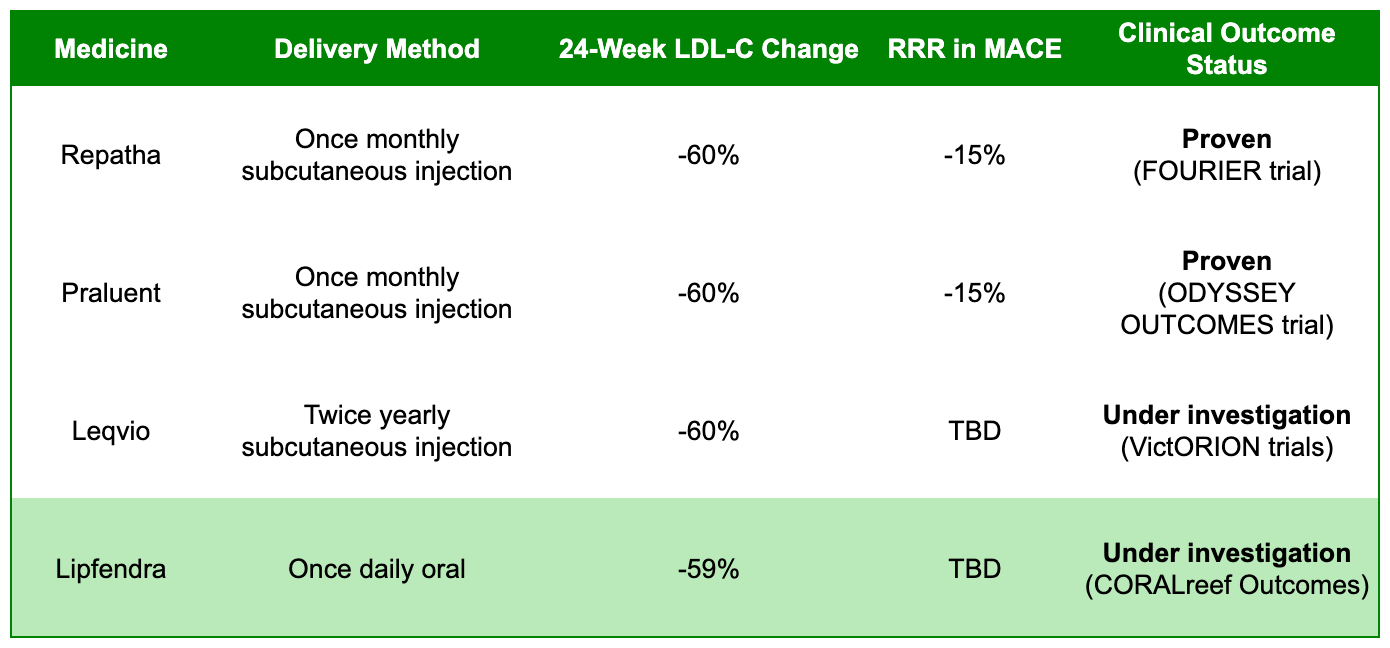
PCSK9 was historically considered an intractable, flat protein–protein interaction (PPI) surface. For years, it could only be effectively targeted by injectable monoclonal antibodies (such as evolocumab and alirocumab). Merck identified the initial peptide lead using mRNA display technology through a collaboration with Ra Pharmaceuticals and Italian contract research organization IRBM, followed by extensive internal medicinal chemistry and issue-driven fragment-based assembly to optimize its potency and stability.
In Phase 2 trials, Lipfendra demonstrated antibody-like efficacy, reducing LDL-C by up to ~61% in a once-daily pill. Lipfendra’s was supported by two pivotal Phase 3 trials from the CORALreef clinical program. CORALreef Lipids in patients with hypercholesterolemia demonstrated a 56% reduction in LDL-C compared to placebo at week 24 and CORALreef HeFH demonstrated a 59% reduction in LDL-C compared to placebo at week 24. The molecule was voted 2023 Molecule of the Year by the global medicinal chemistry community for proving that synthetic macrocycles could achieve oral delivery against challenging PPI targets.
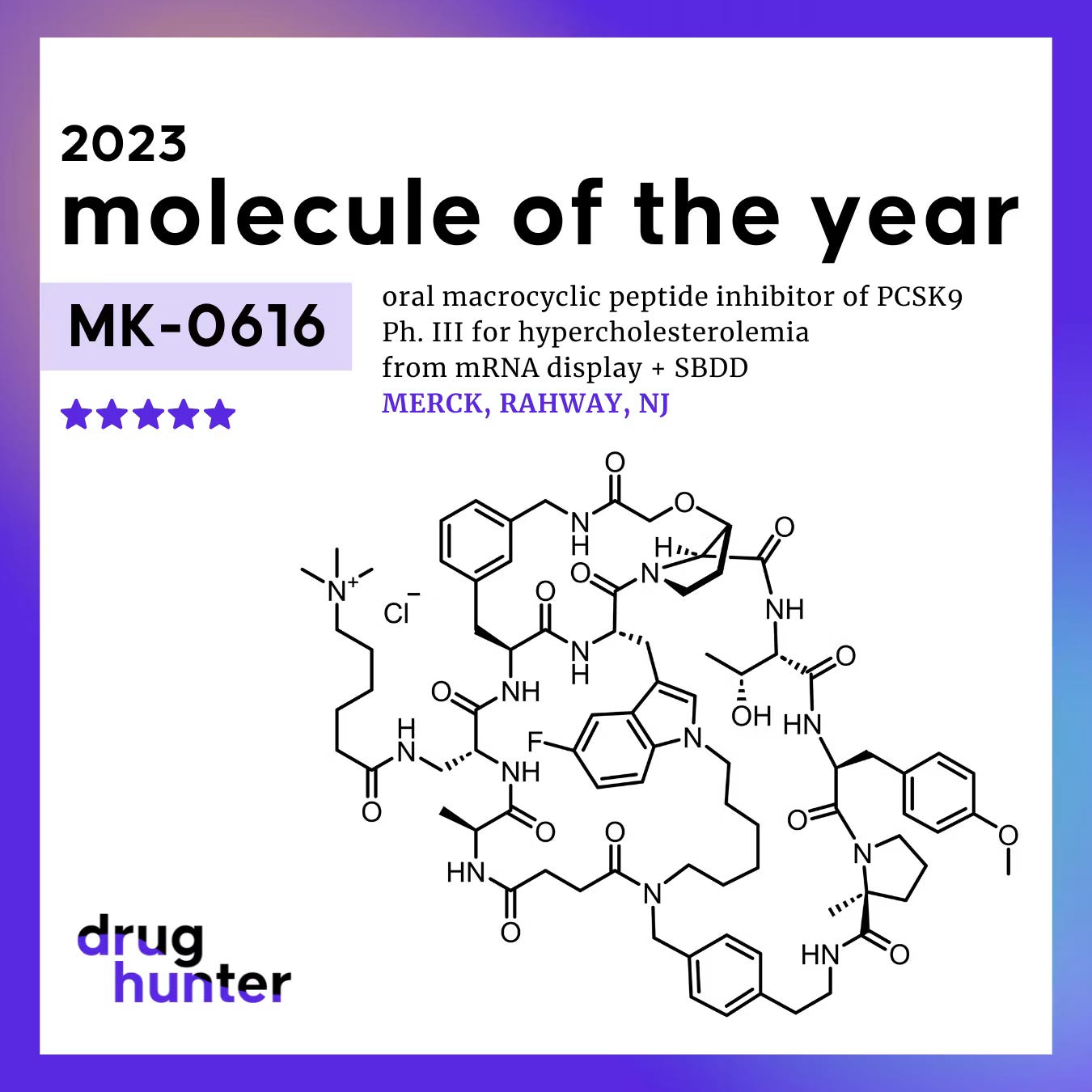
If Merck’s macrocycle medchem was so good, why did it merit a partnership with UNP and a $220 million biobuck payout? Developing a macrocyclic peptide was only half the battle for Merck. Getting a large, rigid compound across the intestinal lining into systemic circulation was notoriously difficult. For molecules like Lipfendra, Merck paired the macrocycle with functional excipients (such as sodium caprate/lipidic permeation enhancers) that temporarily open intestinal tight junctions, allowing the macrocyclic peptide to be absorbed orally. Through investments in structural modeling, artificial intelligence, and partners, Merck has pursued synthetic “chameleon” peptides that dynamically fold their hydrogen-bonding networks to passively diffuse across cell membranes without requiring permeation-enhancing agents. The latter is precisely the technology that UNP had been developing, and “A” players like to work with other “A” players.
Finding a Needle in a Nail-stack
In a 1690 essay by John Locke entitled “An Essay Concerning Human Understanding”, the philosopher noted how men take up the first abstract ideas they encounter and then rigidly judge everything else by them:
“He that hath set his beams only on one sort of men, and consulted but one sort of books, will readily be of this opinion.”
From this quote, arose the old adage that if all you have is a hammer, everything looks like a nail. At its core, the saying means that when people master a specific skill, tool, or way of thinking, they tend to apply it indiscriminately to every problem they encounter, even when it is completely the wrong tool for the job. It suggests that, instead of adapting our approach to fit the unique nature of a new challenge, we ought to force the challenge to fit whatever solution we happen to be comfortable with. Overcoming this bias requires intellectual humility and deliberate friction. Seeking diverse perspectives, multidisciplinary teams, and alternative problem-solving frameworks helps ensure you are matching the right solution to the actual problem.
Perhaps that’s ultimately why UNP linked up with BridgeBio, Merck, Argenyx, and Novartis; to figure out which nails were worth hammering. Now, that hammer passes to Argenyx. Karen Massey, CEO of Argenx, commented, “UNP adds macrocyclic peptide capabilities that are highly complementary to our antibody engineering and creates new possibilities for oral and long-acting medicines. After working together for more than two years, we also know there is a strong fit in how we work: science first, entrepreneurial and focused on patients. We want to preserve what has made UNP successful while bringing the strengths of both teams together.”
This will indeed be one to watch, as Argenyx begins to spin up oral macrocyclic pipeline candidates.
Love biotech? Check out Biotech Readout’s full content library, or navigate directly to a segment that interests you:
Frontiers in Medicine: Exploring the frontiers of our understanding and treatments for disease.
Medical History: Recovering forgotten relics in the history of medicine.
Acquisitions: Exploring the innovation behind acquired companies.
Weekly Readout: A digest of new clinical data from the past week.

To contact us, please send us an email at biotechreadout@gmail.com
Disclaimers
Investigational Status Disclaimer
The therapeutic candidates discussed in this newsletter are currently in clinical development and have not been approved for commercial sale by the U.S. Food and Drug Administration (FDA), the European Medicines Agency (EMA), or other global regulatory authorities. Their safety and efficacy have not been established. References to pipeline products and ongoing clinical trials involve significant risks and uncertainties. Statements regarding the potential safety, potency, or efficacy of investigational drugs reflect current hypotheses and are not a guarantee of future performance or regulatory clearance. The outcome of clinical trials is inherently unpredictable, and clinical results from earlier stages may not be predictive of results in later, larger-scale trials.
No Medical Advice Disclaimer
This newsletter is for informational and educational purposes only. The content is not intended to be a substitute for professional medical advice, diagnosis, or treatment. Always seek the advice of your physician or another qualified health provider with any questions you may have regarding a medical condition. Never disregard professional medical advice or delay in seeking it because of something you have read in this publication.
No Patient-Provider Relationship Disclaimer
The information provided in this newsletter is for educational and analytical purposes only. Receipt of this information, or any interaction with this content, does not create a physician-patient, pharmacist-patient, or any other professional-provider relationship between you and the authors or publishers. This newsletter should not be used as a substitute for a personal consultation with a qualified healthcare professional.
Forward-Looking Statements Disclaimer
This newsletter contains “forward-looking statements” regarding future events, including clinical trial timing, regulatory milestones, and projected market performance. These statements are based on current expectations and assumptions that are subject to significant risks and uncertainties. Actual results may differ materially from those expressed or implied. We undertake no obligation to update these statements as a result of new information or future developments.
Third-Party Links & Content Disclaimer
This newsletter contains links to third-party websites, including clinical trial registries and corporate presentations. Biotech Readout does not endorse, guarantee, or assume responsibility for the accuracy or reliability of any information offered by third-party providers.
Errors and Omissions Disclaimer
While we strive for technical accuracy, the information in this newsletter is provided on an “as is” basis with no guarantees of completeness, accuracy, or timeliness. Biotech Readout assumes no liability for any errors or omissions in the content of this publication.
Non-Endorsement Disclaimer
Any reference to specific commercial products, processes, or services by trade name, trademark, or manufacturer does not constitute or imply an endorsement or recommendation by the author. All trademarks are the property of their respective owners.
No Investment Advice Disclaimer
This newsletter is for informational purposes only and does not constitute financial, investment, or legal advice. The author is not a registered investment advisor. You should consult with a professional financial advisor before making any investment decisions. The biotechnology sector is highly volatile; past performance is not indicative of future results.
Conflict of Interest Disclaimer
The author of this newsletter maintains a position of independence, with the exception of holding a direct equity position in BridgeBio Pharma (NASDAQ:BBIO). At the time of publication, the author holds no direct financial interest, equity, or options in any other specific companies mentioned in this report. No compensation has been received from any third party to feature or analyze specific therapeutic candidates or corporate entities.