

Disclaimer: This newsletter is for educational and informational purposes only and does not constitute medical, investment, or financial advice, nor does it establish a provider-patient relationship. Content may include forward-looking statements and discussions of investigational therapeutic candidates that are not FDA/EMA approved; their safety and efficacy remain unestablished and clinical outcomes are unpredictable. While we strive for accuracy, all information is provided as is without guarantees. As of the date of publication, the author holds no direct equity positions in the specific companies mentioned in this issue nor receives third-party compensation for this coverage. Please find a complete version of our disclaimers linked here.

If you are a paid subscriber, go to myelofibrosis competitive landscape here ⬇️
If you are a free reader or subscriber, enjoy the whole article free of charge and consider upgrading for competitive landscapes of disease areas & therapeutics modalities; view samples here.
Introduction
On November 16, 2026, Calytrix Bio, Inc. announced a definitive agreement to be acquired by Eli Lilly and Company for up to $1.5 billion in cash, inclusive of an upfront payment and subsequent payments upon the achievement of certain clinical and regulatory milestones. This acquisition centers on an investigational biparatopic antibody for mutant calreticulin (mCALR)-driven essential thrombocythemia (ET) and myelofibrosis (MF).
In this article, we elaborate on Lilly’s interest in myelofibrosis and dive into the corporate history of Calytrix Bio.
CALR ID
Before we get to Calytrix Bio, I want to call attention to another acquisition from earlier this year, which we covered here:
On April 27, 2026, Eli Lilly and Company announced a definitive agreement to acquire Ajax Therapeutics for up to $2.3 billion in cash, inclusive of an upfront payment and subsequent payments upon the achievement of certain clinical and regulatory milestones. This acquisition centers on Ajax’s lead program AJ1-11095, a small molecule JAK2 inhibitor currently in a Phase 1 clinical trial called AJX-101 (NCT06343805).
[…]
Myeloproliferative neoplasms (MPNs) like myelofibrosis (MF) and polycythemia vera (PV) already constitute a blockbuster indication space, representing an aggregate revenue run rate of more than $6.6 billion per year and growing 13% year over year as of 4Q 2025 according to quarterly press releases associated with Jakafi/Jakavi, Ojjaara/Omjjara, Vonjo, and Inrebic*. Despite this [multi-billion dollar opportunity], the competitive field is relatively sparse compared to other indication spaces with 4 approved medicines and 9 in clinical development.
That last sentence struck me, both when I wrote it back in April and when I re-visited it this morning. Even with the blockbuster success of Incyte’s JAK inhibitor franchise, why is there such little R&D in this multi-billion dollar indication space with known disease drivers? Perhaps, Eli Lilly is asking the same question, while taking a flier on these two companies.
Another detail: Ajax’s next-generation JAK2 inhibitor would be complementary to Calytrix’s anti-mCALR mAb approach. In that same Lilly-Ajax article, we discussed how JAK2 was identified as a driver mutation for myelofibrosis (MF), polycythemia vera (PV), essential thrombocythemia (ET). More systematic sequencing-based approaches subsequently identified CALR mutations as accounting for the majority (70-84%) of patients with non-JAK2-mutated myeloproliferative neoplasms (MPNs):
The 2008 WHO update also took the wild west of clinical diagnosis and turned it into a rigorous checklist. To be diagnosed with an MPN like PV, a patient now had to meet specific Major and Minor criteria, heavily weighted toward molecular testing. For the first time, testing for the JAK2V617F mutation (or similar markers) became a Major Criterion.
[…]
Five years later in 2013, researchers uncovered a third driver mutation of MPNs. At the time, roughly 30% of MF and ET patients lacked JAK2 or MPL mutations, suggesting that another identified factor was a play. Two teams, led by Robert Kralovics (Vienna) and Tony Green (Cambridge), used Whole Exome Sequencing to scan the entire genetic code of JAK2-negative patients and identified mutations in Calreticulin (CALR). They published their results simultaneously in NEJM (Nangalia et al. NEJM, Klampfl et al. NEJM). CALR normally lives inside the cell (endoplasmic reticulum) helping proteins fold. However, the mutated CALR develops a pathological attraction to the MPL receptor. It binds to MPL inside the cell and escorts it to the surface, holding it in an active position. They identified CALR mutations in 70-84% of patients with non-mutated JAK2 and indicated that these mutations occur early in the disease’s clonal evolution. Beyond identifying the mutation, they highlighted that patients with CALR mutations had a lower risk of thrombosis and better overall survival compared to those with JAK2 mutations.
The prevalence of the three driver mutations (JAK2, MPL, CALR) varies significantly depending on which specific myeloproliferative neoplasm (MPN) is being discussed. Essentially, these mutations are mutually exclusive (a patient rarely has more than one), and together they account for approximately 90% of all classical MPN cases.
[…]
You will notice that CALR and MPL mutations are essentially non-existent in PV. They are almost exclusively found in ET and MF, where the primary problem is platelet overproduction or marrow scarring rather than red cell excess.

Calytrix takes Lilly into that complementary CALR-mutated patient population in myelofibrosis (MF) and essential thrombocythemia (ET).
Antibodies from Down Under
Lilly’s acquisition of Ajax was a deep pull that in-housed expert work from Dr. Ross Levine at Memorial Sloan Kettering and Calytrix continues that trend of pursuing excellence. Calytrix Bio’s core therapeutic concept stems from research led by Professor Daniel Thomas, a clinical hematologist, Program Director for Blood Cancers at the South Australian Health and Medical Research Institute (SAHMRI) and Royal Adelaide Hospital, and researcher at Adelaide University (with prior postdoctoral training at Stanford University). Professor Daniel Thomas serves as Calytrix Bio’s scientific founder. Given that the company has largely operated in stealth, there isn’t a whole lot of information out there, but there are breadcrumbs.
In December 2021 and December 2022, Australian researchers filed foundational patent applications (“Antibodies to mutant calreticulin and uses thereof”, PCT/AU2022/051491) originally held by the Central Adelaide Local Health Network, the University of South Australia, and the University of Adelaide. Their research, later published in Blood in April 2026, demonstrated in preclinical experiments that targeting two distinct epitopes on mutant calreticulin (mCALR) could inhibit cell proliferation across the major MPN driver mutations (Type 1 and Type 2 CALR). They showed that using two monoclonal antibodies (4D7 and 9H11) that bind to distinct amino acid epitopes on the mutant CALR C-terminus is significantly more effective than single-antibody therapy at eradicating disease-driving megakaryocyte progenitors and blocking oncogenic JAK/STAT signaling (STAT5 and ERK phosphorylation). Different CALR mutation classes respond differently to the targeted antibodies, potentially requireing ultraprecision disease stratification based on CALR mutation subtype. Notably, Calytrix is pursuing an antibody with “pan-mutant activity”, which could reduce diagnostic friction if their candidate eventually passes FDA muster.
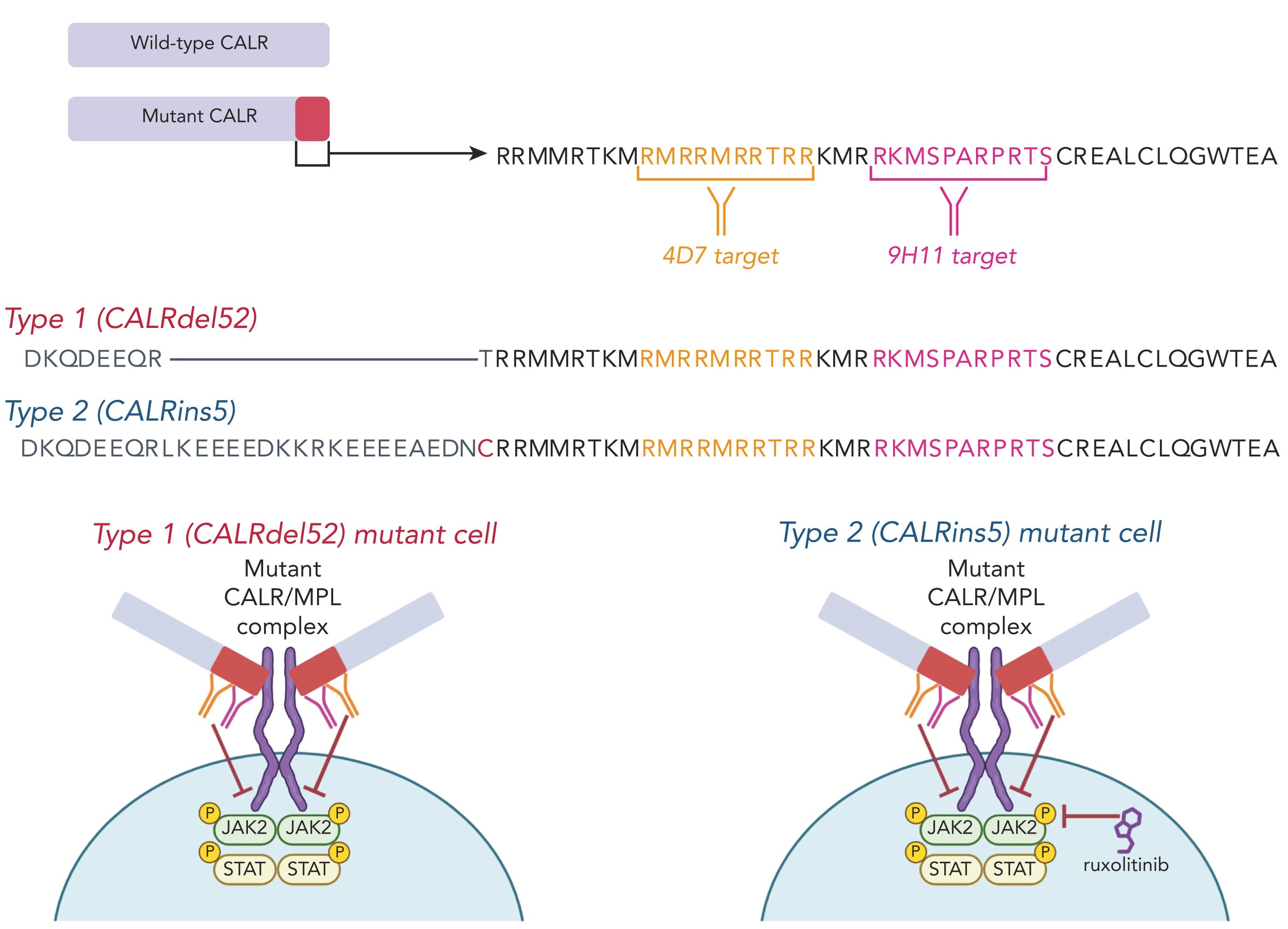
Calytrix Bio was founded in 2025 by J.P. Morgan Life Sciences Private Capital, the life sciences venture capital arm of J.P. Morgan Asset Management. Brad Prosek joined as President and CEO, bringing prior MPN and dealmaking experience as the former CBO of Constellation Pharmaceuticals (which advanced the myelofibrosis drug pelabresib before being acquired by MorphoSys for $1.7 billion in 2021) and earlier corporate development leadership at Cubist Pharmaceuticals. Katarina Luptakova, M.D. (formerly CMO of Xilio Therapeutics) joined as CMO in early October 2026, according to Endpoints.
While keeping a low profile, Calytrix completed two formerly undisclosed venture rounds: a Series A co-led by founding investor J.P. Morgan Life Sciences Private Capital and Westlake BioPartners and a Series B led by Avoro Ventures. After engineering a lead preclinical candidate, a novel biparatopic antibody designed to bind two separate sites on cell-surface mutant calreticulin to deliver pan-mutant activity against both Type 1 and Type 2 mCALR, the company built an international scientific advisory board of prominent MPN clinicians and researchers (spanning Adelaide, Memorial Sloan Kettering, Johns Hopkins, Stanford, and the Sanger Institute) and expanded corporate registrations (registering in Pennsylvania in March 2026). On June 4, 2026, the Australian mutant-CALR antibody patent application (AU2022416990A1) was formally assigned to Calytrix Bio, Inc. By late 2026, the company had brought its lead biparatopic antibody program to the cusp of clinical testing, with plans for a Phase 1 trial in Australia targeted for the first half of 2027.
Early Incytes
While Calytrix has yet to start clinical trials, Incyte’s anti-mCALR antibody INCA033989 have shown some early Phase 1 signals. At European Hematology Association (EHA) 2026 in mid-June, Incyte presented clinical data from two ongoing Phase 1 studies (INCA33989-101 and INCA33989-102, evaluating IV doses from 24 mg to 3500 mg every two weeks).
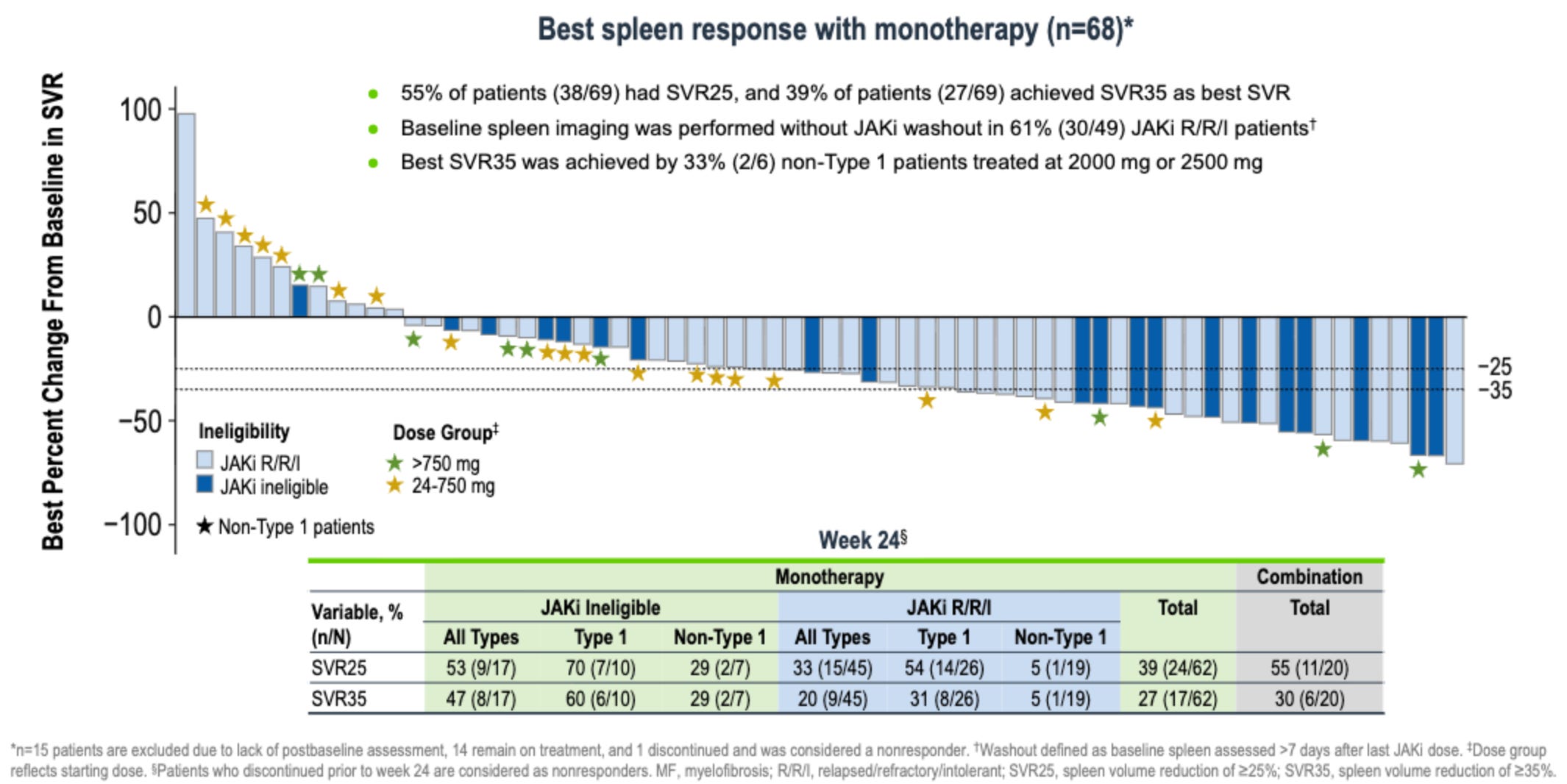
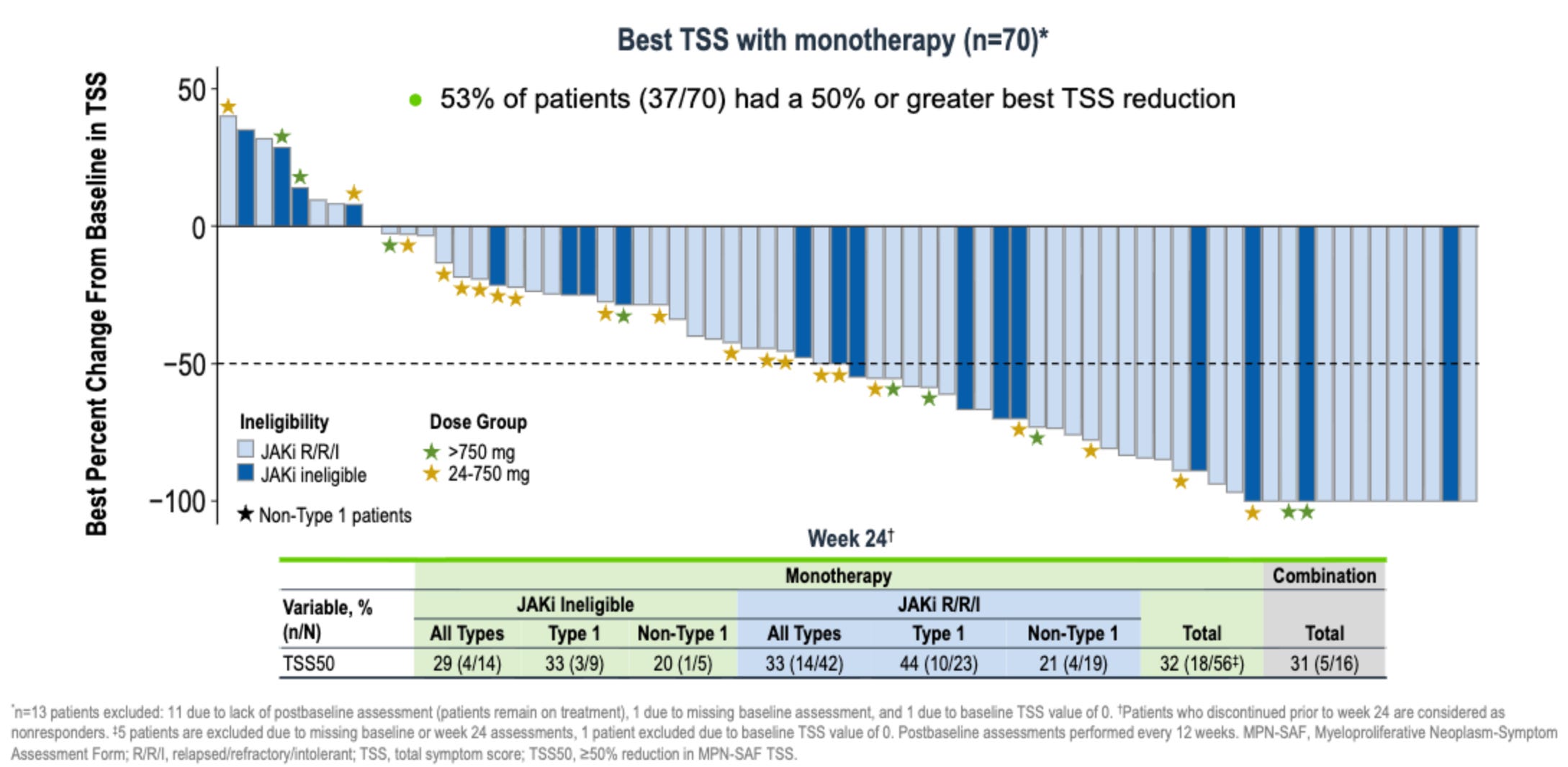
In 83 evaluable patients with JAK-resistant/refractory/intolerant myelofibrosis (Type 1 and non-Type 1 mutCALR), 55% of patients (38/69) had Spleen Volume Reductions of at least 25% (SVR25), and 39% of patients (27/69) achieved SVR35 as best SVR. At Week 24, 27% (17/62) overall achieved SVR35, comprising 47% (8/17) of JAK-ineligible patients and 20% (9/45) of JAK R/R/I patients. In JAK-ineligible patients, 60% (6/10) of Type 1 and 29% (2/7) of non-Type 1 responded. In JAK R/R/I patients, 31% (8/26) of Type 1 responded across doses, while non-Type 1 required the highest evaluated dose (2500 mg) to reach 33% (1/3). Overall, 53% achieved a best total symptom score reduction of ≥50% (TSS50) and 32% maintained TSS50 at Week 24. Furthermore, 60% of evaluable anemic patients achieved an anemia response, including 52% with a major anemia response (63% in JAK R/R/I; 55% in JAK-ineligible). In MF patients with a suboptimal response to ruxolitinib, adding INCA033989 yielded 30% SVR35 and 31% TSS50 at Week 24.
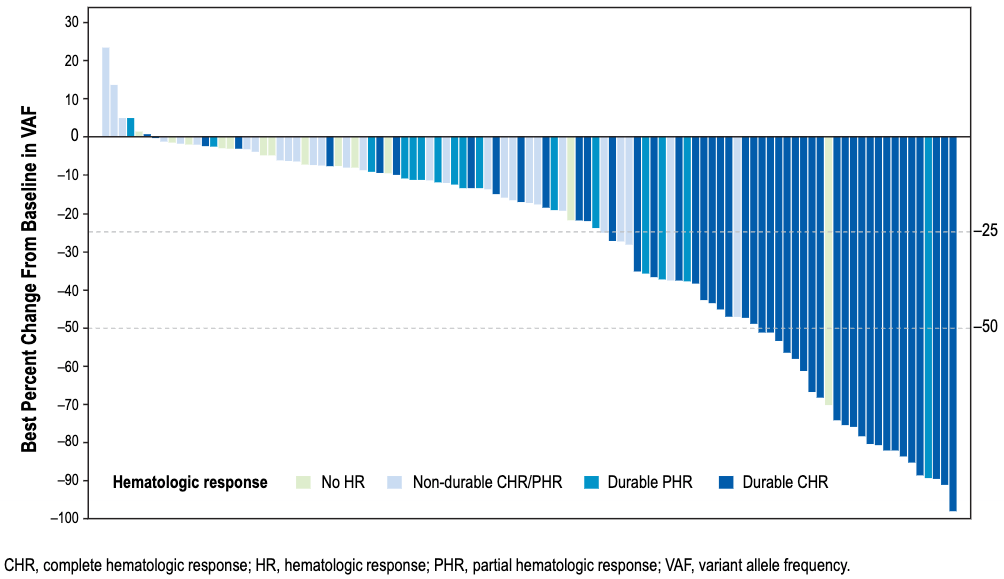
Responses were also observed in 110 evaluable patients with high-risk Essential Thrombocythemia (ET) who were resistant or intolerant to prior cytoreductive therapy (46% Type 1, 36% Type 2, 17% other mutCALR). Across all doses, 70% (80/114) patients had a complete hematologic response (CHR) and 87% (99/114) had a CHR/PHR. Durable hematologic response was seen in most patients with Type 1 mutCALR at ≥750 mg (CHR, 81%; 21/26), and in non–Type 1 mutCALR at 2500 mg (CHR/PHR, 50%; 3/6).
Incyte initiated the pivotal Phase 3 EXCALIBUR-ET2 trial (comparing INCA033989 vs. best available therapy in high-risk mutCALR ET across all mutation subtypes), with new Phase 1 JAK-naive MF and ET oral presentations scheduled for ASH 2026 in December.
Conclusion
Eli Lilly’s $1.5 billion bid for Calytrix Bio, hot on the heels of its $2.3 billion acquisition of Ajax Therapeutics, targets a fairly well-understood but under-developed corner of hematology. Between Type II JAK2 inhibition and anti-mCALR antibodies, Lilly is assembling complementary tools for a multi-billion-dollar myeloproliferative neoplasm (MPNs) market that has historically seen surprisingly little pipeline innovation. It’s unclear whether Calytrix’s preclinical biparatopic candidate proves out as a true pan-mutant therapy or runs into the subtype nuances flagged by dual-epitope work until we start to see early Phase 1 results. In the meantime, Incyte’s INCA033989 has generated early clinical validation in two Phase 1 trials and given Lilly plenty of reason to move quickly before the field gets crowded. Nevertheless, Incyte currently has the top selling myelofibrosis drug in JAK1/2 inhibitor Jakafi (ruxolitinib), so the onus is on Lilly to compete for the coveted titles of first- or best-in-class.
Myelofibrosis Competitive Landscape
All charts reflect data current as of the specified date and may not include every drug development program, although we aimed to capture the vast majority. Please feel free to email me at biotechreadout@gmail.com with “CHARTS” in the subject line to share suggestions or request chart updates.
Press ⬇️ to navigate to a section
