

Disclaimer: This newsletter is for educational and informational purposes only and does not constitute medical, investment, or financial advice, nor does it establish a provider-patient relationship. Content may include forward-looking statements and discussions of investigational therapeutic candidates that are not FDA/EMA approved; their safety and efficacy remain unestablished and clinical outcomes are unpredictable. While we strive for accuracy, all information is provided as is without guarantees. As of the date of publication, the author holds no direct equity positions in the specific companies mentioned in this issue nor receives third-party compensation for this coverage. Please find a complete version of our disclaimers at the bottom of the article and linked here.

Introduction
On August 31, 2026, Eli Lilly and Company announced a definitive agreement to acquire Merida Biosciences, Inc. for up to $2.875 billion in cash, inclusive of an upfront payment, and contingent milestone payments (Eli Lilly press release, Merida press release). This acquisition centers on three investigational drugs:
MER511 (anti-TSHR autoAb degrader for Graves’ disease & TED): This molecule is designed to selectively bind pathogenic thyroid-stimulating hormone receptor autoantibodies (anti-TSHR autoAbs) in Graves’ disease and Thyroid Eye Disease (TED). It aims to mediate rapid clearance/lysosomal degradation of these autoantibodies and their autoreactive B-cell sources, while sparing baseline TSH signaling and general immunoglobulin levels. MER511 is currently being evaluated in the NEXUS Phase 1 trial.
MER683 (anti-PLA2R autoAb degrader for pMN): This molecule is designed to bind and clear anti-phospholipase A2 receptor autoantibodies (anti-PLA2R autoAb) in Primary Membranous Nephropathy (pMN). By driving rapid clearance of circulating anti-PLA2R IgGs, it aims to address the driver of glomerular damage without requiring cytotoxic alkylating agents (e.g., cyclophosphamide) or broad B-cell depletion. MER683 is in IND-enabling studies at the time of publication.
MER769 (IgE degrader for food allergy, asthma, CSU): This is an engineered biotherapeutic designed to bind, neutralize, and clear circulating IgE antibodies via targeted degradation pathways in severe food allergy, asthma, and chronic spontaneous urticaria (CSU). Merida has engineered this molecule with the goal of achieving deeper depletion of elevated IgE titers than traditional monoclonal antibodies (e.g., anti-IgE IgGs like omalizumab), potentially allowing for less frequent dosing and greater durability. MER769 is in IND-enabling studies at the time of publication.
In this article, we unpack the autoantibody-based autoimmune diseases that Merida is pursuing and dive into the corporate history of Merida leading to its acquisition.
Antibody Rebellion
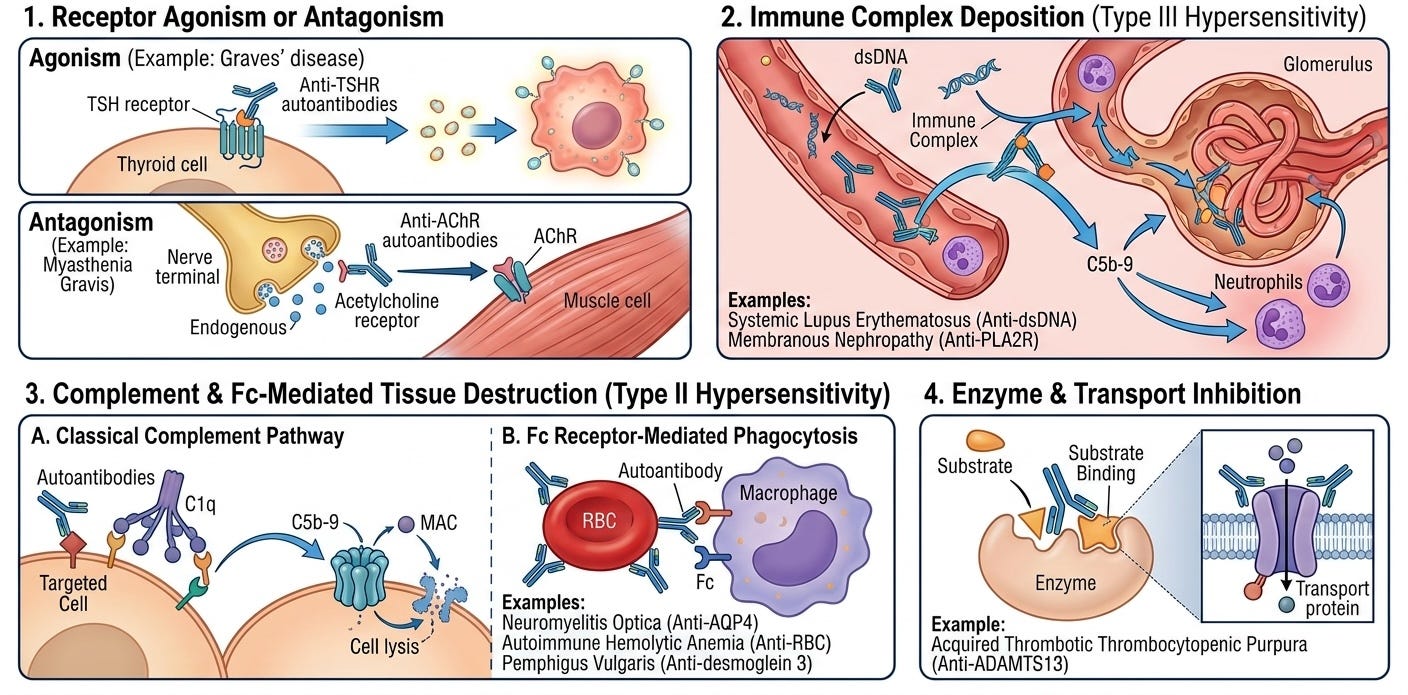
Merida Biosciences was purpose-built to combat autoantibody-based autoimmune diseases, a bucket of diseases that occur when the immune system loses self-tolerance, leading B cells to produce immunoglobulins (IgG, IgM, or IgA) directed against host tissues. These conditions are directly driven by pathognomonic self-reactive antibodies circulating in the blood. Autoantibodies cause pathology through four main mechanisms:
Receptor Agonism or Antagonism: Autoantibodies bind to cell-surface receptors, either inappropriately activating them (anti-TSHR autoAbs in Graves’ disease) or blocking endogenous ligands (anti-AChR autoAbs in myasthenia gravis).
Immune Complex Deposition (Type III Hypersensitivity): Circulating autoantibodies bind soluble self-antigens, forming immune complexes that deposit in small blood vessels, glomeruli, or joints, activating complement and recruiting neutrophils. Examples include Lupus Erythematosus (anti-dsDNA, anti-Sm autoAbs) and Primary Membranous Nephropathy (anti-PLA2R autoAbs).
Complement & Fc-Mediated Tissue Destruction (Type II Hypersensitivity): Autoantibodies target surface antigens on specific cell types or basal membranes, triggering the Classical Complement Pathway (C1q to MAC/C5b-9 assembly) or Fc receptor-mediated phagocytosis. Examples include Neuromyelitis Optica Spectrum Disorder (anti-AQP4 autoAbs), Autoimmune Hemolytic Anemia (anti-RBC autoAbs), and Pemphigus Vulgaris (anti-desmoglein 3 autoAbs).
Enzyme & Transport Inhibition: Autoantibodies bind directly to active catalytic sites or transport proteins, disrupting metabolic processing. An example is Acquired Thrombotic Thrombocytopenic Purpura (anti-ADAMTS13).
Merida developed programs against two such autoantibodies: anti-TSHR autoAbs and anti-PLA2R autoAbs. First, we’ll discuss anti-TSHR autoAbs, receptor-modulating antibodies that damage the thyroid and eyes. The thyroid-stimulating hormone receptor (TSHR) is a G-protein–coupled receptor expressed primarily on thyroid follicular cells (thyrocytes) and orbital fibroblasts. Anti-TSHR autoantibodies act directly on this receptor to disrupt standard physiological feedback loops, either acting as competitive inhibitors of TSHR (leading to hypothyroidism), neutral antibodies (don’t alter receptor activity but trigger/block downstream cascades), or full TSHR agonists (called Thyroid-Stimulating Immunoglobulins or TSIs).
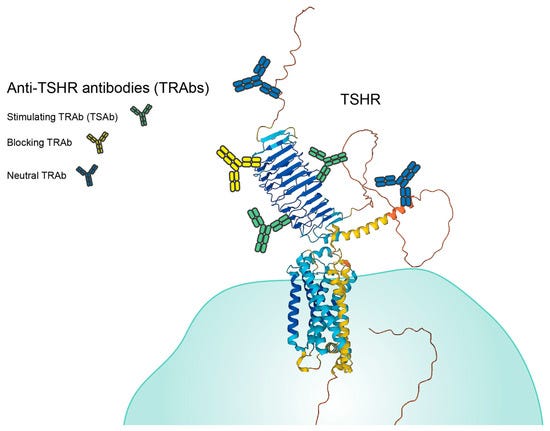
TSHR-activating Thyroid-Stimulating Immunoglobulins (TSI) titers correlate directly with disease activity in Graves’ disease and clinical activity scores (CAS) in Thyroid Eye Disease (TED), the lead indications of MER511. High TSI levels at the end of antithyroid drug therapy strongly predict relapse. These autoAbs bind the leucine-rich repeat extracellular domain of TSHR. They cause the most damage to two different organ systems:
In the thyroid gland, TSIs bind TSHR, activating the Gαs adenylyl cyclase/cAMP and phospholipase C pathways. This causes continuous, non-regulated synthesis and secretion of thyroid hormones (T3 and T4), hypertrophy of thyrocytes, and diffuse goiter (swells in the neck), driving hyperthyroidism in Graves’ disease. According to Eli Lilly, Graves’ disease affects approximately 3 million people in the U.S. and patients face elevated cardiovascular risk and mortality.
In the eye, TSHR is co-expressed with the Insulin-like Growth Factor 1 Receptor (IGF-1R) on orbital fibroblasts. TSI binding stimulates these fibroblasts to proliferate, differentiate into pre-adipocytes, and produce high levels of hydrophilic glycosaminoglycans (mainly hyaluronic acid). The resulting osmotic swelling causes muscle and tissue expansion, leading to bulging eyes (proptosis), double vision (diplopia), and orbital inflammation. According to Eli Lilly, roughly 25-40% of people with Graves’ disease go on to develop TED, which can cause pain, disfigurement, and in severe cases, vision loss.
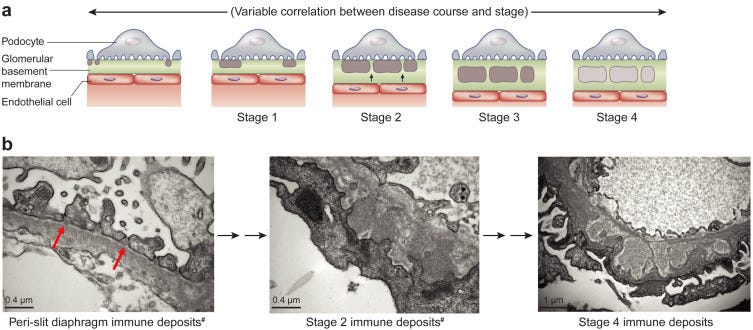
Separately, anti-PLA2R autoAbs result in kidney damage due to immune complex formation, rather than altering receptor activity. The M-type phospholipase A2 receptor (PLA2R) is a transmembrane glycoprotein abundantly expressed on the surface of specialized kidney cells called podocytes. Autoantibodies against PLA2R account for approximately 70-80% of all cases of Primary Membranous Nephropathy (pMN), resulting in destruction of the kidney filter and harmful loss of important electrolytes and functional proteins in the urine. Autoantibodies tend to initially target an N-terminal, cysteine-rich domain (CysR) on PLA2R. Over time, intramolecular epitope spreading to downstream C-type lectin domains (CTLD1, CTLD7, CTLD8) can occur, which correlates with worse clinical outcomes and reduced treatment responsiveness. Anti-PLA2R serum levels track disease activity, with rising titers preceding clinical relapses of proteinuria (unusual presence of protein in the urine) and declining titers signaling immunological remission prior to functional kidney recovery. High levels (≥20 RU/mL via ELISA) can establish a diagnosis of pMN without requiring an invasive renal biopsy. Significant proteinuria (>3.5 g/24h) and nephrotic syndrome become clinically apparent only after extensive structural breakdown of the filtration barrier has occurred, which explains the months- to years-long gap between detectable anti-PLA2R autoAbs and noticable kidney damage.
The third antibody that Merida went after isn’t an autoantibody, but an antibody that is present at low levels in healthy persons and is dangerously elevated in allergic reactions. Immunoglobulin E (IgE) is the key mediator of Type I hypersensitivity allergic reactions. Its high-affinity interactions with effector cells trigger acute allergic cascades, ranging from localized rhinitis and urticaria to potentially life-threatening systemic anaphylaxis. MER769’s anti-IgE therapeutic strategy aims to neutralize or eliminate circulating IgE to interrupt the allergic cascade before it can trigger mast cell and basophil activation in allergic reactions. By targeting IgE directly rather than inhibiting downstream mediators (like histamine or leukotriene receptor antagonists), this approach aims to provide broad suppression across multiple allergic indications, including severe asthma, chronic spontaneous urticaria (CSU), and food allergies.
Capturing Rebels
The line “Rebel scum!” is one of the most famous quotes from Star Wars: Episode VI - Return of the Jedi (1983). After Han Solo, Princess Leia, and their strike team get ambushed outside the shield generator bunker on the Forest Moon of Endor, the Imperial officer steps out, points a blaster at Han, and delivers the iconic line. The phrase has become a favorite among fans and has been referenced across games, novels, and shows throughout the Star Wars franchise. This comically over-the-top quote also encapsulates Merida’s strategy for suppressing the antibody rebellion in autoimmune disease.

Merida’s founding thesis was to treat autoimmune diseases by laying traps for the rebellious antibodies that caused them. The company engineered Fc-fused protein antigens that look like the targets of autoAbs. Instead of attacking normal receptors, autoantibodies bind these decoys, sending them and their corresponding autoreactive B cells to an early grave via liver endosomal/lysosomal pathways.
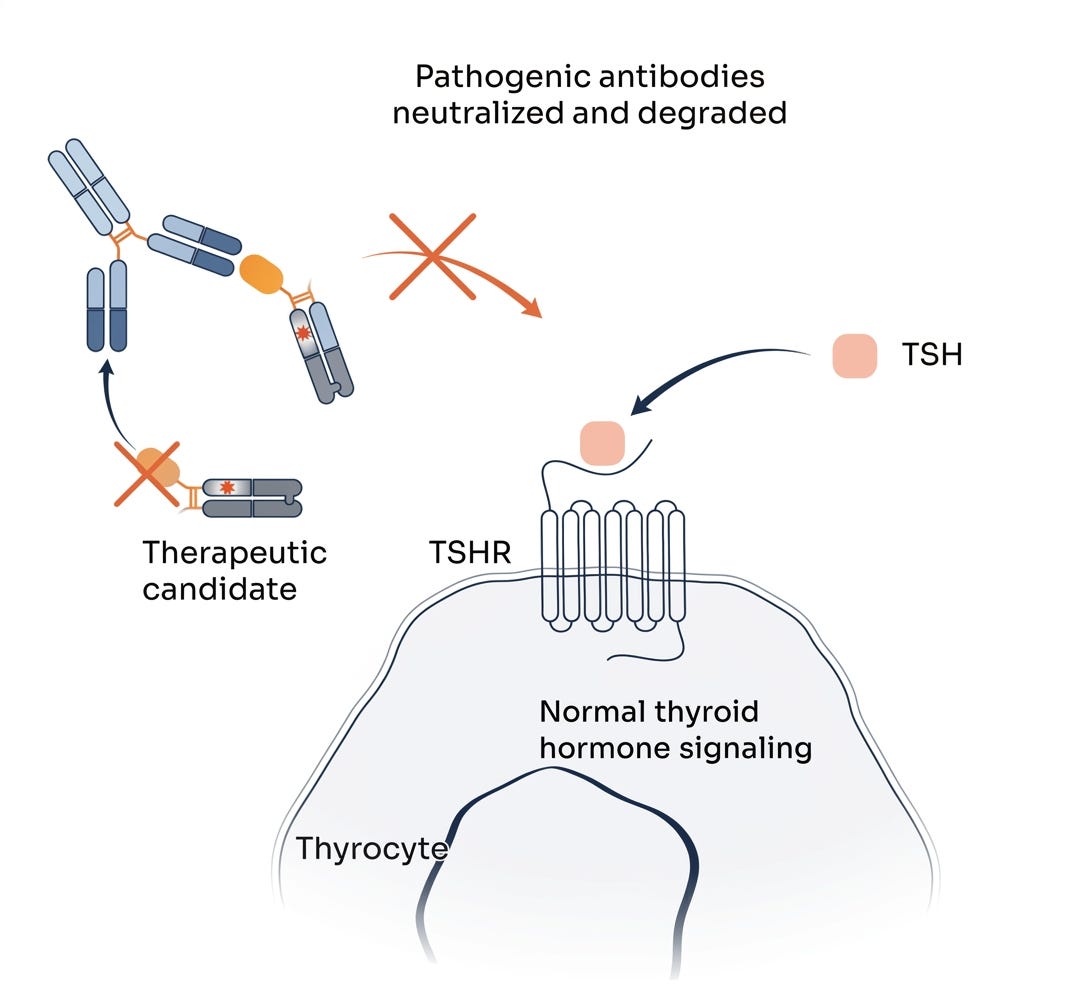
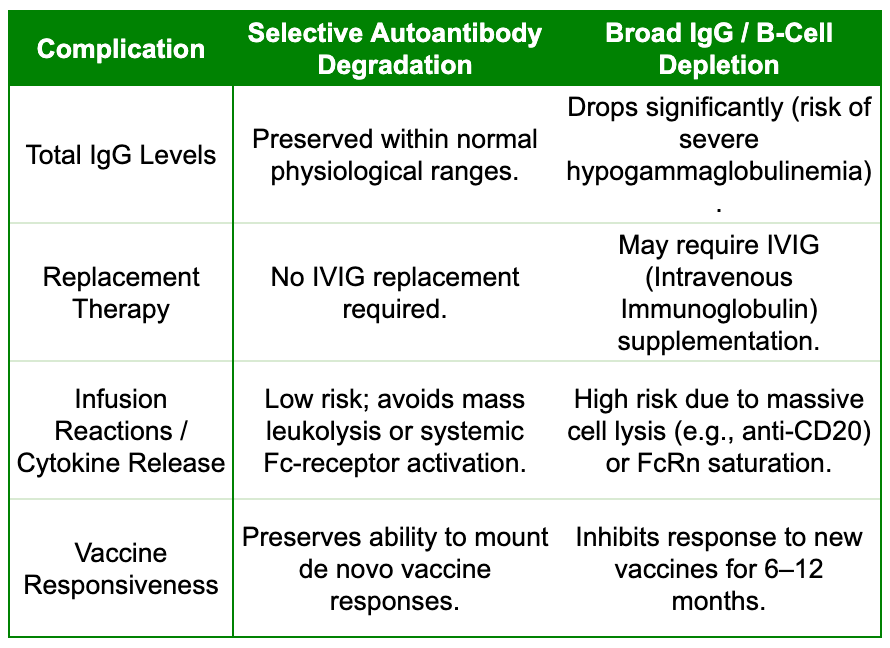
By directly eliminating rebel antibodies rather than relying on systemic immunosuppression or FcRn-mediated pan-IgG depletion, Merida’s pipeline aims for high selectivity and preserved baseline immunity. Standard of care methods to broadly suppress the immune system can leave patients immune compromised, meaning vaccines don’t work and mundane bacterial infections can be fatal. However, selective autoantibody degradation has the potential to suppress disease pathogenesis, while leaving the rest of a patient’s immune system intact.
Seeing an opportunity to redefine precision immunology, the venture firm Third Rock Ventures seeded Merida in 2022 in Cambridge, Massachusetts. The founding team, led by Chief Executive Officer Adam Townsend and Chief Scientific Officer Dario Gutierrez, alongside co-founders Dodzie Sogah and Matthew Leoni, set out to build a platform that trapped & degraded rebellious antibodies. Working quietly in stealth across 2023 and 2024, Merida’s scientific team refined its targeted degradation platform and built out an initial pipeline. They zeroed in on three high-impact targets, which we discussed earlier.
In April 2025, Merida emerged from stealth with a $121 million Series A financing round co-led by Third Rock Ventures, Bain Capital Life Sciences, BVF Partners, GV (Google Ventures), and PXV Funds. The capital injection allowed the company to scale operations and transition from a platform-discovery firm into a clinical-stage biotechnology enterprise. Through late 2025 and into 2026, Merida advanced its lead candidate, MER511, into first-in-human clinical testing in the NEXUS trial. Although Merida hasn’t released any clinical data to date, Eli Lilly confirmed that “initial Phase 1 data show MER511 achieved robust reductions in pathogenic thyroid-stimulating antibodies with a favorable initial safety profile.” Eli Lilly cited MER511’s early clinical profile and the broader applicability of Merida’s platform across antibody-driven diseases as key factors in its decision to acquire the company for up to $2.875 billion in cash in late August 2026.
Conclusion
Merida’s journey from a 2022 Third Rock company build to a $2.875 billion acquisition by Eli Lilly highlights the high demand for selective autoantibody clearance over blunt-force immunosuppression. By avoiding the systemic risks of broad immunosuppression and FcRn-driven pan-IgG depletion, Merida’s Fc-fusion degrader platform is designed to offer a highly targeted model for autoantibody and IgE-mediated disease. As MER511 moves further into clinical trials for Graves’ disease and TED, and as MER683 and MER769 advance toward the clinic, we will be on the lookout for additional validation of Merida’s promising strategy.
Love biotech? Check out Biotech Readout’s full content library, or navigate directly to a segment that interests you:
Frontiers in Medicine: Exploring the frontiers of our understanding and treatments for disease.
Medical History: Recovering forgotten relics in the history of medicine.
Acquisitions: Exploring the innovation behind acquired companies.
Weekly Readout: A digest of new clinical data from the past week.

To contact us, please send us an email at biotechreadout@gmail.com
Disclaimers
Investigational Status Disclaimer
The therapeutic candidates discussed in this newsletter are currently in clinical development and have not been approved for commercial sale by the U.S. Food and Drug Administration (FDA), the European Medicines Agency (EMA), or other global regulatory authorities. Their safety and efficacy have not been established. References to pipeline products and ongoing clinical trials involve significant risks and uncertainties. Statements regarding the potential safety, potency, or efficacy of investigational drugs reflect current hypotheses and are not a guarantee of future performance or regulatory clearance. The outcome of clinical trials is inherently unpredictable, and clinical results from earlier stages may not be predictive of results in later, larger-scale trials.
No Medical Advice Disclaimer
This newsletter is for informational and educational purposes only. The content is not intended to be a substitute for professional medical advice, diagnosis, or treatment. Always seek the advice of your physician or another qualified health provider with any questions you may have regarding a medical condition. Never disregard professional medical advice or delay in seeking it because of something you have read in this publication.
No Patient-Provider Relationship Disclaimer
The information provided in this newsletter is for educational and analytical purposes only. Receipt of this information, or any interaction with this content, does not create a physician-patient, pharmacist-patient, or any other professional-provider relationship between you and the authors or publishers. This newsletter should not be used as a substitute for a personal consultation with a qualified healthcare professional.
Forward-Looking Statements Disclaimer
This newsletter contains “forward-looking statements” regarding future events, including clinical trial timing, regulatory milestones, and projected market performance. These statements are based on current expectations and assumptions that are subject to significant risks and uncertainties. Actual results may differ materially from those expressed or implied. We undertake no obligation to update these statements as a result of new information or future developments.
Third-Party Links & Content Disclaimer
This newsletter contains links to third-party websites, including clinical trial registries and corporate presentations. Biotech Readout does not endorse, guarantee, or assume responsibility for the accuracy or reliability of any information offered by third-party providers.
Errors and Omissions Disclaimer
While we strive for technical accuracy, the information in this newsletter is provided on an “as is” basis with no guarantees of completeness, accuracy, or timeliness. Biotech Readout assumes no liability for any errors or omissions in the content of this publication.
Non-Endorsement Disclaimer
Any reference to specific commercial products, processes, or services by trade name, trademark, or manufacturer does not constitute or imply an endorsement or recommendation by the author. All trademarks are the property of their respective owners.
No Investment Advice Disclaimer
This newsletter is for informational purposes only and does not constitute financial, investment, or legal advice. The author is not a registered investment advisor. You should consult with a professional financial advisor before making any investment decisions. The biotechnology sector is highly volatile; past performance is not indicative of future results.
Conflict of Interest Disclaimer
The author of this newsletter maintains a position of independence. At the time of publication, the author holds no direct financial interest, equity, or options in any of the companies mentioned in this report. No compensation has been received from any third party to feature or analyze specific therapeutic candidates or corporate entities.