Disclaimer: This newsletter is for educational and informational purposes only and does not constitute medical, investment, or financial advice, nor does it establish a provider-patient relationship. Content may include forward-looking statements and discussions of investigational therapeutic candidates that are not FDA/EMA approved; their safety and efficacy remain unestablished and clinical outcomes are unpredictable. While we strive for accuracy, all information is provided as is without guarantees. As of the date of publication, the author holds no direct equity positions in the specific companies mentioned in this issue nor receives third-party compensation for this coverage. Please find a complete version of our disclaimers at the bottom of this article and linked here.
Introduction
On October 5, 2026, Shionogi & Co., Ltd. announced that its Board of Directors approved Shionogi entering into an agreement to acquire IntraBio Inc. for an upfront consideration of $2 billion (Shionogi press release). This acquisition centers on Aqneursa (levacetylleucine), an orally administered chemically modified enantiomer of the essential amino acid leucine that is currently approved to treat symptoms of two rare diseases:
Neurological manifestations of Niemann-Pick disease type C (NPC) in adults and pediatric patients weighting ≥15 kg.
Ataxia in adults and padiatric patients with ataxia-telangiectasia (A-T) weighing ≥15 kg. We covered this approval ~1.5 weeks ago in Weekly Readout #24.
In this article, we uncover the story of how three professors from the University of Munich and University of Oxford teamed up with serial entrepreneur Mallory Factor to repurpose a mid-20th Century vertigo drug for rare neurological diseases.
Magic Mirrors
For readers who either forgot or memory-holed their organic chemistry, an enantiomer is one of two stereoisomers of a molecule that are non-superimposable mirror images of each other, much like a pair of human hands. Although a left hand and a right hand have identical parts connected in the same structural order, no amount of rotation can align them perfectly on top of one another (see graphics below). Enantiomers possess nearly identical physical and chemical properties (melting point, boiling point, density, solubility), but chemists can tell them apart because they rotate plane-polarized light in opposite directions. For biologists, therapeutic targets such as enzymes, receptors, and cell transporters are themselves chiral structures so two enantiomers of a molecule interact with them in different ways. A 50/50 mixture of both enantiomers is called a racemic mixture (or racemate), which is optically inactive because the opposing light rotations cancel each other out. For the chemistry-phobic among us, this concludes today’s o-chem primer and we shall now proceed with the riveting story of IntraBio.
Hands are chiral because they are mirror images, but do not overlap when you superimpose them; Source: Reddit
Hands are not chiral because they are mirror images, but they do overlap when you superimpose them; Source: Reddit
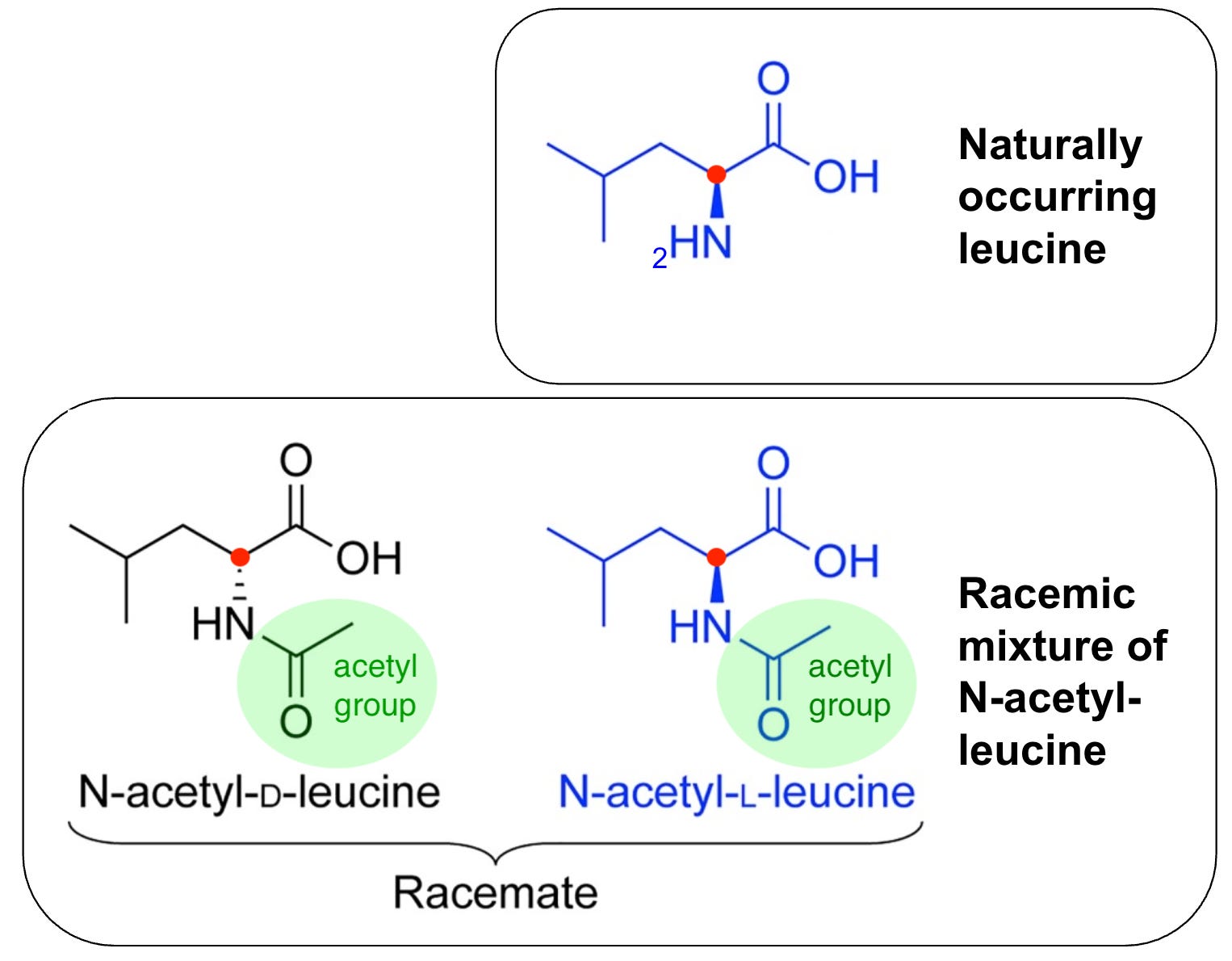
The story begins with Tanganil, a generic, over-the-counter formulation of racemic N-acetyl-DL-leucine that existed in relative obscurity outside of France. In the 1950s, researchers at Laboratoires Pierre Fabre synthesized a chemical derivative of leucine, a branched-chain amino acid that serves as one of 20 fundamental building blocks from proteins in the human body. At the time, the critical role of drug chirality (enantiomeric purity) was not yet fully integrated into clinical pharmacology, so the compound was formulated as a racemic mixture, a 50/50 combination of mirror-image D- and L-isomers. In 1957, French health authorities approved Tanganil for the treatment of acute peripheral vertigo and dizziness. It was supplied as both 500 mg oral tablets and intravenous ampoules, intended for rapid administration in acute, distressing episodes of room-spinning vertigo.
Chemical structures of naturally occurring amino acid L-leucine (top) versus the racemic mixture of N-acetyl-leucine synthesized at Pierre Fabre (bottom), with the chiral center indicated in red
For more than half a century, Tanganil occupied a unique niche in the French healthcare system. It became a household name and standard-of-care baseline in French emergency rooms, ENT clinics, and general practices despite an almost total absence of modern randomized controlled trial (RCT) data or a clear molecular mechanism of action. When patients presented with acute vestibular neuritis (inner ear infection), Meniere’s disease attacks (inner ear disorder), or inner-ear dysfunction, intravenous or high-dose oral Tanganil was routinely administered to dampen the sensation of dizziness. Nevertheless, the medicine was largely restricted to the French domestic market and a few francophone territories because the medicine was grandfathered in before the harmonization of international regulatory standards (such as the FDA or EMA framework). Outside of France, the drug remained virtually unknown to the global medical community for decades.
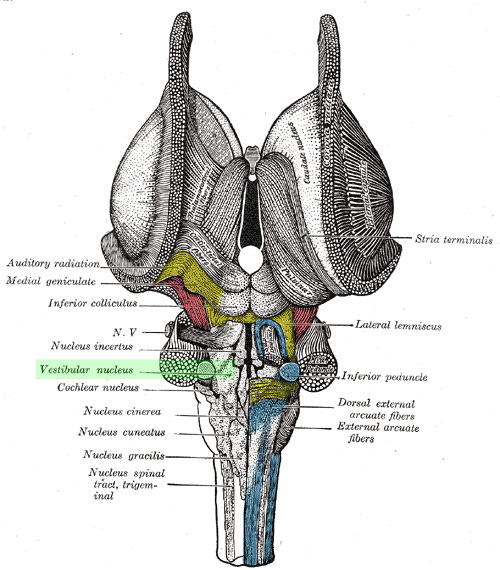
Decades later, scientists started to take a closer look. Animal models in the late 1990s demonstrated that N-acetyl-DL-leucine acted directly on the central vestibular nuclei, a part of the brainstem that process sensory information about balance, motion, and head position to maintain stable vision, posture, and equilibrium. Following acute unilateral loss of inner-ear function (vestibular deafferentation), the vestibular nuclei on opposing sides of the brainstem fall into severe electrical imbalance, triggering vertigo and nystagmus. Researchers discovered that Tanganil accelerated “central vestibular compensation”, acts as a neuro-modulator that restored baseline firing rates in hyperpolarized or de-stabilized vestibular neurons. In hyperpolarized, silent vestibular neurons on the damaged side, N-acetyl-DL-leucine promotes membrane depolarization, restoring spontaneous resting action potential discharge rates. In depolarized, hyper-excitable neurons on the healthy side, the compound acts to tone down excess firing. By raising the floor on the damaged side and lowering the ceiling on the intact side, N-acetyl-DL-leucine rapidly re-establishes electrophysiological symmetry across the bilateral brainstem circuit.
The discovery that N-acetyl-DL-leucine directly modulates central membrane potentials in the brainstem provided the critical theoretical link to cerebellar and degenerative brain disorders. Cerebellar Purkinje cells share similar intrinsic pacemaker dynamics, ion-channel expressions, and electrophysiological properties with brainstem vestibular neurons. Researchers realized that if N-acetyl-DL-leucine could stabilize errant membrane potentials in vestibular neurons during an acute injury, it could similarly stabilize dysfunctional, altered Purkinje cells in patients with cerebellar ataxia. This early work set the stage for the eventual application of N-acetyl-DL-leucine in rare genetic neurodegenerative conditions.
Michael Strupp’s Clinical Unveiling
It was not until the early 2010s that neurophysiologists at the University of Munich’s German Center for Vertigo and Balance Disorders more carefully explored the clinical effects of N-acetyl-DL-leucine. A team of neurologists led by Professor Michael Strupp began examining an unusual pattern in off-label compassionate use cases. In 2013, Strupp and colleagues published a series of clinical case studies in Journal of Neurology, hinting at the broader neurological utility of N-acetyl-DL-leucine outside of vertigo.
Prior to this study, no pharmacotherapy had convincingly been shown to improve motor cerebellar ataxia. Drawing on the pharmacological similarities and physiological interactions between vestibular neurons (for which N-acetyl-DL-leucine was used to treat vertigo) and cerebellar Purkinje cells, the researchers evaluated whether the drug could alleviate symptoms in patients with degenerative cerebellar disorders. Strupp’s case series included 13 patients (8 males; median age 51 years) presenting with various forms of cerebellar ataxia (including hereditary ataxias like SCA1/2, ADCA, AOA, SAOA). Patients received oral N-acetyl-DL-leucine at a daily dose of 5 grams for 1 week (typically given as 500 mg tablets divided into multiple doses per day).
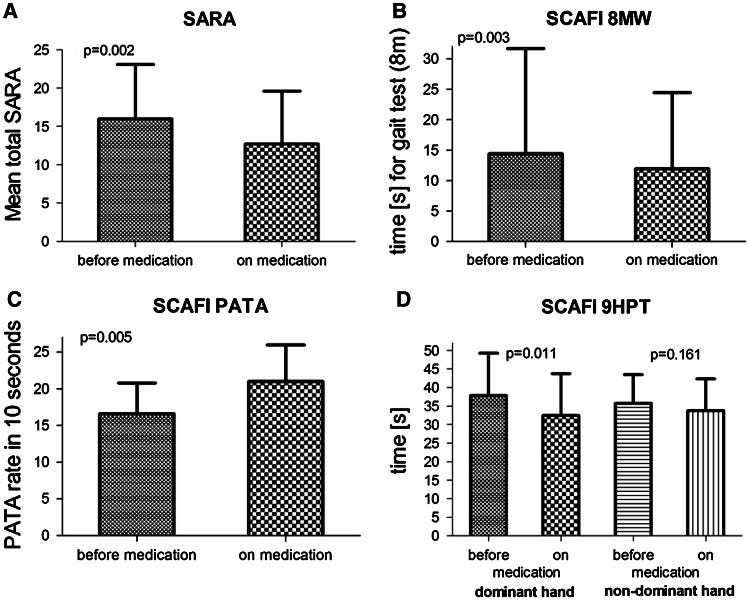
Treatment with acetyl-DL-leucine for 1 week resulted in statistically significant reductions (improvements) in overall SARA scores (Scale for the Assessment and Rating of Ataxia) compared to baseline. Patients demonstrated improvements across several SCAFI components (Spinocerebellar Ataxia Functional Index), including faster 8-meter walking (8MW) times and improved fine-motor performance on the 9-Hole Peg Test (9HPT). Self-reported quality-of-life measures increased significantly during the treatment period (p = 0.003). No adverse side effects or safety signals were reported during therapy. The authors concluded that “acetyl-DL-leucine significantly improved ataxic symptoms without side effects and therefore showed a good risk–benefit profile”. They ended by stating that their findings “need to be confirmed in placebo-controlled trials”.
Value changes on a Scale for the Assessment and Rating of Ataxia (SARA) and Spinocerebellar Ataxia Functional Index (SCAFI) sub-score items in terms of b 8 m walk (8 MW), c PATA word count in 10 s and d 9-hole-peg-test (9HPT) of the dominant and non-dominant hand before and during the therapy with acetyl-dl-leucine (5 g/day) (mean ± SD); Source: Strupp et al., J Neurol. (2013), Figure 2
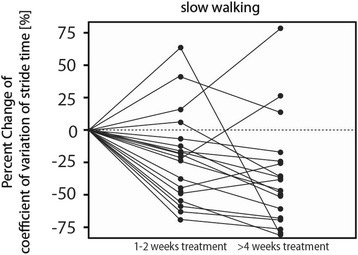
Mobility impairments in cerebellar ataxia carry a high risk of falls. Building off of their 2013 paper, the the Strupp group published a second case series in Cerebellum Ataxias in 2016 that evaluated whether treatment with N-acetyl-DL-leucine improved dynamic walking stability and quantitative gait parameters in patients with various types of cerebellar ataxia. It included 12 patients with sporadic forms of cerebellar ataxia (e.g., Sporadic Adult-Onset Ataxia [SAOA], Multiple System Atrophy cerebellar type [MSA-C]) and 6 patients with hereditary forms (e.g., Spinocerebellar Ataxia types 1 and 2 [SCA 1, SCA 2], CACNA1A mutation, Autosomal Dominant Ataxia [ADA]). Patients received 5 g/day of oral N-acetyl-DL-leucine (administered as 500 mg Tanganil tablets split into a 3-3-4 daily regimen) for at least 4 weeks. Gait performance was quantitatively measured using a pressure-sensitive sensor carpet across three walking speeds (slow, preferred, and maximal fast) before treatment and at two post-baseline time points (7-14 days and 28-42 days).
Treatment with N-acetyl-DL-leucine for 4 weeks significantly improved the coefficient of variation (CV) of stride time in 14 out of 18 patients (78% response rate) across tested walking speeds (see graph below). This reduction in stride-to-stride fluctuations directly indicated stabilized gait dynamics and better dynamic balance. Clinicians also observed statistically significant reductions on the Scale for the Assessment and Rating of Ataxia (SARA), as were seen in Strupp’s first case series. Subjective balance confidence and ambulatory confidence scores, assessed via the Falls Efficacy Scale-International (FES-I) and the Activities-specific Balance Confidence (ABC) scale, showed significant improvement under therapy. The treatment was well tolerated without reported serious adverse events. This study provided the first evidence that N-acetyl-DL-leucine could improve objective stride dynamics in degenerative brain disorders, rather than subjective symptomatic relief alone.
In parallel, Professor Michael Strupp’s initial clinical findings in 2013 motivated him to reach out to University of Oxford’s lysosomal biology and calcium signaling experts to investigate the underlying biochemical mechanisms of N-acetyl-DL-leucine at a cellular level. Around that time, Strupp began working with Professors Frances Platt, Antony Galione, and Grant Churchill at the University of Oxford’s Department of Pharmacology. Together, they sought to answer two critical scientific questions:
Symptomatic versus Disease-Modifying: Does acetyl-leucine merely provide rapid, symptomatic motor relief, or can long-term treatment actually slow down neurodegeneration, protect Purkinje cells, and extend survival?
Stereoisomer Selectivity: Which enantiomer, the L-isomer (N-acetyl-L-leucine) or D-isomer (N-acetyl-D-leucine), drives these neuroprotective and disease-modifying effects?
The team utilized both in vivo animal models and in vitro cellular assays to answer these questions:
Npc1-/- mice: This mouse model recapitulated Niemann-Pick disease type C1 and was used to evaluate both symptomatic and pre-symptomatic treatment paradigms across early, late, and lifelong dosing regimes.
Hexb-/- mice: This mouse model recapitulated GM2 gangliosidosis (Sandhoff disease) and was used to evaluate N-acetyl-DL-leucine as a long-term treatment.
Cell Culture & Biochemical Analyses: CHO cells and patient-derived fibroblasts were analyzed for lipid accumulation, lysosomal volume (LysoTracker), mitochondrial reactive oxygen species (MitoSOX), NAD/NADH coenzymes, and ATP/ADP cellular energy ratios.
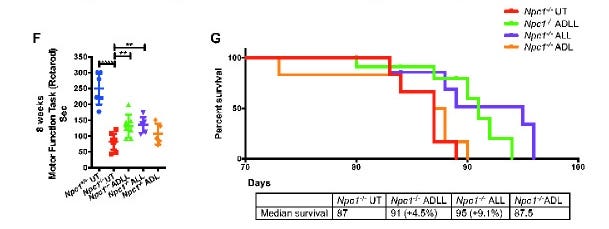
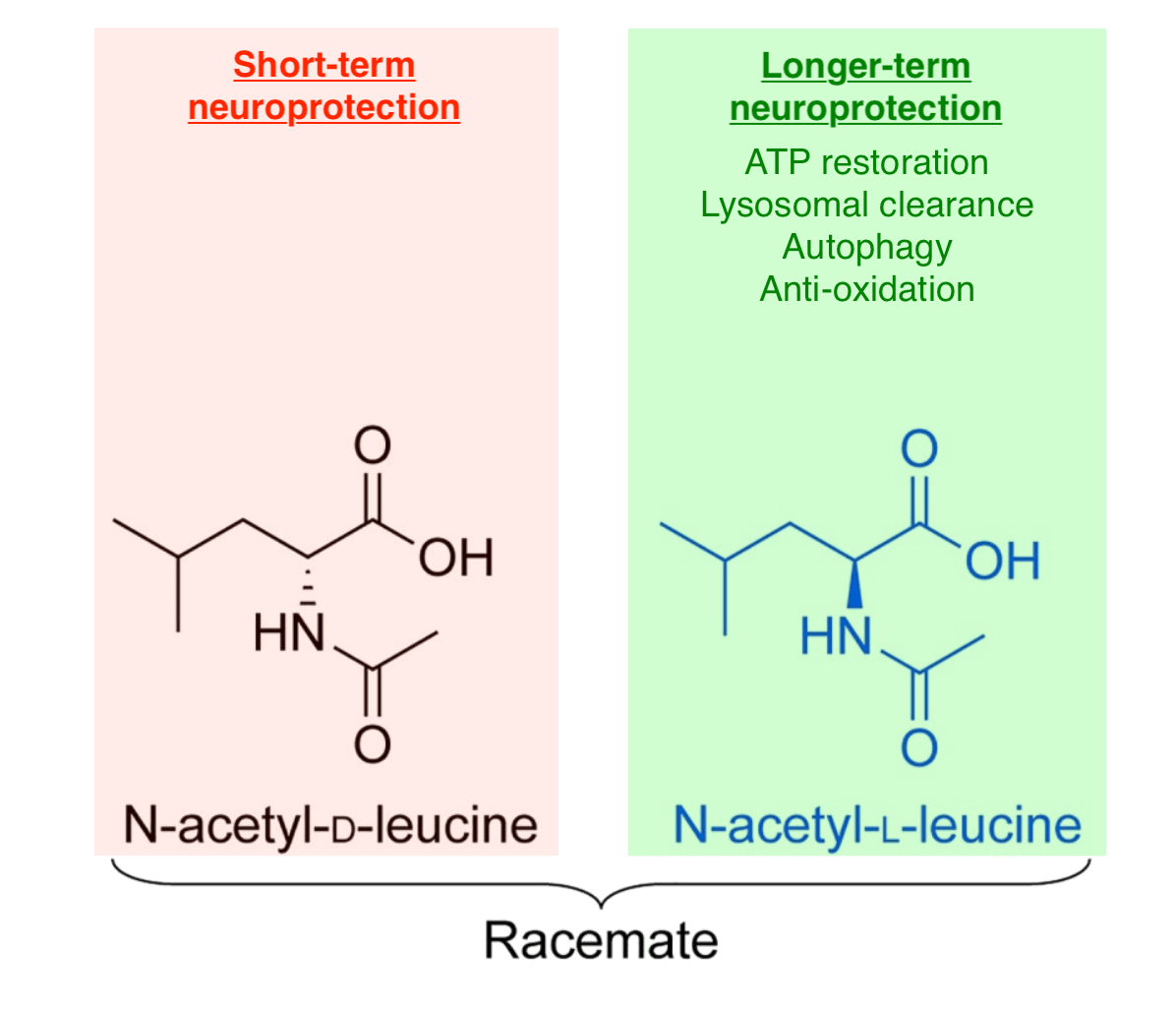
They discovered that short-term administration of racemic N-acetyl-DL-leucine (ADLL), N-acetyl-L-leucine (ALL), or N-acetyl-D-leucine (ADL) rapidly reduced lateral gait displacement and ataxic motor symptoms in Npc1-/- mice. However, when treatment was initiated pre-symptomatically and maintained long-term, only the N-acetyl-L-leucine (ALL) enantiomer provided true neuroprotection. ALL treatment significantly preserved cerebellar Purkinje cell density and survival, delayed motor decline and improving performance on the accelerating Rotarod, and extended life span in Npc1-/- mice.
Only the L-enantiomer (N-acetyl-L-leucine; ALL) improves gait abnormalities, motor function and modestly extends survival in Npc1−/− mice; Source: Kaya et al., Brain Commun. (2020), Figure 1F-G
The study also unraveled three mechanisms by which the ALL (N-acetyl-L-leucine) enantiomer exerts its neuroprotective and lipid-clearing effects:
Metabolic Reprogramming: ALL altered intracellular bioenergetics by decreasing the NAD/NADH ratio and elevating glycolytic flux, effectively restoring cellular ATP levels in energy-starved neurons.
Lysosomal Clearance & Lipid Storage Reduction: ALL significantly lowered toxic glycosphingolipid (GSL), sphingosine, and unesterified cholesterol accumulation in brain tissue and peripheral organs (e.g., liver).
Autophagic & Oxidative Balance: Treatment normalized lysosomal membrane dynamics and reduced excessive mitochondrial reactive oxygen species (ROS).
Altogether, the study demonstrated that acute symptomatic improvement in ataxia and long-term neuroprotection operate through distinct cellular mechanisms. While acute motor gains can be mediated by both enantiomers, long-term neuroprotection and survival extension require the purified L-enantiomer (N-acetyl-L-leucine).
The L-enantiomer (N-acetyl-L-leucine) has a higher therapeutic potential than the D-enantiomer
The Business Factor
To deliver a product or service at scale, you need a business. To start a business, you need a business man. That man for IntraBio was Professor Mallory Factor. Prior to co-founding IntraBio in 2015, Mallory Factor had built a multi-decade career spanning merchant banking, corporate restructuring, venture investing, political strategy, and academia.
Factor earned a B.A. in Biochemistry from Wesleyan University. This background provided him with the technical literacy required to evaluate early-stage pharmacology and molecular biology. He pursued graduate work in the joint Law and Business program at Columbia University before starting his career as a management consulting supervisor at Coopers & Lybrand. In 1976, he founded Mallory Factor, Inc., an independent merchant bank, financial relations consultancy, and corporate advisory firm. Through the firm, he spent decades advising public and private corporations on corporate strategy, capital raises, restructuring, debt/equity financing, and investor relations. Across the 1980s, 1990s, and 2000s, Factor acted as an active investor and advisor across healthcare, technology, media, and natural resource ventures. His investment thesis frequently centered on identifying undervalued, distressed, or mispriced assets and restructuring them into commercially viable, high-margin growth vehicles.
In the years leading up to IntraBio’s formation, Factor served as a Visiting Senior Fellow in Entrepreneurship at the Department of Pharmacology at the University of Oxford. It was in this role that he gained direct exposure to the life sciences Intellectual Property (IP) generated in the laboratories of Oxford Professors Frances Platt and Antony Galione. When Oxford researchers demonstrated that N-acetyl-L-leucine could normalize lysosomal function and cellular bioenergetics, Factor recognized the opportunity. Where others saw an unpatented, generic French vertigo pill, Mallory Factor saw the potential to:
Ensconce a Novel Asset with Defensible IP: Racemic N-acetyl-DL-leucine consists of a 50/50 mix of two mirror-image molecules (D- and L-enantiomers). The scientific founders discovered that the pharmacodynamics were driven almost entirely by the L-enantiomer: levacetylleucine, designated internally as IB1001. Isolating IB1001 eliminated the inactive D-enantiomer, drastically reducing metabolic load while optimizing transport across the blood-brain barrier via specialized monocarboxylate carriers. Recognizing the potential of an asset-centric model, IntraBio built a broad patent portfolio between 2016 and 2018. The filings covered purified enantiomeric formulations, specific dosing regimens, and target indications spanning rare lysosomal storage disorders, inherited cerebellar ataxias, and neurodegenerative conditions.
Address a High Unmet Medical Need: The Oxford and Munich labs systematically mapped how levacetylleucine operated at the cellular level. They demonstrated that once inside the cell, levacetylleucine normalizes neuronal membrane potential, restores lysosomal function and autophagic flux, and boosts mitochondrial ATP synthesis. In diseases like Niemann-Pick type C (NPC) and GM2 gangliosidosis, where cellular lipid accumulation destroys neuronal networks, IB1001 could offer a way to bypass broken metabolic pathways and restore baseline cellular bioenergetics.
In late 2015, Mallory Factor partnered with Professors Strupp, Platt, Galione, and Churchill to formally incorporate IntraBio. Factor assumed the roles of Chairman and CEO, providing the business leadership, while Strupp, Platt, Galione, and Churchill served as the founding scientists and key scientific advisors. Drawing on his background as a merchant banker, venture architect, and Oxford fellow, he structured IntraBio in 2015 as a virtual, capital-efficient biopharmaceutical company. Operating with an ultra-lean, virtual corporate structure, the new company brought together Oxford’s bench science, Munich’s clinical insights, and Factor’s capital deployment.
With all the right pieces in place, Mallory Factor kicked off a unique clinical development strategy for IB1001. Instead of developing isolated trials for different conditions, IntraBio designed an innovative Master Protocol Platform. Since conditions like Niemann-Pick disease type C (NPC), GM2 gangliosidosis (Tay-Sachs and Sandhoff disease), and Ataxia-Telangiectasia (A-T) share underlying cerebellar ataxia and neurodegeneration, IntraBio launched three parallel, multi-national Phase 2 basket studies using shared clinical endpoints:
IB1001-201: Niemann-Pick Disease Type C (NPC)
IB1001-202: GM2 Gangliosidosis (Tay-Sachs and Sandhoff)
IB1001-203: Ataxia-Telangiectasia (A-T)
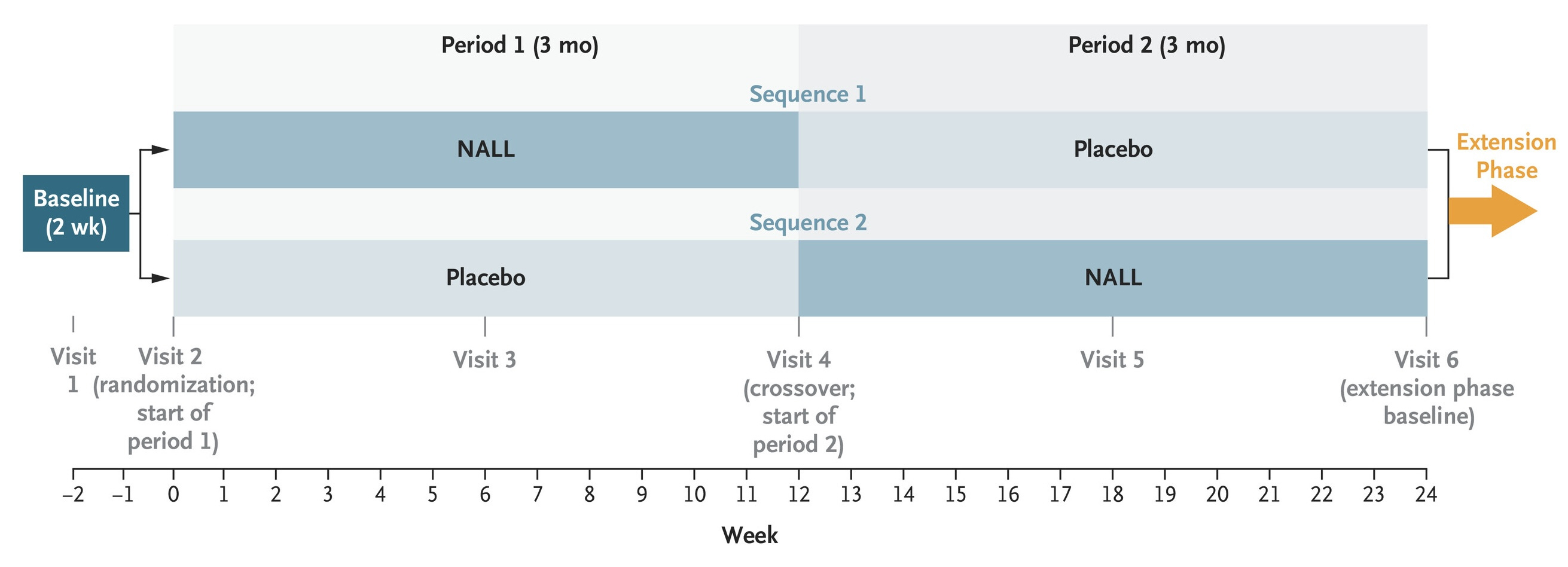
Since these diseases are ultra-rare, making traditional long-term parallel-group placebo trials ethically and logistically difficult, IntraBio deployed 12-week randomized, double-blind, placebo-controlled crossover trials. Patients acted as their own controls, switching between treatment and placebo periods. Primary efficacy was measured using the Scale for the Assessment and Rating of Ataxia (SARA) alongside quantitative gait, speech, and fine motor assessments. By late 2020, Phase 2 data across all three indications met primary endpoints, demonstrating rapid, statistically significant improvements in motor function and cognition.
IntraBio then launched its pivotal Phase 3 study for NPC (IB1001-301), which enrolled 60 pediatric and adult patients with NPC enrolled across multi-center international sites. Patients were randomized 1:1 to receive either oral N-acetyl-L-leucine for 12 weeks followed by a 12-week placebo period, or vice versa (placebo first, followed by active drug).
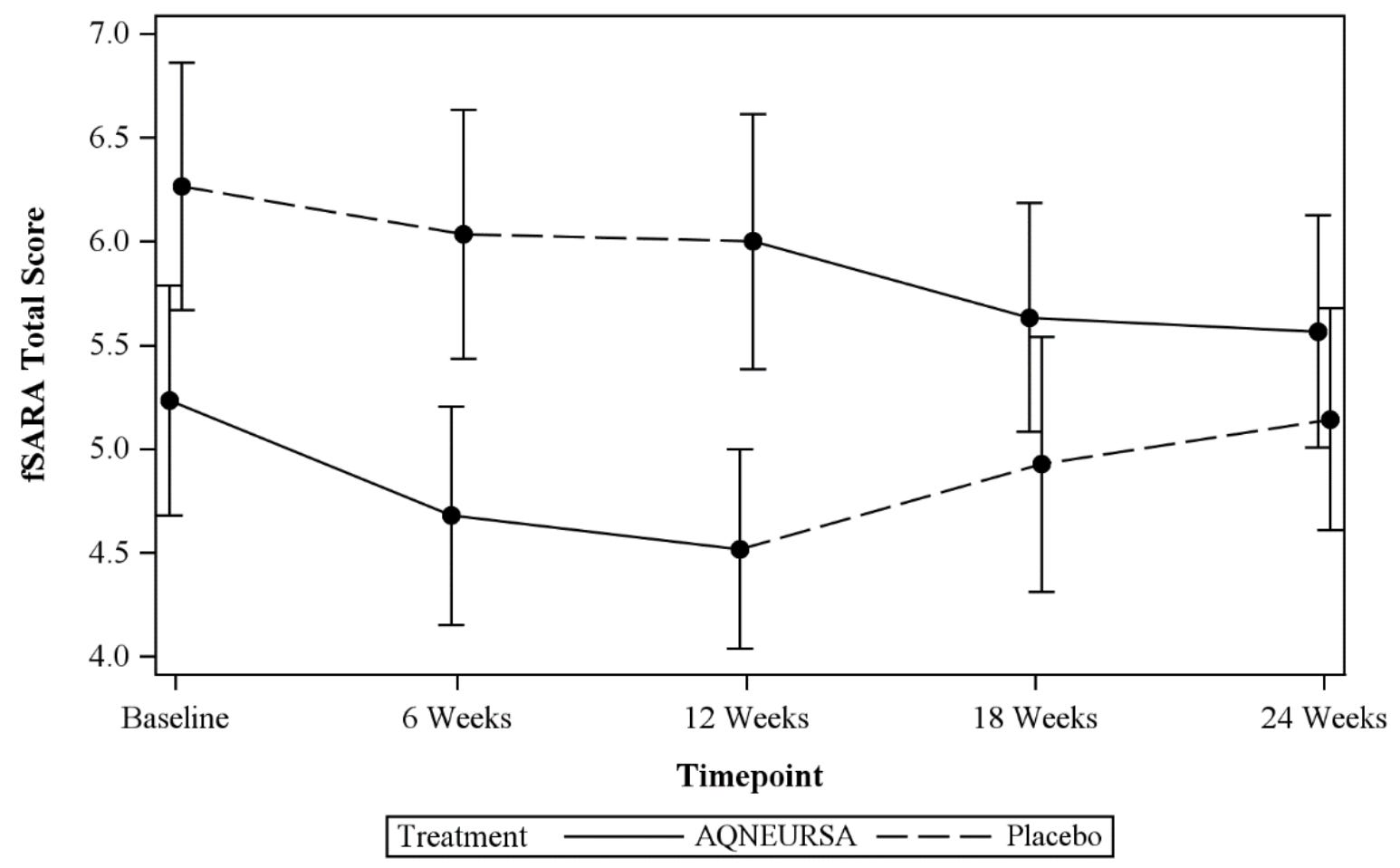
On June 29, 2023, IntraBio reported positive topline results from the Phase 3 IB1001-301 trial in patients with NPC. Treatment with N-acetyl-L-leucine (NALL) resulted in a statistically significant improvement in the mean SARA total score compared to placebo (p < 0.001). Patients demonstrated measurable functional gains in gait, stance, fine motor skills, and speech coordination while receiving N-acetyl-L-leucine. Neurological improvements were observed during the active treatment phase. When patients switched from active drug to placebo during the crossover, ataxia symptoms returned toward baseline levels, supporting a direct therapeutic effect. The most common adverse events included mild-to-moderate gastrointestinal symptoms (e.g., abdominal pain, vomiting) and upper respiratory tract infections. No treatment-related serious adverse events were reported. The pivotal Phase 3 trial data were later published in the NEJM on January 31, 2024.
Mean (+/- standard error) Plot of the fSARA Total Score by Time and Treatment Sequence in Adult and Pediatric Patients with NPC; Source: Aqneursa label, Figure 1
On the heels of their positive Phase 3, IntraBio leveraged regulatory incentives including FDA Orphan Drug, Rare Pediatric Disease, Fast Track, and Priority Review designations to convert clinical trial data into global drug approvals. In September 2024, the FDA granted full commercial approval to Aqneursa (levacetylleucine) for the treatment of neurological manifestations of Niemann-Pick disease type C in adult and pediatric patients weighing ≥15 kg. On January 2026, the European Commission granted marketing authorization for Aqneursa across the EU for NPC.
Later that year on September 25, 2024, the FDA approved a major label expansion for IntraBio’s Aqneursa (levacetylleucine / N-acetyl-L-leucine) to treat ataxia in adults and pediatric patients weighing at least 15 kg with Ataxia-Telangiectasia (A-T), as we described in Weekly Readout #24.
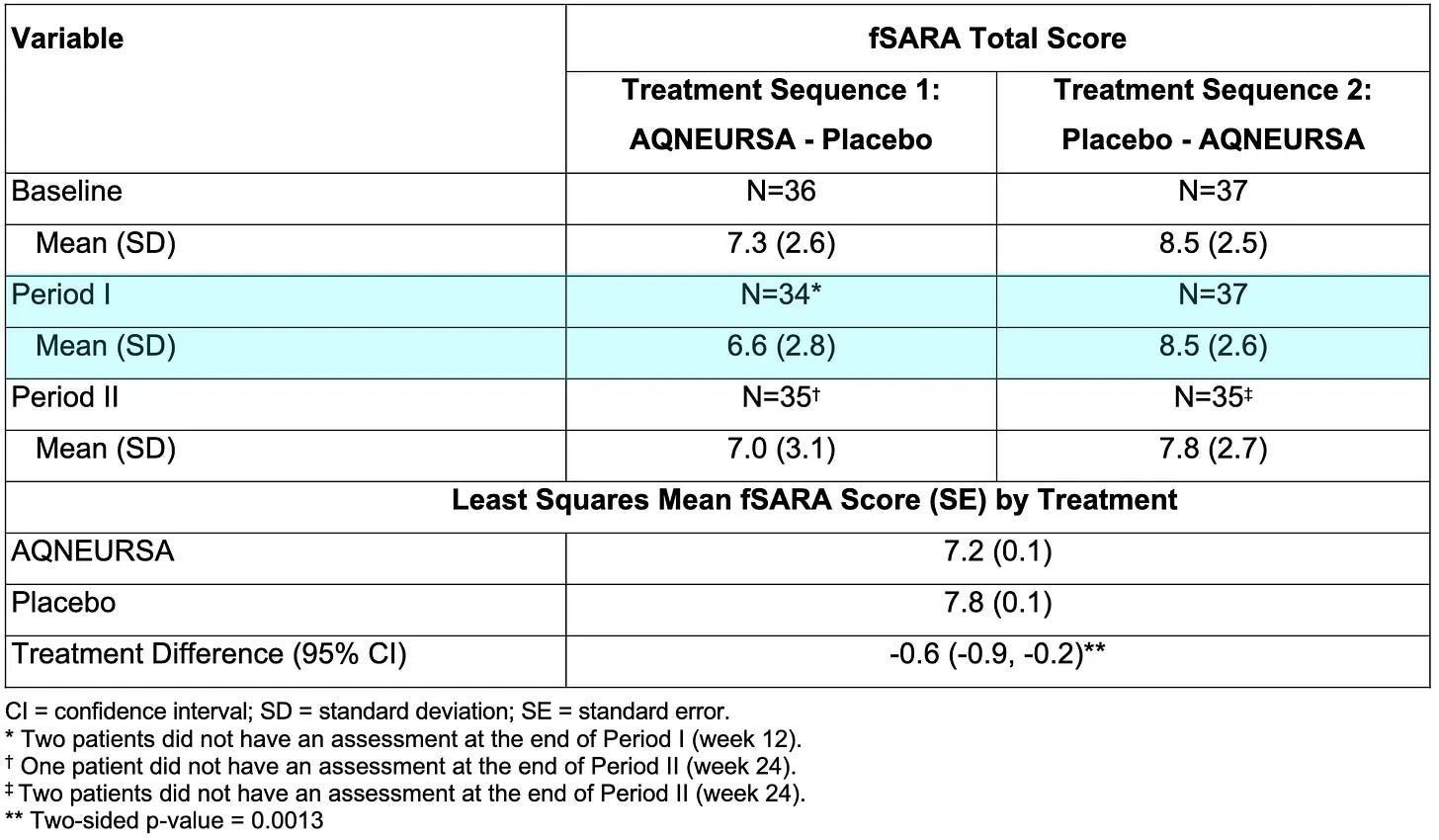
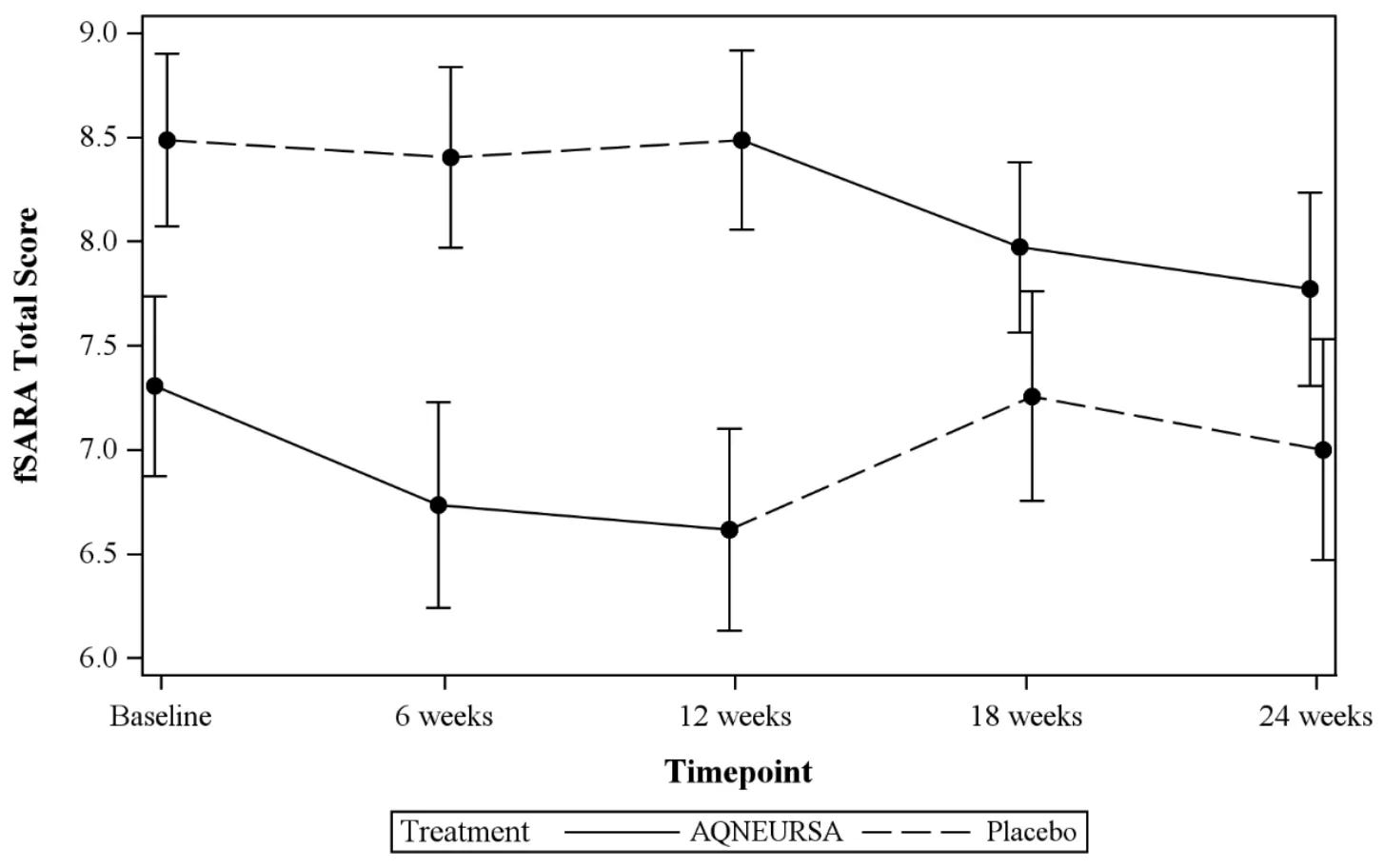
This regulatory decision marks a historical milestone as the first FDA-approved disease-modifying treatment specifically indicated for A-T, a rare, progressive, and life-limiting autosomal-recessive neurodegenerative disease caused by mutations in the ATM gene. The label extension of Aqneursa was granted on the strength of pivotal data from the Phase 3 IB1001-303 trial, a multinational, randomized, double-blind, placebo-controlled crossover study (N = 73) in patients aged 4 to 50 years with genetically confirmed A-T. Over a 12-week treatment period, Aqneursa demonstrated a statistically significant improvement in motor function compared to placebo on the Scale for the Assessment and Rating of Ataxia (SARA). Patients treated with Aqneursa achieved a 1.9-point mean improvement over placebo (Treatment Difference = -1.9; p < 0.001). In a modified, functional SARA assessment prioritized by the FDA (evaluates core daily tasks across gait, sitting, stance, and speech domains), Aqneursa demonstrated a 0.6-point mean advantage over placebo (Treatment Difference = -0.6; p < 0.001).Clinically observable neurological and functional improvements emerged rapidly within 12 weeks of therapy initiation. Benefits were consistent across pediatric and adult age cohorts, prior functional baseline levels, and prespecified disease severity subgroups. A notable 96% of enrolled participants (70/73) completed both treatment periods of the crossover design, reflecting high trial adherence and patient tolerance. The product labeling warns against concomitant administration with race-mixture formulations like N-acetyl-DL-leucine or N-acetyl-D-leucine, as the D-enantiomer competes for monocarboxylate transporter uptake and impairs Aqneursa‘s efficacy. Since Aqneursa inhibits P-glycoprotein (P-gp), patients on narrow-therapeutic-index P-gp substrates require close monitoring. Animal data indicate potential embryo-fetal toxicity, necessitating pregnancy verification and reliable contraception in female patients of reproductive potential.
Summary of fSARA Efficacy Results in Adult and Pediatric Patients with A-T; Source: Aqneursa label, Table 5
Mean (+/- standard error) Plot of the fSARA Total Score by Time and Treatment Sequence in Adult and Pediatric Patients with A-T; Source: Aqneursa label, Figure 2
Less than 2 weeks later on October 5, 2026, Japanese biopharmaceutical company Shionogi & Co. announced an agreement to acquire IntraBio for $2.0 billion in cash. Shionogi acquired worldwide rights to Aqneursa across its indications, including its initial 2024 U.S. and early 2026 EU approvals for Niemann-Pick disease type C (NPC), as well as the newly granted A-T indication. The acquisition also hands Shionogi IntraBio’s active clinical pipeline, including ongoing Phase 3 studies applying levacetylleucine to CACNA1A-related disorders.
Conclusion
From obscure 1950s vertigo pill, to Michael Strupp’s clinical observations in Munich, to mechanistic untangling at Oxford’s pharmacology labs, and ultimately to FDA approvals and a $2.0 billion acquisition, IntraBio’s trajectory is a testament to scientific collaboration paired with sharp biotech execution. By teaching an old racemic drug new tricks, Mallory Factor and his scientific co-founders serve as case of rare disease innovation with an even rarer backstory. By separating a racemic mixture into its pure, biologically active L-enantiomer, a multidisciplinary team turned the generic vertigo medicine with mysterious mechanism of action into a life-changing, FDA-approved therapy for Niemann-Pick disease type C (NPC) and Ataxia-Telangiectasia (A-T). The $2 billion acquisition of IntraBio by Shionogi marks a fitting culmination of their decades-long passion project. Most importantly, Aqneursa (levacetylleucine) brings tangible neurological improvement to patients facing devastating degenerative diseases, and will continue to do so with the backing of Shionogi.
Love biotech? Check out Biotech Readout’s full content library, or navigate directly to a segment that interests you:
Frontiers in Medicine: Exploring the frontiers of our understanding and treatments for disease.
Medical History: Recovering forgotten relics in the history of medicine.
Acquisitions: Exploring the innovation behind acquired companies.
Weekly Readout: A digest of new clinical data from the past week.
Biotech Readout is a reader-supported publication. To receive new posts and support my work, consider becoming a free or paid subscriber.
The therapeutic candidates discussed in this newsletter are currently in clinical development and have not been approved for commercial sale by the U.S. Food and Drug Administration (FDA), the European Medicines Agency (EMA), or other global regulatory authorities. Their safety and efficacy have not been established. References to pipeline products and ongoing clinical trials involve significant risks and uncertainties. Statements regarding the potential safety, potency, or efficacy of investigational drugs reflect current hypotheses and are not a guarantee of future performance or regulatory clearance. The outcome of clinical trials is inherently unpredictable, and clinical results from earlier stages may not be predictive of results in later, larger-scale trials.
No Medical Advice Disclaimer
This newsletter is for informational and educational purposes only. The content is not intended to be a substitute for professional medical advice, diagnosis, or treatment. Always seek the advice of your physician or another qualified health provider with any questions you may have regarding a medical condition. Never disregard professional medical advice or delay in seeking it because of something you have read in this publication.
No Patient-Provider Relationship Disclaimer
The information provided in this newsletter is for educational and analytical purposes only. Receipt of this information, or any interaction with this content, does not create a physician-patient, pharmacist-patient, or any other professional-provider relationship between you and the authors or publishers. This newsletter should not be used as a substitute for a personal consultation with a qualified healthcare professional.
Forward-Looking Statements Disclaimer
This newsletter contains “forward-looking statements” regarding future events, including clinical trial timing, regulatory milestones, and projected market performance. These statements are based on current expectations and assumptions that are subject to significant risks and uncertainties. Actual results may differ materially from those expressed or implied. We undertake no obligation to update these statements as a result of new information or future developments.
Third-Party Links & Content Disclaimer
This newsletter contains links to third-party websites, including clinical trial registries and corporate presentations. Biotech Readout does not endorse, guarantee, or assume responsibility for the accuracy or reliability of any information offered by third-party providers.
Errors and Omissions Disclaimer
While we strive for technical accuracy, the information in this newsletter is provided on an “as is” basis with no guarantees of completeness, accuracy, or timeliness. Biotech Readout assumes no liability for any errors or omissions in the content of this publication.
Non-Endorsement Disclaimer
Any reference to specific commercial products, processes, or services by trade name, trademark, or manufacturer does not constitute or imply an endorsement or recommendation by the author. All trademarks are the property of their respective owners.
No Investment Advice Disclaimer
This newsletter is for informational purposes only and does not constitute financial, investment, or legal advice. The author is not a registered investment advisor. You should consult with a professional financial advisor before making any investment decisions. The biotechnology sector is highly volatile; past performance is not indicative of future results.
Conflict of Interest Disclaimer
The author of this newsletter maintains a position of independence. At the time of publication, the author holds no direct financial interest, equity, or options in any of the companies mentioned in this report. No compensation has been received from any third party to feature or analyze specific therapeutic candidates or corporate entities.