

Disclaimer: This newsletter is for educational and informational purposes only and does not constitute medical, investment, or financial advice, nor does it establish a provider-patient relationship. Content may include forward-looking statements and discussions of investigational therapeutic candidates that are not FDA/EMA approved; their safety and efficacy remain unestablished and clinical outcomes are unpredictable. While we strive for accuracy, all information is provided as is without guarantees. As of the date of publication, the author holds no direct equity positions in the specific companies mentioned in this issue nor receives third-party compensation for this coverage. Please find a complete version of our disclaimers linked here.

If you are a paid subscriber, go to radiopharmaceutical competitive landscape here ⬇️
If you are a free reader or subscriber, enjoy the whole article free of charge and consider upgrading for competitive landscapes of disease areas & therapeutics modalities; view samples here.
Introduction
On September 21, 2026, Telix Pharmaceuticals Limited announced a strategic agreement to lead a merger with ITM Isotope Technologies Munich SE for an upfront consideration of $1.65 billion on a cash-free/debt-free basis plus up to $700 million upon achievement of regulatory approvals and commercial sales milestones for ITM-11, for a total deal value of up to $2.35 billion (Telix press release, ITM Isotope press release, Telix merger presentation). This merger centers on ITM’s differentiated radioisotope manufacturing platform and fuses two radiopharmaceutical pipelines:
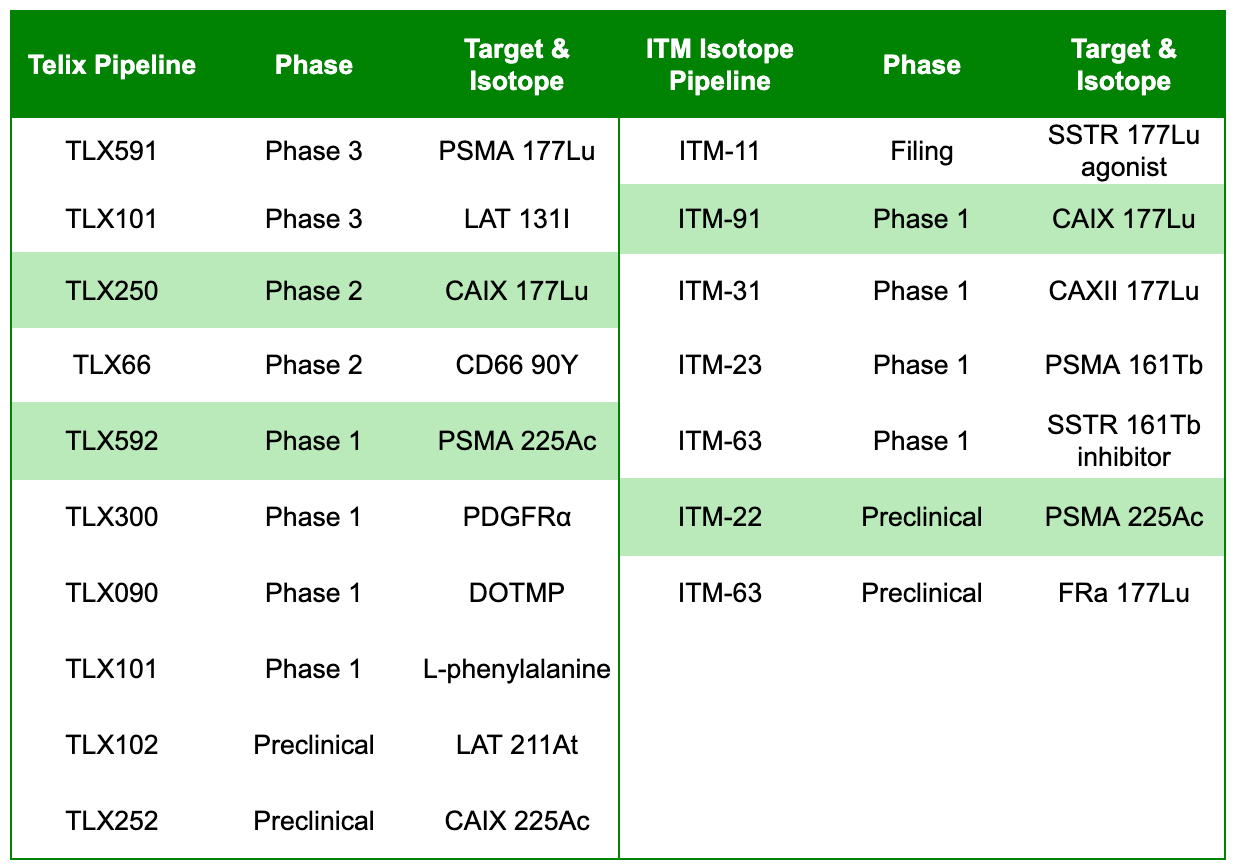
In this article, we briefly define radiopharmaceuticals, explain what makes these medicines so difficult to manufacture, dive into the corporate histories of ITM Isotope and Telix, and explore the global reach of the combined entity’s supply chain.
Medicinal Glow Up
Radioisotopes kill cancer by delivering targeted ionizing radiation directly to tumor cells, damaging their cellular machinery and causing cell death. As the radioisotope decays, it releases high-energy particles (such as alpha or beta particles). These particles strike the DNA strands inside cancer cells, causing double-strand breaks that render the cancer cells unable to repair themselves, replicate, or survive. A radiopharmaceutical is a specialized medicinal product that contains a radioactive isotope (radionuclide) bound to a targeting agent (such as a molecule, antibody, or peptide) designed to target specific cells or tissues in the body. By binding the radioisotope to a targeting vector that attaches preferentially to cancer cell receptors, high doses of radiation accumulate inside the tumor while minimizing damage to surrounding healthy tissue. The emitted radiation can travel short distances beyond the single cell to which the radioisotope is bound, destroying nearby neighboring cancer cells within the tumor microenvironment, even if those adjacent cells lack the specific target receptor. Unlike traditional pharmaceuticals that rely purely on chemical mechanisms, radiopharmaceuticals harness radiation for two main clinical uses: diagnostics and therapeutics.
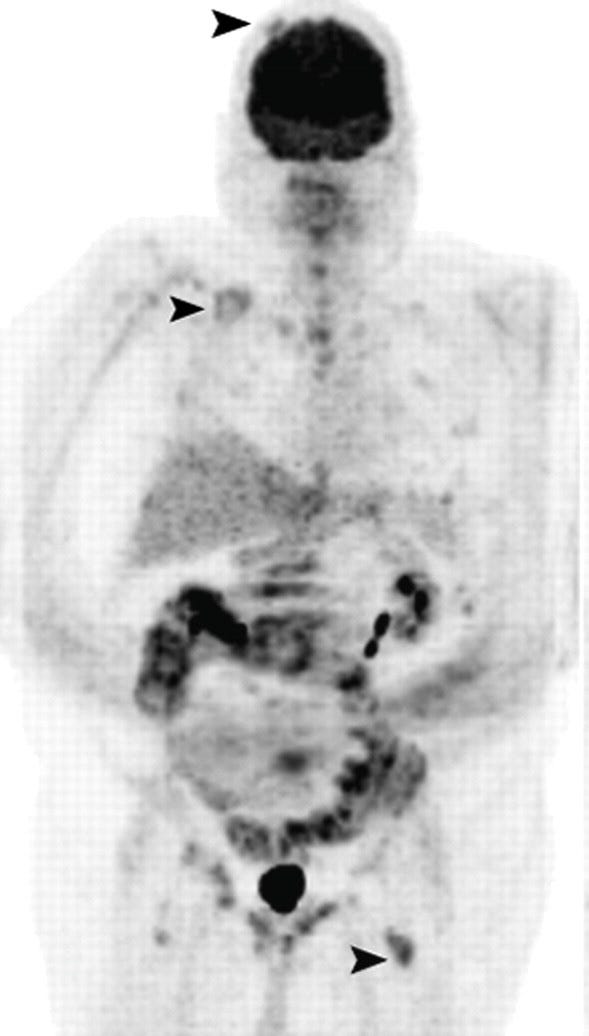
Radioactive diagnostic agents typically use a radioisotope emitting low-energy gamma rays or positrons (such as Fluorine-18, Technetium-99m, or Gallium-68) and are administered at micro-doses. The agent is designed to selectively travel to specific tissues or disease sites (such as tumors or cardiac tissue). Advanced scanners, like PET (Positron Emission Tomography) or SPECT (Single-Photon Emission Computed Tomography), detect the emitted radiation to build detailed 3D images of organ function, tissue perfusion, or receptor expression. For example, 18F-FDG (fluorodeoxyglucose) is used to measure metabolic activity in cancer cells, thereby identifying both the primary cancer site as well as distant metastasis in separate regions throughout the body (commonly found in the brain, bones, liver, lymph nodes, etc.).
Meanwhile, radioactive therapeutics typically use a radioisotope emitting high-energy radiation (such as beta or alpha particles) that is attached to a targeting vector. The targeting vector locks onto cell-surface receptors unique to cancer cells (e.g., PSMA in prostate cancer or SSTR2 in neuroendocrine tumors). Once bound, the radioisotope releases targeted radiation that causes double-stranded DNA breaks, killing the cancer cells while minimizing damage to surrounding healthy tissue. For example, Pluvicto (lutetium Lu 177 vipivotide tetraxetan) works by delivering localized, high-energy beta radiation (emitted by the lutetium 177 isotope) directly into prostate cancer cells (targeted with PSMA binder). Upon binding to the cell-surface PSMA receptor, the complex undergoes receptor-mediated endocytosis. The prostate cancer cell internalizes the entire Pluvicto molecule, pulling the radioactive payload into the intracellular space. Since the emission range (~2 mm) spans multiple cell diameters, the radiation also destroys adjacent tumor cells that may have lower or heterogeneous PSMA expression, a phenomenon known as the bystander or crossfire effect.
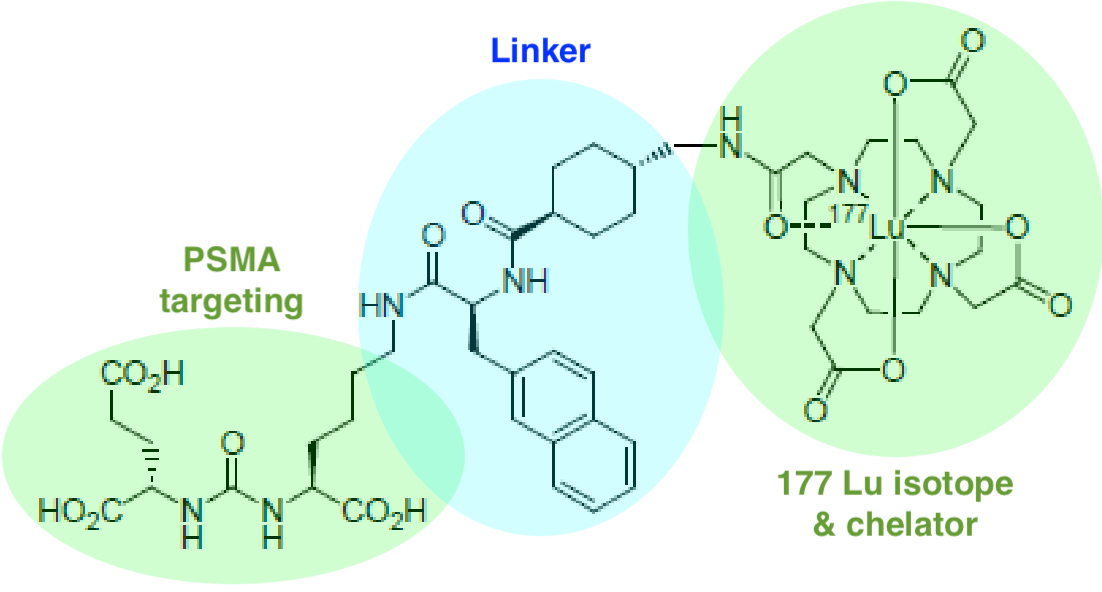
Many radiopharmaceuticals belong to a paradigm called theranostics, which combine radioactive therapeutics and diagnostics. Physicians can use a diagnostic radiopharmaceutical to image and confirm that a patient’s tumor expresses a specific receptor, then swap out the imaging isotope for a therapeutic isotope using the exact same targeting molecule to treat the disease.
These agents are certainly clinically useful, but they aren’t without their challenges. Radiopharmaceutical manufacturing combines the strict sterility standards of injectable biopharmaceuticals with the temperamental physics of radioactive decay and high-precision nuclear engineering, making them particularly difficult to manufacture. Injectable therapies require Grade A cleanroom conditions to prevent bacterial contamination. However, researchers developing radiopharmaceuticals cannot manually handle the product due to radiation exposure risks. Synthesis, filtering, and vial filling must occur behind thick lead glass inside automated, heavily shielded containment chambers known as hot cells using robotic systems. Maintaining cleanroom sterile airflow while operating heavy mechanical shielding and remote automated units presents significant engineering challenges. Facilities must simultaneously satisfy traditional drug regulators (such as the FDA or EMA for cGMP, sterile processing, and drug stability) and nuclear safety regulators (such as the NRC or equivalent atomic energy agencies for radioactive material handling, worker protection, and hazardous waste disposal)
Then there’s the shelf-life problem. Unlike traditional drugs that can sit in a warehouse for months or years, radioisotopes decay constantly. Standard diagnostic isotopes (like Fluorine-18) have half-lives of around 110 minutes (a little less than 2 hours), while therapeutic isotopes (like Lutetium-177 or Actinium-225) have half-lives ranging from a few days to under two weeks. As a result, batches cannot be stockpiled. As the radioisotope decays, it emits high-energy alpha or beta radiation that can break chemical bonds within its own carrying molecule (a process called radiolysis). Formulators must carefully engineer protective quenching agents (like ascorbic acid) to prevent the active drug molecule from degrading before administration. Every single dose is manufactured, released, shipped, and injected according to a precise schedule. A single flight delay or logistics bottleneck means the drug decays into an ineffective dose before it ever reaches the patient. This also impacts Quality Control (QC). In standard drug manufacturing, full Quality Control (including a 14-day sterility test) is completed before a batch is released to customers. Since radiopharmaceuticals decay in hours or days, doses often must be shipped and administered before traditional 14-day sterility test incubation results are completed. Manufacturers rely on validated rapid surrogate assays (like rapid endotoxin testing and high-performance liquid chromatography for radiochemical purity) and strict process validation, creating zero margin for error.
Lastly, there’s the challenge of raw material supply. Radiopharmaceuticals require rare target materials and access to specialized nuclear infrastructure, such as nuclear research reactors or particle accelerators (cyclotrons). A sudden maintenance shutdown at one of the world’s few medical nuclear reactors or cyclotrons can instantly freeze the global supply of critical precursor isotopes. Radioactive isotope supply chains are peppered with regulatory hurdles, compounding its complexity. In the United States, the NRC (Nuclear Regulatory Commission) regulates the possession, transfer, use, and security of radioactive target materials and parent isotopes through 10 CFR Part 30 (Byproduct Material Licenses) and 10 CFR Part 35 (Medical Use). Suppliers cannot ship radioactive raw materials without verifying that the recipient facility holds a specific, active NRC or state materials license. The import and export of medical isotopes and radioactive precursors are controlled under 10 CFR Part 110. Any shipment crossing U.S. borders requires export/import authorization, specialized customs clearance, and adherence to physical protection standards, which can create international supply bottlenecks. This is a substantial regulatory barrier for radiopharmaceuticals developed in the U.S. because the isotope supply chain relies heavily on international research reactors (e.g., in Europe, Canada, and South Africa) for major therapeutic and diagnostic radioisotopes (such as 177Lu precursor enrichment materials or 99Mo).
Altogether, one does not simply develop radiopharmacuticals. The barriers to entry are so high that companies in the space practically need to be anointed by the relevant international & domestic regulatory agencies in order to have the freedom to operate. Yet, that didn’t stop a dedicated cohort of drug hunters from trying.
Going Nuclear
In 2004, nuclear energy specialist Oliver Buck set out in Munich, Germany, with a mission: harness precision nuclear technology to solve a fundamental problem in targeted cancer care. At the time, radiopharmaceuticals held vast promise, but the industry was severely constrained by the quality and availability of medical radioisotopes.
ITM’s first breakthrough came in the form of no-carrier-added (n.c.a.) Lutetium-177 (177Lu). Traditional production methods resulted in carrier-added isotopes, which contained long-lived radioactive impurities (like Lu-177m) and unwanted stable lutetium atoms that competed for receptor binding sites on cancer cells. ITM engineered a proprietary process to manufacture pure, high-specific-activity n.c.a. Lutetium-177. By eliminating long-lived radioactive waste and maximizing targeted efficiency, ITM established the supply backbone for the entire modern radiopharmaceutical sector. Biotech firms and academic centers around the globe began relying on ITM as their primary engine for raw medical isotopes. At the heart of ITM’s manufacturing strategy is the NOVA facility in Neufahrn near Munich, Germany. Spanning over 7,000 square meters, NOVA represents the world’s largest production site dedicated specifically to GMP-grade no-carrier-added Lutetium-177 (177Lu).
As the 2010s progressed, ITM leadership realized that controlling the purest radioisotope supply chain gave them an extraordinary vantage point. Rather than remaining solely an upstream vendor, ITM made a bold strategic expansion, vertically integrating into proprietary drug discovery. The company began attaching its high-purity radioisotopes to specialized targeting molecules. These efforts were led by ITM-11 (177Lu-edotreotide), a radiopharmaceutical targeted at the somatostatin receptor (SSTR) designed to treat gastroenteropancreatic neuroendocrine tumors (GEP-NETs). Early phase 2 academic studies demonstrated that this high-purity composition resulted in superior tumor uptake, reduced renal toxicity, and extended progression-free survival (PFS). These early signals earned ITM-11 both Orphan Drug Designation and Fast Track Designation from the FDA, setting the stage for the global Phase 3 COMPETE trial. Rather than comparing ITM-11 against placebo or standard somatostatin analogues alone, ITM pitted its radiopharmaceutical directly against everolimus, a widely used targeted oral mTOR inhibitor for progressive, inoperable Grade 1 and Grade 2 gastroenteropancreatic neuroendocrine tumors (GEP-NETs).
On March 6, 2025, ITM reported topline results from the Phase 3 COMPETE trial at the 22nd Annual European Neuroendocrine Tumor Society (ENETS) Conference. COMPETE met its primary endpoint, demonstrating a statistically significant and clinically meaningful improvement in progression-free survival. ITM-11 extended central median PFS to 23.9 months compared to 14.1 months for everolimus (HR 0.67; p = 0.022). Secondary endpoints reinforced the efficacy gap: ITM-11 achieved an Objective Response Rate (ORR) of 21.9% versus just 4.2% for everolimus. Furthermore, ITM-11 demonstrated a superior safety and tolerability profile, with significantly lower treatment discontinuation rates due to drug-related toxicity (1.8% ITM-11 vs. 15.2% everolimus). COMPETE was the first large Phase 3 trial to integrate prospective 3D SPECT/CT dosimetry, confirming that ITM-11 delivered maximum radiation doses directly to tumor sites while keeping absorbed doses to critical organs (like the kidneys and bone marrow) well below safety limits.
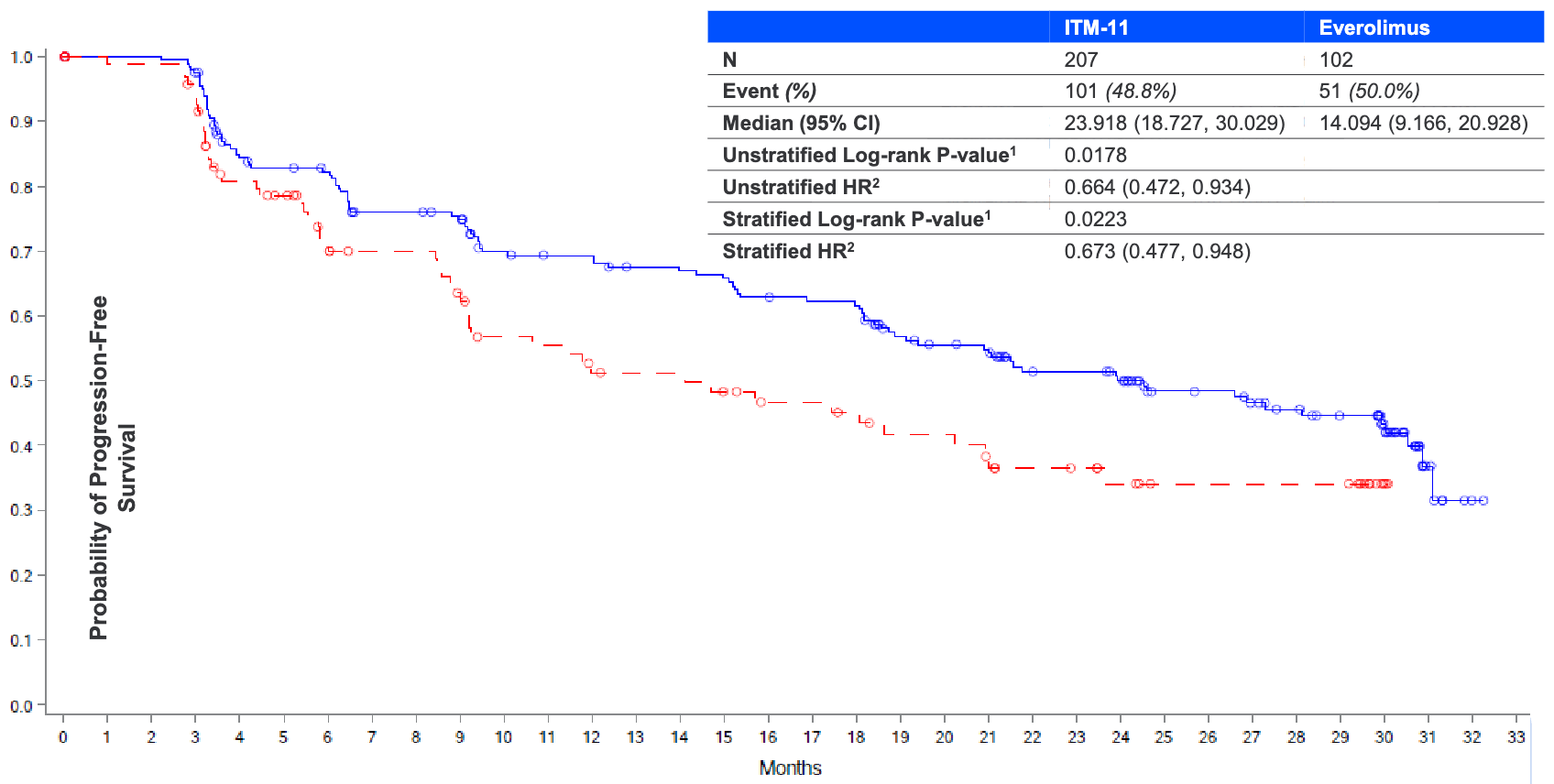
Building on momentum from COMPETE, ITM initiated the global Phase 3 COMPOSE trial (NCT04919226). Recognizing that patients with more aggressive, higher-grade tumors had limited choices, COMPOSE was designed to evaluate ITM-11 in patients with well-differentiated, aggressive Grade 2 and Grade 3 SSTR-positive GEP-NETs. In COMPOSE, ITM-11 is being evaluated as a first- or second-line treatment against physician’s choice standard chemotherapy (such as CAPTEM or FOLFOX) or everolimus, expanding PRRT’s footprint into higher-risk oncology settings.
With robust efficacy, safety, and dosimetry data from the COMPETE trial in hand, ITM submitted a New Drug Application (NDA) for ITM-11 to the FDA. In August 2026, the FDA issued a Complete Response Letter (CRL). According to company disclosures, the FDA raised no concerns regarding the clinical safety or efficacy data, nor did it request additional clinical trials. Instead, the CRL cited specific Chemistry, Manufacturing, and Controls (CMC) and inspection findings at a third-party commercial manufacturing facility. Nevertheless, ITM intends to resubmit the NDA to complete FDA review, although timing remains subject to remediation and agency interaction.
Ionizing Aussies
Speaking of Telix, they also played a significant role in nucleating radiopharmaceuticals. Founded in Melbourne, Australia, in November 2015 by Dr. Christian Behrenbruch and Dr. Andreas Kluge, Telix Pharmaceuticals was built on a bold premise: that theranostics, the integration of targeted molecular imaging with precision radiation therapy, would become a foundational pillar of modern oncology.
The strategy focused on pairing specific targeting vectors (such as small molecules or monoclonal antibodies) with short-lived radioisotopes to both “see and treat” cancer cells. In November 2017, Telix listed on the Australian Securities Exchange (ASX: TLX), raising A$50 million. Rather than focusing solely on long-shot therapeutic clinical trials, Telix prioritized rapid-to-market diagnostic imaging agents to build early commercial infrastructure and fund its broader R&D pipeline. Their strategy bore fruit in late 2021, when the FDA approved Illuccix (a Gallium-68 PSMA-11 kit) for prostate cancer imaging. Launched commercially in early 2022, Illuccix quickly established a significant share of the U.S. prostate cancer imaging market, transforming Telix from a pre-revenue company to a commercial-stage company generating tens of millions of dollars annually. This commercial execution provided a rare self-sustaining cash flow engine in the biotech space, enabling Telix to scale without relying heavily on dilutive capital raises.
By 2026, Telix further solidified its position at the center of the radiopharmaceutical renaissance. In April 2026, Telix entered into a major multi-billion-dollar 50/50 cost/profit-sharing partnership with Regeneron Pharmaceuticals to combine Regeneron’s antibody discovery platform with Telix’s radiomanufacturing capabilities across solid tumor programs. Beyond prostate cancer, Telix broadened its diagnostic portfolio with FDA approvals for imaging agents like Gozellix (next-gen PSMA) and Pixclara (glioma/brain cancer imaging), while expanding clinical trials across renal and bone cancers. Their latest move, as of the time of this publication, is an agreement to merge with ITM Isotope Technologies Munich SE, uniting Telix’s global radiopharmacy distribution network and commercial scale with ITM’s production capabilities and late-stage therapeutic candidates.
Mutually Assured Manufacturing
The Telix-ITM tie-up does far beyond the typical pipeline integration activities seen in traditional biotech M&A. The combination of Telix Pharmaceuticals and ITM Isotope Technologies Munich SE creates an end-to-end vertically integrated radiopharmaceutical entity with global reach. Their individual manufacturing and distribution infrastructures operate at opposite ends of the radiopharmaceutical value chain, making their merger structurally complementary.
Starting in 2024, Telix executed a rapid series of vertical integration moves to better control its distribution channels for approved radiopharm diagnostics. They acquired ARTMS Inc. for $57.5 million upfront to secure proprietary cyclotron-based isotope production technology. The in-housed QUANTM Irradiation System (QIS) enables hospital or regional cyclotrons to produce high-demand diagnostic and therapeutic radiometals locally, reducing dependence on centralized nuclear reactors. Then, in early 2025, Telix completed the landmark acquisition of RLS (USA) Inc., securing the largest independent Joint Commission-accredited network of 31 radiopharmacies in major U.S. metropolitan areas with over 100,000 sq. ft. of expansion space. This gave Telix localized “last-mile” dose-compounding, packaging, and courier delivery capabilities across the United States.
As for ITM, their territory in the radioisotope manufacturing spans far beyond the world’s largest production site for GMP-grade no-carrier-added Lutetium-177 (177Lu) in Germany. Since radiopharmaceutical production depends on access to nuclear research reactors, ITM has sought to establish a global, multi-continent network to secure raw isotope precursor material. ITM has partnered with Bruce Power, Isogen, and the Saugeen Ojibway Nation to install automated Isotope Production Systems (IPS) directly inside commercial nuclear power reactors in Ontario, Canada. This partnership unlocked commercial-scale continuous irradiation capacities for 177Lu. To manufacture n.c.a. 177Lu, ITM holds proprietary, highly enriched stockpiles of Ytterbium-176 (176Yb) and utilizes a closed-loop recycling process to safeguard its supply against global geopolitical or supply-chain shocks.
To lead the transition toward alpha-particle and Auger-electron therapies, ITM expanded beyond beta-emitters. Partnering with Canadian Nuclear Laboratories (CNL), ITM formed Actineer to scale production of Actinium-225 (225Ac), a highly coveted short-supply alpha isotope, using proton cyclotrons on Radium-226 targets. Furthermore, ITM integrated custom processing lines for 161Tb, establishing the commercial availability of this emerging Auger-emitting isotope for targeted micro-metastatic therapies.
As we mentioned before, therapeutic isotopes decay constantly, which limits the shelf-life of radioactive diagnostics & therapeutics. To solve this, ITM created a seamless distribution network capable of delivering doses to clinics across over 65 countries. ITM guarantees priority delivery within 24-48 hours across Europe and North America, and within 72 hours globally. ITM established its North American headquarters in Princeton, New Jersey, positioning local commercial, regulatory, and technical operations directly adjacent to major East Coast logistics hubs.
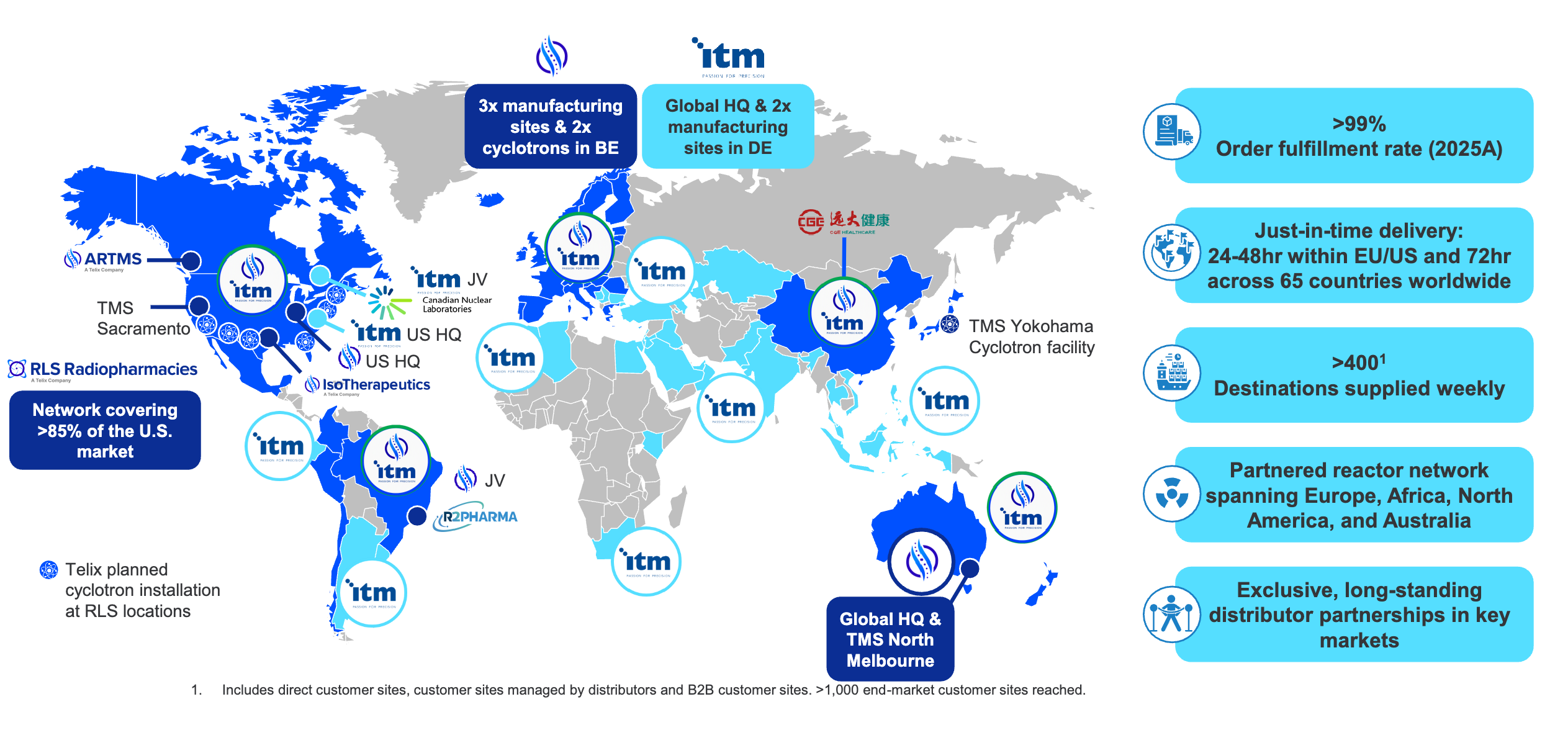
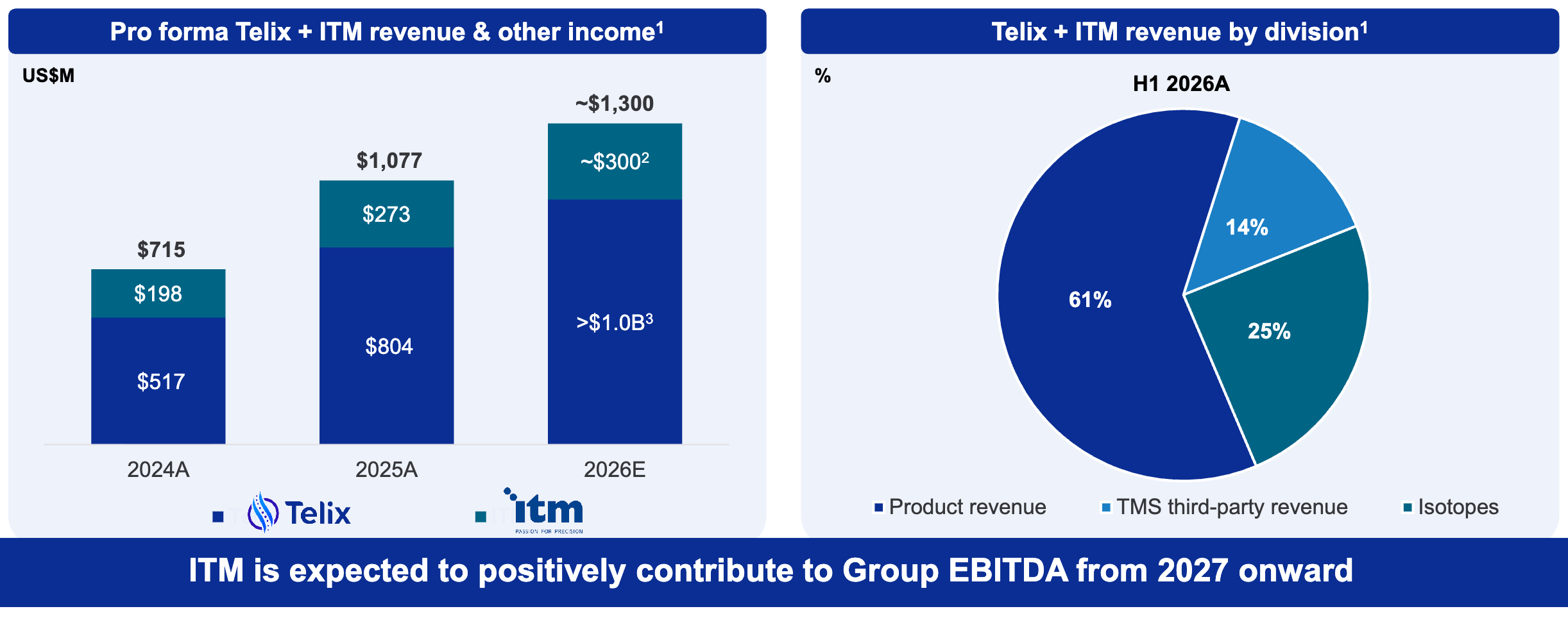
Before the merger, Telix relied on external isotope vendors to supply raw materials for its diagnostic and therapeutic pipeline. ITM was primarily a bulk producer that supplied isotopes to third parties. If successfully integrated, the combined entity could control nearly every stage of the lifecycle: target enrichment, reactor/cyclotron irradiation, chemical purification, cGMP radiolabeling, and final delivery to hospital nuclear medicine departments. With Telix expanding its late-stage therapeutic clinical pipeline and acquiring ITM’s late-stage candidate ITM-11 (177Lu-edotreotide), having direct control over ITM’s NOVA site guarantees an uninterrupted, internal supply of high-grade, no-carrier-added Lutetium-177. This could mitigate third-party isotope supply risks during commercial scale-up. Finally, the merged company combines revenue streams with a diversified product mix.
Conclusion
The $2.35 billion merger between Telix and ITM Isotope marks a defining moment in the maturation of targeted radionuclide therapies. In an industry where a drug’s commercial viability lives and dies on nuclear physics and supply chain logistics, controlling the full stack, from reactor isotope enrichment at NOVA to last-mile compounding across RLS radiopharmacies, creates an unprecedented competitive moat. While near-term execution will hinges on remediating ITM-11’s third-party manufacturing CRL and clearing regulatory hurdles, the broader strategic rationale is unmistakable: to build a vertically integrated radiopharmaceutical giant with unparalleled global scale. As alpha and Auger-emitting therapies transition from bench to bedside, Telix-ITM is uniquely positioned to set the pace for the future of radiation oncology.
Radiopharmaceutical Competitive Landscape
All charts reflect data current as of the specified date and may not include every drug development program, although we aimed to capture the vast majority. Please feel free to email me at biotechreadout@gmail.com with “CHARTS” in the subject line to share suggestions or request chart updates.
Press ⬇️ to navigate to a section