

Disclaimer: This newsletter is for educational and informational purposes only and does not constitute medical, investment, or financial advice, nor does it establish a provider-patient relationship. Content may include forward-looking statements and discussions of investigational therapeutic candidates that are not FDA/EMA approved; their safety and efficacy remain unestablished and clinical outcomes are unpredictable. While we strive for accuracy, all information is provided as is without guarantees. As of the date of publication, the author holds no direct equity positions in the specific companies mentioned in this issue nor receives third-party compensation for this coverage. Please find a complete version of our disclaimers at the bottom of the article and linked here.

Press ⬇️ to go down to a section and ⬆️ to go back up to the Table of Contents
Table of Contents
The European Society for Medical Oncology (ESMO) 2026 Congress took place from October 23 to October 27, 2026, in Madrid, Spain. Europe’s largest cancer conference produced a deluge of clinical breakthroughs, so we split our ESMO 2026 coverage into four separate articles. Subscribe so you don’t miss them!
ESMO 2026: Genitourinary & Reproductive Cancers (you are here)
In this article, we focus on the following genitourinary & reproductive cancer datasets from ESMO 2026:
FRα Strikes Ovarian Cancer
Diverse Mechanisms Pursue HER2- mBC
Celcuity - Revtorpyk (pan-PI3K/mTOR inhibitor) / Phase 3, VIKTORIA-1 (HR+ HER2- mBC) ⬇️
Novartis - Kisqali (CDK4/6 inhibitor) / Phase 3, NATALEE (HR+ HER2- mBC) ⬇️
BMS - Iza-bren (EGFR x HER3 ADC) / Phase 3, PANKU-Breast01 (HR+ HER2- mBC) ⬇️
Merck - Pembrolizumab (anti-PD1 mAb) / Phase 3, KEYNOTE-B49 (HR+ HER2- mBC) ⬇️
BioNTech & DualityBio - Trastuzumab pamirtecan (HER2 ADC) / Phase 3, DYNASTY-Breast02 (HR+ HER2- mBC) ⬇️
Other Notable Genitourinary & Reproductive Datasets
CSPC - Anbenitamab (HER2 x HER2 mAb) / Phase 3, HEALER (HER2+ mBC) ⬇️
AstraZeneca & Pfizer - Imfinzi (anti-PDL1 mAb) + Padcev (Nectin-4 ADC) ± Imjudo (anti-CTLA4 mAb) / Phase 3, VOLGA (MIBC) ⬇️
Merck - Sacituzumab Tirumotecan (TROP2 ADC) / Phase 3, TroFuse-005 (endometrial) ⬇️
J&J - JNJ-6143 (AR-BRD4 glue & RIPTAC) / Phase 1 (mCRPC) ⬇️
Xencor - XmAb819 (ENPP3 x CD3 TCE) / Phase 1 (ccRCC) ⬇️
FRα Strikes Ovarian Cancer
Folate Receptor Alpha (FRα) is a cell-surface glycoprotein that plays a critical role in the biology and treatment of ovarian cancer, particularly high-grade serous ovarian carcinoma (HGSOC). While FRα expression in normal adult tissues is minimal and restricted mainly to the apical surface of polarized epithelial cells (e.g., kidney tubules), it is overexpressed in roughly 75-80% of epithelial ovarian cancers. High expression is driven by the tumor’s increased metabolic demand for folate to sustain rapid cell division. High FRα expression correlates with advanced stage, poor differentiation, higher rates of disease recurrence, and reduced overall survival (OS). Furthermore, FRα overexpression is frequently retained or enriched in platinum-resistant ovarian cancer (PROC), making FRα antibody-drug conjugates (ADCs) an attractive therapeutic strategy for this treatment-resistant tumor type. ESMO 2026 featured four notable readouts in this space.
Genmab - Rinatabart Sesutecan (FRα ADC) / Phase 3, RAINFOL-02 (PROC)
Strangely enough, this groundbreaking data was not presented at ESMO 2026, but it was debuted during the conference and arguably generated the most buzz within the GU & Reproductive category covered in this article. On October 23, 2026, Genmab unveiled landmark findings from the Phase 3 RAINFOL-02 trial evaluating rinatabart sesutecan (Rina-S) in 584 heavily pretreated patients with platinum-resistant ovarian cancer (PROC) who had progressed following standard front-line regimens. Notably, Rina-S utilizes an advanced, hydrophilic protease-cleavable linker that is designed to maintain high stability in systemic circulation, drastically minimizing premature payload release and reducing off-target toxicities. Rina-S demonstrated profound risk reductions against investigator’s choice chemotherapy (ICC) across both major analysis populations. In the ITT population, Rina-S demonstrated a 71% reduction in the risk of disease progression or death (HR-PFS 0.29; p<0.0001) and 57% reduction in the risk of death (HR-OS 0.43; p<0.0001). Genmab plans to engage with regulatory authorities worldwide to discuss global marketing applications and submission timelines. Concurrently, clinical investigators are continuing to expand the broader Rina-S development program, evaluating its efficacy across earlier lines of therapy, platinum-sensitive settings, and other high-unmet-need tumors like endometrial cancer to fully establish its footprint in precision oncology.
Sources: Genmab press release
Link to top ⬆️
AstraZeneca - Torvutatug samrotecan (FRα ADC) / Phase 1-2a, FONTANA (PROC)
At ESMO 2026, updated results from the Phase 1/2a FONTANA trial evaluating AstraZeneca’s torvutatug samrotecan (Torvu-Sam / AZD8205) were unveiled by lead investigator Dr. Funda Meric-Bernstam and colleagues. The ADC carries a potent topoisomerase 1 inhibitor (TOP1i, payload AZ14170132) with a high and tightly controlled average drug-to-antibody ratio (DAR of 8.1). The FONTANA trail enrolled patients that had a median age of 64 years and a median of 2.0 prior lines of therapy (ranging up to 4 lines), with high baseline exposure to prior PARP inhibitors (60.3%) and bevacizumab (67.9%). Confirmed overall response rates (ORR) were meaningful across expression categories (see table below). In the FRα High subgroup, median DoR reached 10.2 months with a median PFS of 9.7 months, while the FRα Low subgroup showed a median DoR of 8.3 months and a median PFS of 7.6 months. Deep molecular responses mirrored clinical tumor reductions, showing an overall complete molecular response (CMR) rate of 47% and any ctDNA molecular response rate of 87% across evaluable patients.

The most common treatment-emergent adverse events (TEAEs) included nausea, fatigue, neutropenia, and anaemia. Grade ≥3 TEAE frequencies were dependent on dose intensity (45.3% at 1.6 mg/kg, 60.0% at 2.0 mg/kg, and 82.8% at 2.4 mg/kg), leading to dose reductions in 13.2% to 48.4% of patients across arms, while treatment discontinuation due to TEAEs remained low (4.4% to 14.1%). Low rates of interstitial lung disease (ILD)/pneumonitis were observed. AstraZeneca has initiated a comprehensive global Phase 3 ovarian cancer clinical development program consisting of three major trials:
TREVI-OC-01 (NCT07218809): Evaluates Torvu-Sam versus mirvetuximab soravtansine in FRa-high PROC, and Torvu-Sam versus investigator’s choice chemotherapy in FRa-low PROC.
TREVI-OC-02 (NCT07851025): Evaluates Torvu-Sam plus bevacizumab as first-line maintenance therapy in homologous recombination deficiency (HRD)-negative epithelial ovarian cancer.
TREVI-OC-03 (NCT07816666): Evaluates Torvu-Sam with or without bevacizumab as maintenance therapy in platinum-sensitive ovarian cancer (PSOC).
Sources: ESMO 2026 Abstract 1245RO
Zymeworks - ZW191 (FRα ADC) / Phase 1-2a (PROC)
Zymeworks presented updated clinical data for ZW191 at ESMO 2026. The construct carries ZD06519, a novel proprietary topoisomerase-1 inhibitor (TOP1i) payload developed by Zymeworks, paired via a high drug-to-antibody ratio (DAR) structure. The data presented stem from an ongoing, multi-center, open-label Phase 1/2a first-in-human trial evaluating ZW191 in advanced solid tumors, specifically emphasizing heavily pretreated PROC cohorts. Among response-evaluable patients with high-grade serous PROC, ZW191 delivered remarkable confirmed objective response rates, with the 6.4 mg/kg cohort reaching a cORR of 64.5% and a DCR of 100%, while the 9.6 mg/kg cohort reached a cORR of 55.3% and a DCR of 92.1%. Like other FRα ADC datasets, ZW191 showed robust activity beyond strictly high-expressing tumors: cORR reached 69.2% in high FRα expressors, 50.0% in intermediate expressors, and 55.0% in low/negative expressors, underscoring the power of its bystander mechanism. Responses appeared early and deepened over time, with median duration of response (DoR) not yet reached at data cutoff and median progression-free survival (PFS) tracking strongly in heavily pretreated lines. Grade ≥3 treatment-related adverse events (TRAEs) occurred in 22% of patients at the 6.4 mg/kg dose compared to 44% at the 9.6 mg/kg dose. TRAEs led to dose reductions in only 5% of patients at 6.4 mg/kg versus 33% at 9.6 mg/kg, while treatment discontinuations due to adverse events stood at 14% and 19%, respectively. No treatment-related deaths were reported. Zymeworks has indicated that these robust phase 1/2a findings will serve as the foundation to advance ZW191 into subsequent late-stage clinical development, pursued either through strategic partnerships or external collaborations to maximize its therapeutic reach.
Sources: Zymeworks press release
Eli Lilly - Sofetabart Mipitecan (FRα ADC) / Phase 1 (PSOC)
Eli Lilly presented first-in-human Phase 1 data evaluating sofetabart mipitecan (Sofe-M), both as a monotherapy and in combination with bevacizumab for patients with ovarian cancer. The presented data derive from a multi-part, open-label, first-in-human Phase 1 clinical trial evaluating safety, optimal dosing, and efficacy in advanced solid tumors, focusing heavily on high-grade serous ovarian cancer cohorts. In patients with platinum-sensitive ovarian cancer treated with Sofe-M plus bevacizumab (n=33), the combination achieved a confirmed objective response rate (cORR) of 79.3% and a disease control rate (DCR) of 100%, including a 20.7% complete response rate. At the selected Phase 3 dose of 3 mg/kg, single-agent Sofe-M yielded an ORR of 58.8% with a median PFS of 8.1 months. Notably, robust responses spanned across expression tiers, achieving a 44.4% ORR in tumors with FRα expression below 75%, and maintained a 57.9% ORR in patients who had previously progressed on prior mirvetuximab soravtansine. The most common treatment-emergent adverse events were nausea, fatigue, and anemia. Treatment-related Grade ≥3 events occurred in 42.9% of monotherapy patients, primarily driven by reversible hematologic abnormalities, with low discontinuation rates due to adverse events. Eli Lilly has established 3 mg/kg as the recommended Phase 3 dose and initiated the global FRAmework-01 registrational program. This clinical roadmap is actively evaluating Sofe-M as a monotherapy in platinum-resistant disease and in combination with bevacizumab for platinum-sensitive ovarian cancer to secure future regulatory approvals.
Sources: Eli Lilly press release
Diverse Mechanisms Pursue HER2- mBC
HER2-negative metastatic breast cancer (HER2- mBC), encompasses both hormone receptor-positive (HR+/HER2-) and triple-negative breast cancer (TNBC). These breast cancer types have considerable heterogeneity so finding actionable, precision-targeted drivers outside of hormone receptors or specific genomic alterations (like BRCA, PIK3CA, or AKT mutations) remains difficult, particularly for triple-negative tumors. Most patients eventually develop resistance to standard therapies, including endocrine therapies (coupled with CDK4/6 inhibitors) and successive lines of chemotherapy. This generally leads to disease progression and narrows future treatment options. In the metastatic setting, treatments are palliative rather than curative, meaning the goal is to prolong survival while preserving quality of life. Balancing the potent efficacy of modern agents (such as ADCs or multi-agent regimens) against cumulative systemic toxicities, such as severe neutropenia, neuropathy, or interstitial lung disease (ILD), is a constant challenge. While the recent recognition of “HER2-low” and “HER2-ultralow” categories has expanded treatment possibilities (with the use of HER2 ADCs), standardizing pathology assays to reliably and consistently quantify low-level protein expression across laboratories remains a technical hurdle. ESMO 2026 featured the success of Celcuity’s pan-PI3K, Novartis’ CDK4/6, and BMS’ EGFR x HER3 ADC Iza-bren, but also hosted clinical misses by Merck’s anti-PD1 mAb and BioNTech’s HER2 ADCs (despite clinical validation by AstraZeneca’s Enhertu).
Celcuity - Revtorpyk (pan-PI3K/mTOR inhibitor) / Phase 3, VIKTORIA-1 (HR+ HER2- mBC)
On July 14, 2026, the FDA approved Revtorpyk (gedatolisib), developed by Celcuity, as first and only FDA-approved therapy that inhibits all class I PI3K isoforms (α, β, δ, γ) for the treatment of adult patients with hormone receptor (HR)-positive, HER2-negative locally advanced or metastatic breast cancer with wild-type PIK3CA whose disease has progressed on or after at least one prior line of endocrine therapy. We covered this approval, as well as results from the Phase 3 data that supported the FDA decision, in Weekly Readout #14. These earlier disclosures and publications from VIKTORIA-1, such as those presented at SABCS and published in early 2026, focused exclusively on the PI3KCA wild-type (WT) cohort.
At ESMO 2026, Celcuity presented updated clinical findings from the PIK3CA mutant (MT) cohort, for which gedatolisib is still investigational and not yet FDA-approved. Since standard-of-care guidelines for PI3KCA-mutant advanced breast cancer involve targeting the PI3K pathway, the control arm for this cohort was alpelisib plus fulvestrant (rather than endocrine monotherapy alone), providing a direct head-to-head comparison against an established targeted therapy. Gedatolisib-based regimens demonstrated a highly statistically significant improvement in PFS compared to control therapies, with hazard ratios reflecting massive reductions in the risk of disease progression or death (p < 0.0001; see tables below). Evaluable patients treated with the gedatolisib regimens achieved markedly higher objective response rates (ORR) and exceptionally long median durations of response (DoR reaching upwards of 19 months in responders) compared to conventional single-agent therapies. The updated data also highlighted a major tolerability advantage over alpelisib, noting that discontinuation rates due to treatment-emergent adverse events were drastically lower with the gedatolisib triplet and doublet (4% to 5%) compared to the 19% discontinuation rate historically seen with alpelisib. Celcuity continues to advance its broader clinical roadmap for Revtorpyk. This includes ongoing execution of the VIKTORIA-2 Phase 3 program, which is investigating gedatolisib-based combinations in the first-line setting for both endocrine-resistant and endocrine-sensitive HR+/HER2- advanced breast cancer, alongside early-phase exploration in metastatic castration-resistant prostate cancer.
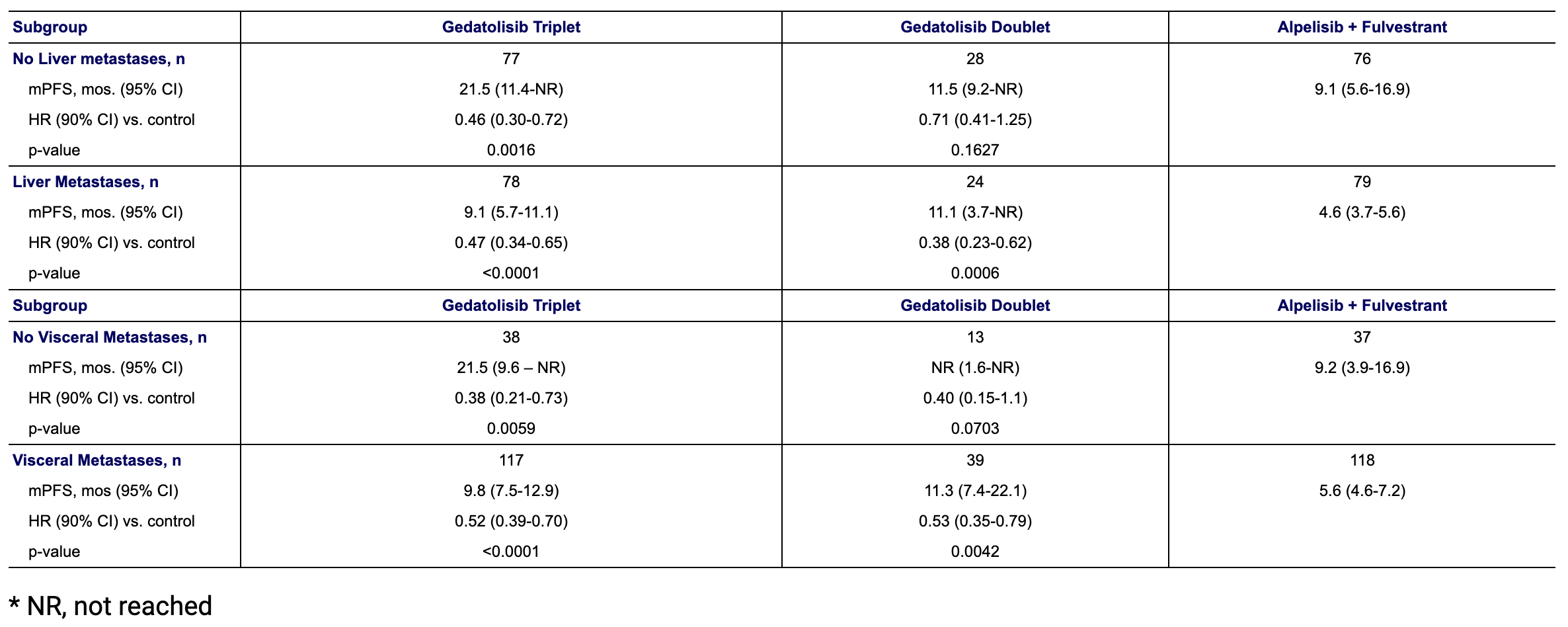

Sources: Celcuity press release
Novartis - Kisqali (CDK4/6 inhibitor) / Phase 3, NATALEE (HR+ HER2- mBC)
Updated landmark findings from the pivotal Phase 3 NATALEE trial evaluating Novartis’s Kisqali (ribociclib), a selective CDK4/6 inhibitor, were presented by lead investigator Dr. Dennis Slamon and colleagues. The NATALEE trial enrolled a total of 5,101 adult patients with Stage II and III HR+/HER2- early breast cancer across 20 countries, encompassing both node-negative and node-positive disease subsets. Patients were randomized 1:1 to receive Kisqali (400 mg daily, 3-weeks-on/1-week-off schedule) combined with a non-steroidal aromatase inhibitor (NSAI) for 3 years, versus NSAI alone for 5 years. Kisqali plus endocrine therapy reduced the risk of death by 19.1% compared to endocrine therapy alone (HR = 0.809; nominal p = 0.019). The 6-year OS rate reached 91.9% in the Kisqali arm versus 89.7% in the control arm, an absolute benefit of 2.1%. The iDFS benefit continued to widen even years after patients completed their 3-year course of Kisqali (with patients off treatment for a median of three years). The 6-year Invasive Disease-Free Survival (iDFS) rate was 83.2% with Kisqali versus 77.9% with endocrine therapy alone, translating to an absolute benefit of 5.3% (HR = 0.741; p < 0.0001). Consistent risk reductions were observed in distant disease-free survival (HR = 0.744) and breast cancer-specific survival (HR = 0.706), with fewer patients living with active metastatic disease in the Kisqali arm (5.0% vs. 6.8%). The safety profile remained consistent with established data, with no new safety signals. The lower 400 mg starting dose and intermittent schedule supported high tolerability. Early discontinuation rates due to adverse events were manageable, and the addition of ribociclib did not negatively impact long-term endocrine therapy adherence.
With the final protocol-specified survival analyses maturing and regulatory agencies globally reviewing these comprehensive datasets, this data could shift clinical practice guidelines to incorporate 3 years of adjuvant Kisqali as a routine standard for eligible high-risk early breast cancer patients. Concurrently, long-term follow-up protocols are tracking extended health outcomes, quality of life, and health-economic impacts as these cohorts move further past treatment completion.
Sources: Novartis press release
BMS - Iza-bren (EGFR x HER3 ADC) / Phase 3, PANKU-Breast01 (HR+ HER2- mBC)
Dr. Bo Lan and colleagues presented landmark findings from the pivotal Phase 3 PANKU-Breast01 trial evaluating izalontamab brengitecan (iza-bren), a potential first-in-class dual-targeting EGFR×HER3 bispecific antibody-drug conjugate (ADC) developed by SystImmune and partnered with Bristol Myers Squibb. PANKU-Breast01 enrolled 383 previously treated patients with locally advanced or metastatic HR+/HER2- breast cancer. Iza-bren reduced the risk of disease progression or death by 59% compared to chemotherapy (HR = 0.41; p < 0.0001). Median PFS more than doubled, reaching 8.2 months with iza-bren versus 4.0 months with chemotherapy. Sustained separation of the Kaplan-Meier curves at 9 months (~41.8% vs. 14.4%) and 12 months (~26.5% vs. 9.2%) underscored durable long-term disease control. Confirmed objective response rate (cORR) by BICR was approximately doubled at 40.5% for iza-bren compared to 20.2% for chemotherapy. Median duration of response (mDoR) extended to 6.9 months versus 4.2 months, respectively. Overall survival data remained immature at the time of the interim analysis. Grade ≥3 treatment-related adverse events occurred in a high proportion of patients, primarily driven by reversible hematologic toxicities (such as neutropenia and thrombocytopenia). However, treatment-related interstitial lung disease (ILD) incidence was notably low (around 1.1%, with only low-grade events reported), and permanent treatment discontinuations due to adverse events remained relatively uncommon given the longer median treatment exposure on iza-bren (7.3 vs. 4.3 months). Clinical and regulatory teams are preparing to engage health authorities to discuss global filing strategies. Future developmental steps will focus on maturing overall survival data, evaluating combination regimens, and defining iza-bren’s optimal positioning relative to other modern antibody-drug conjugates within an increasingly complex metastatic breast cancer treatment paradigm.
Sources: BMS press release
Merck - Pembrolizumab (anti-PD1 mAb) / Phase 3, KEYNOTE-B49 (HR+ HER2- mBC)
Since immunotherapy has historically struggled to establish a foothold in HR+ breast cancer, KEYNOTE-B49 sought to determine whether adding pembrolizumab to first-line chemotherapy could benefit a biomarker-defined, endocrine-resistant subset of patients. At ESMO 2026, Dr. Hope Rugo and colleagues presented findings from the pivotal Phase 3 KEYNOTE-B49 trial evaluating Merck’s anti-PD1 mAb pembrolizumab combined with chemotherapy in patients with centrally confirmed PD-L1-positive (CPS ≥1) HR+/HER2- locally recurrent inoperable or metastatic breast cancer who had progressed on prior endocrine therapy (including CDK4/6 inhibitors) and were naive to chemotherapy in the metastatic setting. Note that Keytruda (pembrolizumab) is still investigational and is not FDA-approved in this patient population. The study met its primary endpoint, showing a statistically significant improvement in PFS for the pembrolizumab combination. Median PFS was 6.7 months (95% CI, 6.2–8.3) with pembrolizumab-chemotherapy versus 6.0 months (95% CI, 4.2–8.1) with placebo-chemotherapy (HR, 0.74; p = 0.0089). Long-term curves highlighted a subset with sustained control, showing a 24-month PFS rate of 14.1% vs. 3.5%. However, the trial did not meet its overall survival endpoint. Median OS was 21.0 months in the pembrolizumab arm versus 22.2 months in the control arm (HR, 1.04; p = 0.6185). In the biomarker-enriched PD-L1 High Subgroup (CPS ≥10; represented ~21% of enrolled patients), the PFS benefit was more pronounced (median PFS 7.5 vs. 4.4 months; HR, 0.59), though it similarly translated to no statistically significant OS improvement. Grade ≥3 treatment-related adverse events occurred in 37.6% of the pembrolizumab arm versus 32.7% of the control arm. Treatment discontinuations due to adverse events were higher with immunotherapy (11.2% vs. 5.4%), and immune-mediated events included a 4.7% rate of pneumonitis.
Dr. Paolo Tarantino from the Dana-Farber Cancer Institute and Harvard Medical School shared the following comments:
“With the early introduction of immunotherapy, there was a 26% reduction in PFS, which is an interesting signal and suggests there is a cohort deriving benefit from this strategy. However, the absolute benefit was modest, and there was no improvement in overall survival (OS), thus these results are unlikely to be practice-changing.”
Sources: ESMO 2026 Abstract 1245RO, ESMO article
BioNTech & DualityBio - Trastuzumab pamirtecan (HER2 ADC) / Phase 3, DYNASTY-Breast02 (HR+ HER2- mBC)
BioNTech and DualityBiologics presented topline findings from the global Phase 3 DYNASTY-Breast02 trial evaluating trastuzumab pamirtecan (BNT323 / DB-1303), a third-generation antibody-drug conjugate (ADC) targeting HER2. DYNASTY-Breast02 enrolled 541 patients with HR+/HER2-low metastatic breast cancer (defined as IHC 2+/ISH- or IHC 1+). Patients were randomized 1:1 to receive either trastuzumab pamirtecan or investigator’s choice of single-agent chemotherapy (such as capecitabine, paclitaxel, or nab-paclitaxel). The trial met its primary endpoint, demonstrating a statistically significant improvement in PFS for trastuzumab pamirtecan compared to chemotherapy. However, clinical investigators and analysts characterized the improvement as “modest”. At the interim analysis window, overall survival data were not yet mature. While general adverse events were manageable, the trial highlighted a notable safety signal involving interstitial lung disease (ILD) cases, mirroring class-wide toxicities seen with topoisomerase-1 inhibitor ADCs. In light of the trial’s findings, BioNTech and DualityBio noted that the potential clinical benefit for trastuzumab pamirtecan in this specific HR+/HER2-low breast cancer space appears limited. Consequently, the companies are evaluating the totality of clinical data across ongoing trials, including studies in HER2-expressing endometrial cancer and broader solid tumor programs, to determine strategic positioning and regulatory pathways moving forward.
Sources: BioNTech press release
Other Notable Genitourinary & Reproductive Datasets
CSPC - Anbenitamab (HER2 x HER2 mAb) / Phase 3, HEALER (HER2+ mBC)
Potentially practice-changing findings from the pivotal Phase 3 HEALER trial evaluating anbenitamab (KN026), developed by Alphamab Oncology and partnered with CSPC Pharmaceutical Group, were presented at ESMO 2026 and simultaneously published in NEJM. Anbenitamab is an innovative bispecific antibody built on a proprietary charge repulsion-induced bispecific (CRIB) platform. It simultaneously binds to two non-overlapping epitopes of the HER2 receptor (acting effectively as a single molecule combining the binding properties of both trastuzumab and pertuzumab), resulting in enhanced receptor clustering, antibody-dependent cellular cytotoxicity (ADCC), complement-dependent cytotoxicity (CDC), and robust downregulation of cell-surface HER2. In the HEALER trial, anbenitamab was combined with HB1801, an albumin-bound nanoparticle formulation of docetaxel designed to optimize drug delivery and therapeutic index compared to traditional solvent-based taxanes.
The open-label Phase 3 HEALER trial was conducted exclusively in China and enrolled 885 treatment-naive patients with recurrent or metastatic HER2-positive breast cancer who had not received prior systemic chemotherapy or HER2-targeted therapy for advanced disease. Patients were randomized to receive either anbenitamab plus HB1801 versus the standard THP regimen (trastuzumab + pertuzumab + docetaxel). Anbenitamab plus HB1801 reduced the risk of disease progression or death by 54% compared with the THP control arm (HR = 0.46). At the 24-month landmark, 58.5% of patients in the anbenitamab arm were alive without progression versus 34.4% in the control arm—an absolute improvement of 24.1 percentage points. Median PFS in the control arm was 14.3 months, whereas median PFS for the anbenitamab combination was prolonged and not yet reached at data cutoff. Confirmed objective response rates (ORR) reached 87.6% with the anbenitamab regimen compared to 73.4% for standard THP. Overall survival data were immature at the interim analysis window, though early trends favored the experimental arm. Grade ≥3 adverse events occurred in 45.9% of patients in the anbenitamab-HB1801 arm versus 34.4% in the THP arm, driven by increased rates of transient anemia, diarrhea, alopecia, edema, and neutropenia. Despite this, treatment discontinuation rates due to adverse events remained low and comparable between arms (5.2% vs. 3.4%).
CSPC and Alphamab are engaging regulatory bodies to review filing pathways (primarily the NMPA since HEALER was a China-only trial). Concurrently, clinical development is expanding into early-stage and adjuvant settings via ongoing initiatives like the Phase 3 KN026-007 adjuvant trial, ensuring anbenitamab’s evaluation across the full continuum of HER2-positive breast cancer care.
Sources: Alphamab press release, NEJM paper
AstraZeneca & Pfizer - Imfinzi (anti-PDL1 mAb) + Padcev (Nectin-4 ADC) ± Imjudo (anti-CTLA4 mAb) / Phase 3, VOLGA (MIBC)
AstraZeneca presented potential practice-changing data from the pivotal Phase 3 VOLGA trial. Results were simultaneously published in NEJM. While prior milestones like the NIAGARA trial established perioperative Imfinzi (durvalumab) alongside cisplatin-based chemotherapy as a standard for cisplatin-eligible muscle-invasive bladder cancer (MIBC), up to half of all MIBC patients are ineligible for cisplatin due to renal impairment or comorbidities and face high recurrence rates with surgery alone. The VOLGA trial addressed this critical population by evaluating perioperative Imfinzi combined with the Nectin-4-directed antibody-drug conjugate Padcev (enfortumab vedotin), with or without the anti-CTLA-4 antibody Imjudo (tremelimumab), offering a much-needed non-cisplatin perioperative regimen. Note that this combo is still investigational and is not currently FDA-approved.
Perioperative Imfinzi plus neoadjuvant enfortumab vedotin reduced the risk of disease recurrence, progression, or death by an impressive 49% compared to the control arm. More than three-quarters of patients treated with the combination were alive and free of events at the two-year landmark. The regimen yielded a 42% reduction in the risk of death, establishing deep survival separation early in the post-surgical window. The safety profile of the durvalumab-plus-enfortumab vedotin combination was “manageable and consistent with the known individual profiles of the agents, with acceptable rates of surgical delays or perioperative complications”, according to AstraZeneca.
Dr. Michiel van der Heijden from the Netherlands Cancer Institute shared the following comments:
“VOLGA is clearly a positive trial in line with the KEYNOTE-905/EV-303 trial of EV plus pembrolizumab in the cisplatin-ineligible setting. The KEYNOTE-B15/EV-304 trial in cisplatin-eligible patients prompted the U.S. Food and Drug Administration to expand the combination’s label to include peri-operative treatment of MIBC.” He notes that further investigations are now needed to determine whether EV should be used in the adjuvant setting, since it was used peri-operatively in KEYNOTE-905/EV-303 and KEYNOTE-B15/EV-304, while it was used only in the neoadjuvant setting in VOLGA.
Building on these positive Phase 3 results and a recent FDA Priority Review designation, regulatory submissions are underway globally. Clinical investigators will continue tracking longer-term overall survival and quality-of-life metrics, while translational efforts focus on biomarker evaluations to further refine patient selection and optimize sequencing strategies in early-stage urothelial carcinoma.
Sources: AstraZeneca press release, NEJM paper, ESMO article
Merck - Sacituzumab Tirumotecan (TROP2 ADC) / Phase 3, TroFuse-005 (endometrial)
Potentially practice-changing findings from the pivotal Phase 3 TroFuse-005 (ENGOT-en23/GOG-3095) trial evaluating Merck and Kelun-Biotech’s sacituzumab tirumotecan (sac-TMT), a next-generation TROP2-directed antibody-drug conjugate (ADC), were presented by lead investigator Dr. Domenica Lorusso. Results were simultaneously published in Lancet. Focusing on patients with advanced or recurrent endometrial cancer who had progressed following platinum-based chemotherapy and anti-PD-1/PD-L1 immunotherapy, the presentation addressed a critical therapeutic void, demonstrating profound survival gains over conventional single-agent salvage chemotherapy.
The open-label Phase 3 TroFuse-005 trial enrolled a total of 776 patients with advanced or recurrent endometrial carcinoma or carcinosarcoma who had progressed after receiving up to three prior lines of therapy, including platinum-based chemotherapy and immunotherapy. Patients were randomized 1:1 to receive either sacituzumab tirumotecan (4 mg/kg intravenously every two weeks) or treatment of physician’s choice (TPC) (doxorubicin or paclitaxel). Sac-TMT reduced the risk of death by 32% compared to chemotherapy (HR = 0.68; p < 0.0001). Median OS was dramatically extended to 19.0 months with sac-TMT versus 12.1 months with chemotherapy, a nearly seven-month improvement. The trial met its co-primary endpoint by reducing the risk of disease progression or death by 41% (HR = 0.59; p < 0.0001). Median PFS reached 7.2 months compared to 3.9 months for chemotherapy. The confirmed objective response rate more than doubled, reaching 35.1% for sac-TMT versus 17.3% for chemotherapy, alongside a deeper and more sustained median duration of response (11.1 vs. 6.9 months). Grade ≥3 treatment-related adverse events occurred in 54.4% of patients on sac-TMT versus 41.4% on chemotherapy, with common events including anemia, neutropenia, and stomatitis. Permanent treatment discontinuations due to adverse events remained low (3.1% vs. 4.9%), and global quality-of-life scores were successfully maintained over time in both groups.
Dr. Antonio González-Martín from Cancer Center Clínica Universidad de Navarra shared the following comments:
“Notably, almost 85% of the patients included in the study had pMMR disease and almost 80% had medium or high expression of TROP2. An approximate 40% reduction in the risk of progression or death at 1 year is an important improvement for these patients.”
[…]
“To demonstrate this level of OS benefit in this setting is not only remarkable, but also clinically meaningful, because a 32% reduction in the risk of death and extension of median survival by 7 months is highly important to patients. While not currently validated, there is a signal that TROP2 could become a biomarker.”
[…]
“Beyond continuing to refine the role of immunotherapy for endometrial cancer for patients progressing to first-line chemotherapy plus immunotherapy, ADCs will undoubtedly become the standard of care. A biomarker for the selection of patients will therefore be a necessity for selecting the most appropriate therapy among a plethora of options.”
Building on these positive findings, regulatory bodies are actively reviewing the data, with the FDA having already accepted a BLA for sac-TMT with Priority Review in this indication. Concurrently, clinical development is expanding to evaluate sac-TMT in earlier lines of therapy and across broader combination strategies with immunotherapies in women’s cancers.
Sources: Merck press release, Lancet paper, ESMO article
J&J - JNJ-6143 (AR-BRD4 glue & RIPTAC) / Phase 1 (mCRPC)
Johnson & Johnson presented striking first-in-human Phase 1 clinical data for JNJ-6143 (formerly HLD-0915), a first-in-class oral Regulated Induced Proximity Targeting Chimera (RIPTAC) molecule. This asset was the centerpiece of Johnson & Johnson’s $3.05 billion acquisition of Halda Therapeutics in December 2025. The RIPTAC platform is engineered to simultaneously bind a tumor-selective protein highly expressed in the cancer cells, in this case the androgen receptor (AR), and an essential cell-survival protein, BRD4. Rather than using BRD4 normally to regulate general transcription, the drug physically sequesters BRD4’s activity and redirects its powerful cell-survival machinery exclusively to the tumor-driving androgen receptor complex. This aberrant locking disrupts normal cellular function, essentially weaponizing an essential housekeeping protein. By trapping BRD4 where it shouldn’t be and locking up its function, the cancer cell’s vital processes collapse, actively triggering targeted tumor cell death.
Their ESMO 2026 presentation stemmed from an ongoing, multicenter Phase 1 clinical trial (NCT06800313) evaluating JNJ-6143 in heavily pretreated patients with metastatic castration-resistant prostate cancer (mCRPC) who had progressed through a median of four prior lines of systemic therapy, including advanced AR-targeted therapies, taxane-based chemotherapy, and radioligand treatments. Among response-evaluable patients with measurable disease treated at the recommended 50 mg once-daily dose, JNJ-6143 achieved a confirmed complete or partial tumor response rate of 75%. Furthermore, confirmed objective response rates reached 69% broadly across evaluated subsets. The drug drove deep biochemical responses, with 77% of patients experiencing a confirmed PSA reduction of at least 50% (PSA50), and nearly half (48%) achieving deep reductions of at least 90% (PSA90). Notably, these responses occurred irrespective of high-risk molecular features. At the time of the data cutoff, 71% of patients in the 50 mg cohort remained actively on treatment, with a median follow-up of 5.6 months and a median duration of response tracking at 11.0 months. The majority of treatment-related adverse events were mild to moderate (Grade 1 or 2), most commonly transient elevations in cholesterol or triglycerides and mild nausea. Rates of treatment interruption (11%), dose reduction (3%), and discontinuation due to adverse events (3%) remained exceptionally low.
ApexOnco did a wonderful analysis of this first look, which I highly recommend. They cited J&J’s vice-president of global medical affairs, Mark Wildgust, as saying that the PSA50 results with JNJ-6143 are “some of best data out there”. Johnson & Johnson selected the 50 mg once-daily dose to advance into late-stage development. J&J has officially initiated the global Phase 2 study (NCT07832292) to further evaluate JNJ-6143 in metastatic prostate cancer while exploring the broader clinical potential of the RIPTAC platform across other solid tumor indications.
Sources: J&J press release, ApexOnco article
Xencor - XmAb819 (ENPP3 x CD3 TCE) / Phase 1 (ccRCC)
At ESMO 2026, Xencor presented updated Phase 1 dose-selection and expansion data for XmAb819, a potential first-in-class ENPP3 x CD3 bispecific T-cell engager (TCE). The data readout stemmed from the ongoing XmAb819-01 (NCT05433142) Phase 1 dose-escalation and expansion study, which enrolled heavily pretreated patients with advanced ccRCC who had received a median of 3 prior systemic regimens, all of whom had progressed on prior immune checkpoint inhibitors and VEGFR-TKIs (with over 60% having received ≥2 prior VEGFR-TKIs and roughly one-third exposed to HIF-2-alpha inhibitors). XmAb819 showed deep, durable responses. At the selected 400 mcg/kg expansion dose, the confirmed objective response rate reached 45.5%, accompanied by an overall disease control rate of 81.8%. Earlier expansion tiers (100 mcg/kg and 200 mcg/kg) also demonstrated robust disease control and consistent single-agent activity. At the top dose tier, more than 70% of patients remained on active treatment at a median follow-up of 6 months, translating to a promising 6-month progression-free survival Kaplan-Meier estimate of 82%. Highly pretreated triple-class-exposed subgroups (including prior HIF-2-alpha and multi-line TKI progression) also showed deep response rates ranging from 35% to 45%. Cytokine release syndrome (CRS) was predominantly low-grade and transient, dropping sharply to low single-digit rates after target dosing was reached. Grade ≥3 transaminase elevations were mostly asymptomatic and transient, and permanent treatment discontinuation rates due to adverse events remained low at 7.4%. Based on these findings, Xencor selected 400 mcg/kg intravenously as the recommended Phase 3 dose (RP3D). The company plans to engage the FDA in the first half of 2027 to discuss potential accelerated approval pathways in targeted ccRCC subgroups, run subcutaneous administration readouts, and initiate a global randomized pivotal Phase 3 study comparing XmAb819 against standard tivozanib.
Sources: Xencor press release
Love biotech? Check out Biotech Readout’s full content library, or navigate directly to a segment that interests you:
Frontiers in Medicine: Exploring the frontiers of our understanding and treatments for disease.
Medical History: Recovering forgotten relics in the history of medicine.
Acquisitions: Exploring the innovation behind acquired companies.
Weekly Readout: A digest of new clinical data from the past week.

To contact us, please send us an email at biotechreadout@gmail.com
Disclaimers
Investigational Status Disclaimer
The therapeutic candidates discussed in this newsletter are currently in clinical development and have not been approved for commercial sale by the U.S. Food and Drug Administration (FDA), the European Medicines Agency (EMA), or other global regulatory authorities. Their safety and efficacy have not been established. References to pipeline products and ongoing clinical trials involve significant risks and uncertainties. Statements regarding the potential safety, potency, or efficacy of investigational drugs reflect current hypotheses and are not a guarantee of future performance or regulatory clearance. The outcome of clinical trials is inherently unpredictable, and clinical results from earlier stages may not be predictive of results in later, larger-scale trials.
No Medical Advice Disclaimer
This newsletter is for informational and educational purposes only. The content is not intended to be a substitute for professional medical advice, diagnosis, or treatment. Always seek the advice of your physician or another qualified health provider with any questions you may have regarding a medical condition. Never disregard professional medical advice or delay in seeking it because of something you have read in this publication.
No Patient-Provider Relationship Disclaimer
The information provided in this newsletter is for educational and analytical purposes only. Receipt of this information, or any interaction with this content, does not create a physician-patient, pharmacist-patient, or any other professional-provider relationship between you and the authors or publishers. This newsletter should not be used as a substitute for a personal consultation with a qualified healthcare professional.
Forward-Looking Statements Disclaimer
This newsletter contains “forward-looking statements” regarding future events, including clinical trial timing, regulatory milestones, and projected market performance. These statements are based on current expectations and assumptions that are subject to significant risks and uncertainties. Actual results may differ materially from those expressed or implied. We undertake no obligation to update these statements as a result of new information or future developments.
Third-Party Links & Content Disclaimer
This newsletter contains links to third-party websites, including clinical trial registries and corporate presentations. Biotech Readout does not endorse, guarantee, or assume responsibility for the accuracy or reliability of any information offered by third-party providers.
Errors and Omissions Disclaimer
While we strive for technical accuracy, the information in this newsletter is provided on an “as is” basis with no guarantees of completeness, accuracy, or timeliness. Biotech Readout assumes no liability for any errors or omissions in the content of this publication.
Non-Endorsement Disclaimer
Any reference to specific commercial products, processes, or services by trade name, trademark, or manufacturer does not constitute or imply an endorsement or recommendation by the author. All trademarks are the property of their respective owners.
No Investment Advice Disclaimer
This newsletter is for informational purposes only and does not constitute financial, investment, or legal advice. The author is not a registered investment advisor. You should consult with a professional financial advisor before making any investment decisions. The biotechnology sector is highly volatile; past performance is not indicative of future results.
Conflict of Interest Disclaimer
The author of this newsletter maintains a position of independence. At the time of publication, the author holds no direct financial interest, equity, or options in any of the companies mentioned in this report. No compensation has been received from any third party to feature or analyze specific therapeutic candidates or corporate entities.