

Disclaimer: This newsletter is for educational and informational purposes only and does not constitute medical, investment, or financial advice, nor does it establish a provider-patient relationship. Content may include forward-looking statements and discussions of investigational therapeutic candidates that are not FDA/EMA approved; their safety and efficacy remain unestablished and clinical outcomes are unpredictable. While we strive for accuracy, all information is provided as is without guarantees. As of the date of publication, the author holds no direct equity positions in the specific companies mentioned in this issue nor receives third-party compensation for this coverage. Please find a complete version of our disclaimers at the bottom of the article and linked here.

Press ⬇️ to go down to a section and ⬆️ to go back up to the Table of Contents
Table of Contents
The European Society for Medical Oncology (ESMO) 2026 Congress took place from October 23 to October 27, 2026, in Madrid, Spain. Europe’s largest cancer conference produced a deluge of clinical breakthroughs, so we split our ESMO 2026 coverage into four separate articles. Subscribe so you don’t miss them!
ESMO 2026: Immuno-oncology (you are here)
In this article, we focus on the following next generation immuno-oncology datasets from ESMO 2026:
Moderna’s Neoantigen Vaccine Sets T-Cells Against Melanoma & PDAC
PD(L)1 x VEGF Multi-specifics Scorch Immune “Hot” Tumors
Summit & Akeso - Ivonescimab (PD1 x VEGF mAb) / Phase 3, HARMONi-GI1 (BTC) ⬇️
BMS & BioNTech - Pumitamig (PDL1 x VEGF-A mAb) / Phase 2, ROSETTA Lung-107 (NSCLC) ⬇️
BMS & BioNTech - Pumitamig (PDL1 x VEGF-A mAb) / Phase 2 (NETs) ⬇️
BMS & BioNTech - Pumitamig (PDL1 x VEGF-A mAb) / Phase 2 (SE-SCLC, TNBC) ⬇️
CStone - CS2009 (PD1 x VEGF x CTLA4 mAb) / Phase 1-2 (NSCLC, mCRC) ⬇️
Moderna’s Neoantigen Vaccine Sets T-Cells Against Melanoma & PDAC
Before we discuss Moderna’s cancer vaccine, it’s worth remembering how we arrived at the current moment in immuno-oncology. Let me explain.
It began with the forging of immunotherapies. Two were directed at CTLA4; immortalized with a Nobel Prize, wisest, and fairest of all IO targets. One was directed at LAG3, made by the great drug hunters and craftsmen of Bristol Myers Squibb. And several was directed at TIGIT, who above all else desire Fc activation. For within these immunotherapies was bound the strength and the will to direct the immune system to fight cancer. But they were all of them deceived, for another immunotherapy was made. In the land of Organon, in the fires of Schering-Plough, the Lord of IO Merck forged in secret, a master immunotherapy, to control all others. And into this immunotherapy, Merck poured all its epitope binding hotspots, its slower dissociation kinetics and its will to enrich for responders using the proportion of their tumor that expressed PD-L1. One immunotherapy to rule them all: Keytruda (pembrolizumab). One by one, cancers with a high mutational burden fell to the power of Keytruda. It became approved for 19 different types of cancer encompassing a total of 44 distinct clinical indications and, in 2023, it crossed $23 billion annualized revenue run rate, according to 10-Q filings, and became the bestselling medicine of all time.
But there were some who resisted. A last alliance of mRNA and LNP marched against the armies of Keytruda, and on the very slopes of melanoma, they fought to advance the frontier of immuno-oncology. Victory was near, but the power of Keytruda could not be undone. It was in this moment, when all hope had faded, that Moderna, creator of the COVID-19 vaccine, took up its COVID revenues and reinvested them into a personalized neoantigen vaccine for cancer. And Keytruda, enemy of immune “hot” cancers, was defeated.
…or was it?
Moderna & Merck - Intismeran autogene (34-valent neoantigen mRNA) + Keytruda (anti-PD1 mAb) / Phase 3, INTerpath-001 (melanoma)
It has always has been necessary to separate the “science” of Moderna from the “business” of Moderna. The science is interesting and impactful. Their COVID-19 vaccine was one of the most effective and first available vaccines that many of us took, for those of you who are living in the United States. The business, on the other hand, grew to become larger than many big pharma companies at its peak in September 2021, only to crash almost 95% as the COVID-19 pandemic fizzled out.
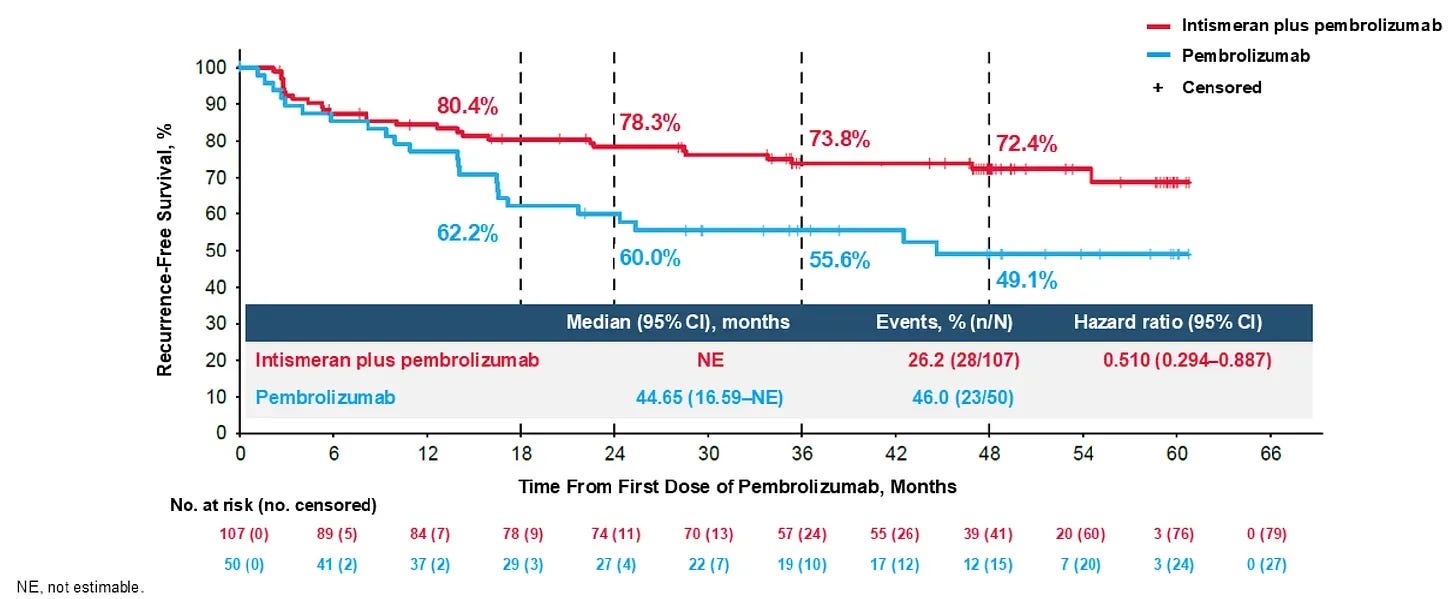
Then in 2026, history rhymed. On August 19, 2026, Moderna and partner Merck announced positive topline results from the Phase 3 INTerpath-001 trial evaluating intismeran autogene (mRNA-4157 / V940), an individualized neoantigen therapy, in combination with Keytruda (pembrolizumab) for patients with completely resected high-risk (stage IIB-IV) cutaneous melanoma. We covered this original press release in Weekly Review #19. At a prespecified interim analysis, the combination met its primary endpoint by delivering statistically significant and clinically meaningful improvements in Recurrence-Free Survival (RFS) compared to Keytruda alone, while also achieving statistical significance for Distant Metastasis-Free Survival (DMFS) with a manageable safety profile consistent with prior data. While they didn’t immediately report quantitative results, they had previously reported 5-year follow-up data from the randomized Phase 2b KEYNOTE-942 / mRNA-4157-P201 trial in completely resected stage III/IV melanoma at the ASCO Congress in June 2026. They showed that, at a median planned follow-up of 60.3 months (~5 years), adjuvant intismeran autogene plus Keytruda demonstrated a 49% reduction in the risk of recurrence or death versus Keytruda alone (HR=0.510; 95% CI: 0.294-0.887), which showed remarkable stability compared to a prior 3-year data cut (HR = 0.51) and demonstrated that the RFS benefit did not decay over time. The “science” of Moderna looks intriguing, at the very least.
The “business” of Moderna was another story. I documented the pandemonium that followed in an article entitled Programming Medicines to Attack Cancer:
The market reaction was explosive. On the day that Moderna reported the results (August 19, 2026), the company’s stock closed up 177%, making it the largest single-day jump for any S&P 500 stock of all time. Everyone cheered in unison for a victory against cancer, right? Not so fast. The tech community was quick to claim the victory as their own because they believed the drug was made using AI (it wasn’t). Dario [Amodei] vindicated? Cancer cured? I don’t think so. Meanwhile, the biotech community scoffed at the AI claims and grumbled at the lack of numerical data in the press release. According to New York-based analytics firm S3 Partners, hedge funds who were short Moderna stock, thinking that the company would wither away after the COVID-19 pandemic, reportedly racked up about $5.5 billion in estimated losses. Enthusiasm for Moderna’s breakthrough result came and, to quote South Park, “and it’s gone.”
Moderna turned the biotech industry upside down, and I was looking forward to the industry being turned right side up again when the full topline data was released at ESMO 2026. What ensued dialed the theatrics up to eleven. On October 24, 2026 October 22, 2026, results from Moderna’s & Merck’s highly anticipated Phase 3 INTerpath-001 trial were leaked to the public from a medical publication called Oncology Central, which apparently published the embargoed Phase 3 clinical trial figures one day before the ESMO 2026 conference began and two days before the presentation was supposed to happen. About two hours later, ESMO lifted the embargo on the data, including its abstract and the full dataset. Then the theatrics cranked up to twelve (ie. one higher). A fitness influencer named Shane Stoffer, or “Togi”, livestreamed himself flipping his personal brokerage account from fully long Moderna (which he had done after a dream that the company cured cancer) to full port puts on Moderna (betting it will go down) after posting on X that Moderna, “not curing no cancer bruh”, which he quickly exited while the company sunk about 20%. To mis-quote The Godfather, this was personal, not business.
Ok, but what did the actual data show? Intismeran autogene combined with pembrolizumab reduced the risk of disease recurrence or death by 42% compared to pembrolizumab monotherapy (HR=0.58, P < 0.001; 24-month recurrence free survival/RFS was 82.2% for the combo versus 70% for pembrolizumab monotherapy), which is strikingly consistent with the RFS-HR=0.51 in their prior Phase 2b trial considering that every patient gets a different personalized vaccine. The curves looks similar until around month 9, which is when they start separating. Distant metastasis-free survival (DMFS) also improved (HR=0.62, P=0.002), although the delta meaningfully shrunk from the Phase 2b (24-month DMFS of 88.5% vs 80.2% in INTerpath-001 versus 90.8% vs 70.6% in the Phase 2b). Grade 3-5 treatment-related adverse events were comparable between the combination arm (14.2%) and the control arm (13.4%), although discontinuations were nearly double with the combo (14.2% versus 8.7%).
Primary endpoint met. Noted. What did other physicians think about the data? Serving as the invited official discussant for the INTerpath-001 trial presentation, Dr. Inge Marie Svane (Professor and Director of the National Center for Cancer Immune Therapy at Copenhagen University Hospital, Herlev) delivered a critical appraisal of the data. While echoing the general consensus that the trial represents a historic watershed moment for oncology, Dr. Svane contextualized the triumph with vital clinical, logistical, and scientific considerations:
“These findings mark a crucial moment in the field of cancer vaccines,” explains Prof. Inge Marie Svane from Copenhagen University Hospital, Herlev, Denmark. “The reported HRs are convincing and show that intismeran offers additional benefit to pembrolizumab in the adjuvant setting.” Although this interim analysis showed no overall survival benefit, Svane acknowledges that this may reflect the short follow-up to date (median 24.6 months). On safety, no serious safety signals were reported. “Adverse events (AEs) were primarily fever, fatigue and injection site pain, which is typical of viral vaccines as well,” she notes. Rates of serious AEs (SAEs) and discontinuation of both agents due to AEs were similar between the intismeran and placebo groups (SAEs: 17.6% versus 15.8%; discontinuations: 6.5% versus 5.3%).
[…]
“Current guidelines recommend considering neoadjuvant therapy for these patients, so clinicians will need guidance on choosing between neoadjuvant checkpoint inhibition and adjuvant vaccine therapy,” advises Svane. There is also the potential to use intismeran as a neoadjuvant treatment. However, manufacturing time will be a challenge in this setting. “Each vaccine has to be prepared for the individual patient, which takes time and limits when it can be given. The key question is whether the vaccine can be prepared on a shorter timeline,” she explains. In the metastatic setting, intismeran’s role appears uncertain: “In patients with advanced disease, current guidelines recommend dual checkpoint inhibition as first-line treatment and it is unclear whether this mRNA-based vaccine will achieve the same level of efficacy,” Svane concludes.
Dr. Svane wasn’t too worried about intismeran autogene’s safety, but a hawk-eyed oncologist from Bower Hospital in Turkey flagged a numerical imbalance of deaths (Grade 5 AEs), which the company shrugged off as “[not] related to intismeran”.


In a way, the full INTerpath-001 data leave us with more questions than answers:
Will intismeran autogene’s manufacturing constraints limit its real-world use?
Will regulators take a closer look at the numerical imbalance of Grade 5 AEs?
Will the combo show an overall survival benefit with longer follow-up?
Or, are these concerns much ado about nothing? A win is a win.
While we wrestle with these questions, Moderna and Merck plan to move full speed ahead. They are actively advancing the broader INTerpath clinical program, which spans nine Phase 2 and 3 trials exploring intismeran across other challenging solid tumors, including non-small cell lung cancer (NSCLC), bladder cancer, and renal cell carcinoma. Concurrently, the companies are engaging with global regulatory authorities (such as the FDA and EMA) to review the data for potential marketing applications in melanoma, while manufacturing infrastructure scales up to handle the complex, rapid turnaround required to produce individualized mRNA sequences for thousands of patients worldwide.
The silver lining to all of this is that the positive Phase 3 INTerpath-001 trial indeed represents a “scientific” feat that marks a major milestone in the history of cancer therapeutics, regardless of debates about the business. I’ll leave you with another passage from my article entitled Programming Medicines to Kill Cancer:
This is the first milestone in precision oncology for an investigational agent that is still in clinical trials, but I believe its mechanism is new enough to merit a place on this list. Allow me to separate the signal from the noise in one sentence: Moderna’s intismeran autogene is precision oncology taken to its logical extreme. Let me explain.
There is no other drug in the history of precision oncology that looks like this drug. Even one batch of the drug looks different than another batch! By using next-generation sequencing on resected tumor tissue, intismeran autogene encodes up to 34 patient-specific neoantigens into a single mRNA strand to prime host dendritic cells and expand cytotoxic T-cell populations against residual tumor cells. The key word there is “patient-specific”. The neoantigens that are baked into the drug cocktail for a specific patient are customized for them, based on the mutational profile of their specific tumor. Not only does this look different than any other mechanism of action, but it isn’t even one-size-fits-all like all other medicines have been since the dawn of time (x drug given for all patients with y disease). Even CAR-T therapies require insertion of the same chimeric antigen receptor (CAR) in every patient. With intismeran autogene, every patient gets a customized instantiation of the drug. Like I said, precision oncology taken to its extreme.
Not only is intismeran autogene’s personalization novel, but it could be the first medicine that never goes generic, since there’s no single product to mass produce after the product’s key patent expires. Typically, in drug development, the end of a Phase 3 also demarcates the spiritual end of a clinical journey. Yet, this feels like the beginning of a much longer journey. Indeed, the spirit of Keytruda (pembrolizumab) endured.

Sources: FiercePharma article, Bezinga article, ESMO 2026 Abstract LBA1, ESMO article, X post by Dr. Yakup Ergün, LOTR Fellowship script, Moderna press release, Moderna slide deck
Moderna & Merck - Intismeran autogene (34-valent neoantigen mRNA) / Phase 1 (PDAC)
Another big question surrounding intismeran autogene is whether the drug has any applications outside of melanoma. Framed another way, can it make immune “cold” tumors “hot” enough to respond to immunotherapy? You see, melanoma isn’t just any old cancer. Melanoma is the “hottest” of all cancers, with the highest tumor mutational burden (TMB). Driven largely by ultraviolet (UV) radiation damage, melanoma possesses an extraordinarily high Tumor Mutational Burden (TMB), often averaging hundreds of mutations per exome and theoretically producing the most neoantigens for the immune system to recognize. This makes it the most immunogenic cancer. Unsurprisingly, melanoma was the very first indication in which Keytruda (pembrolizumab) received FDA approval, back on September 4, 2014. Scientists have long noted that subsequent approvals of Keytruda have trended towards higher TMB’s, as indicated in red in the graph below.
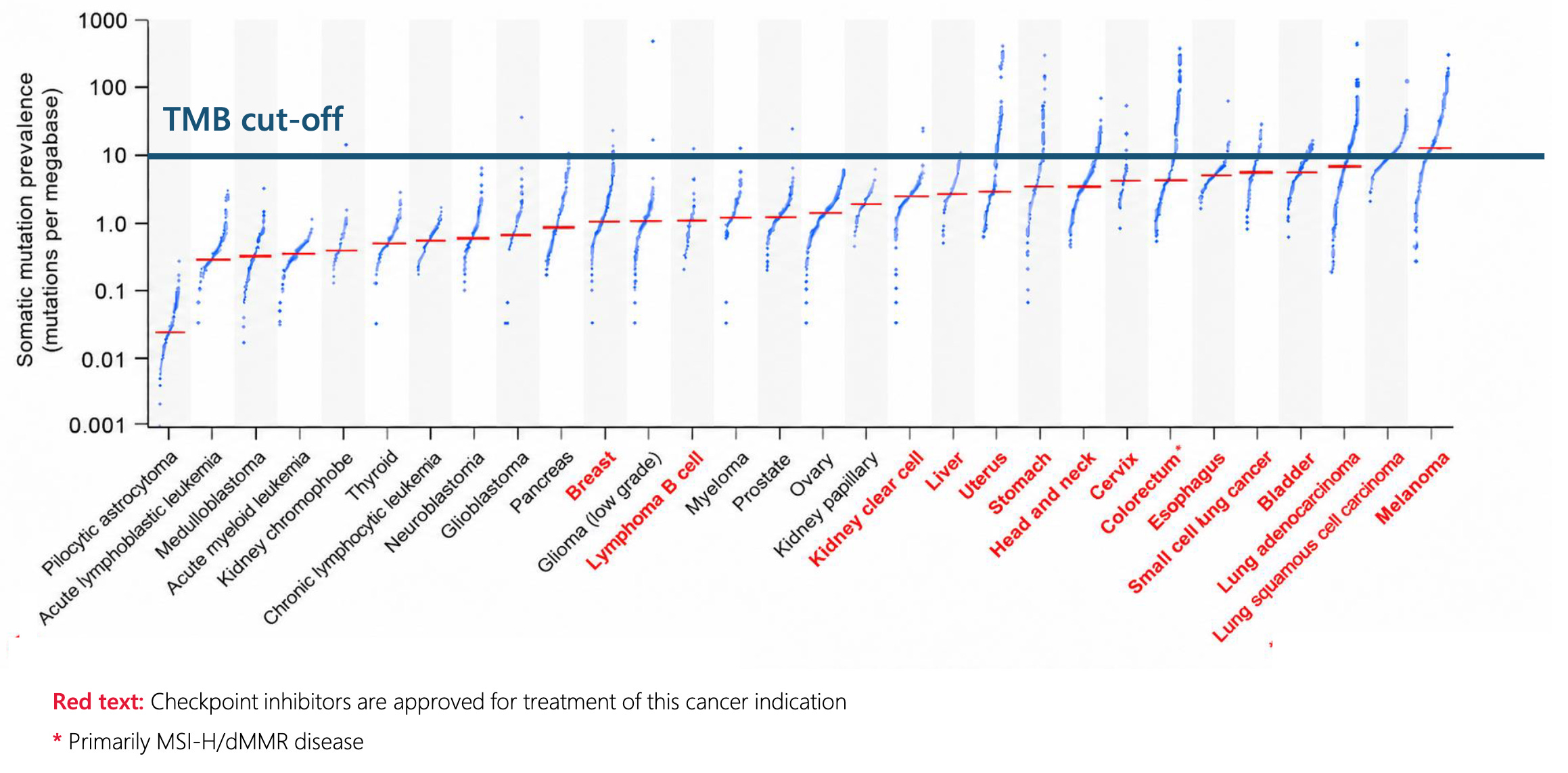
The topline success of the Phase 3 INTerpath-001 trial showed that intismeran autogene made an immune “hot” tumor “hotter”, but that’s the low-hanging fruit. If Moderna’s mRNA cancer vaccine was able to unmask hidden cancer cells to the immune system, its major clinical utility ought to be in cancer types in which Keytruda has historically struggled to show efficacy.
Enter pancreatic ductal adenocarcinoma (PDAC). PDAC has a characteristically low TMB (typically a median of around 34 mutations per exome). It lacks a heavy burden of UV or chemical mutational drivers, offering very few foreign-looking neoantigens for the immune system to spot. Furthermore, its dense, fibrotic, and immunosuppressive stroma actively repels effector T-cells, creating an immune-desert or “cold” microenvironment populated instead by suppressive myeloid cells and regulatory T-cells. Since very few T-cells successfully infiltrate PDAC in the first place, simply blocking the PD1 checkpoint with a drug like Keytruda achieves very little. There are no sleeping T-cells to wake up.
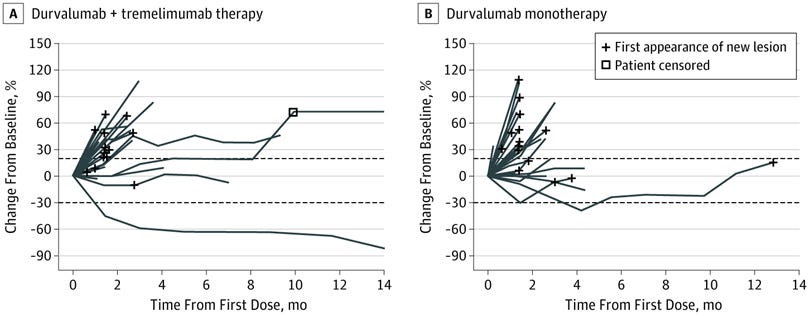
Indeed, as a single-agent monotherapy, the PD(L)1 immunotherapy class has overwhelmingly failed to show efficacy in pancreatic cancer. The clearest example is AstraZeneca’s disappointing Phase 2 trial evaluating the combination of anti-PDL1 mAb durvalumab and anti-CTLA4 mAb tremelimumab versus durvalumab monotherapy in 65 patients with mPDAC who had previously received only one first-line fluorouracil–based or gemcitabine-based treatment. The 12-month objective response rate was a paltry 3.1% for patients receiving PDL1/CTLA4 combination therapy and 0% for patients receiving PDL1 monotherapy. Paradoxically, the single patient with a confirmed partial response had PDL1-low/negative expression (≤25% positive cells in a biopsy), with no PD-L1-expressing tumor cells. The authors of the 2019 JAMA publication who reported this readout concluded by saying, “the absence of significant activity of durvalumab with or without tremelimumab in patients with mPDAC indicates that combining modes of action in this small study did not sufficiently overcome the immune inhibitory environment known to be a key contributor to poor response in patients with mPDAC.”
Could intismeran autogene give hope to PDAC patients who need treatment options? We won’t know for many years, but we got hints at ESMO 2026. Moderna and Merck presented early results from Cohort A2 of their Phase 1 mRNA-4157-P101 trial, which evaluated their 34-valent neoantigen vaccine intismeran autogene in 20 adult patients with histologically confirmed, completely resected (R0/R1) PDAC who were disease-free at study entry and had tissue available for next-generation sequencing (NGS) with an ECOG performance status 0 or 1 (healthy enough to perform light physical activity). Patients sequentially received a lead-in phase of intismeran monotherapy (up to 5 doses intramuscularly every 3 weeks), followed by adjuvant intismeran combined with standard-of-care FOLFIRINOX chemotherapy (up to 12 cycles), concluding with a maintenance intismeran monotherapy phase (totaling up to 16 planned doses).
Despite the characteristically low TMB of PDAC (median of 34 nonsynonymous mutations/exome), the NGS success rate was 83% with a 100% neoantigen selection algorithm pass rate, successfully encoding a median of 34 neoantigens per patient. Most patients (80%) completed all 16 planned intismeran doses (median duration of 45 weeks). Treatment-emergent adverse events were largely consistent with the known toxicity of FOLFIRINOX (such as neutropenia and fatigue), alongside low-grade, transient injection site reactions typical of the mRNA vaccine. No patients discontinued intismeran due to drug-related adverse events.
Interestingly, neoantigen-specific T-cell responses were detected in 100% of evaluable patients (19/19) by ELISpot. Intracellular cytokine staining confirmed that intismeran induced polyfunctional, cytotoxic CD4+ and CD8+ T-cell responses directed against multiple encoded neoantigens per patient. Furthermore, TCR sequencing demonstrated robust expansion of novel, treatment-emergent T-cell clones across treatment phases, suggesting that the vaccine successfully broke immune tolerance even during concurrent chemotherapy. At a median follow-up of ~17 months, 11 patients remained recurrence-free with no deaths reported in this high-risk cohort. These findings are certainly immature and are far from the bluesky outcome of sensitizing PDAC to immunotherapy, but they do provide the first clinical evidence suggesting that intismeran autogene could stimulate neoantigen-specific T-cell responses in PDAC patients with a low TMB. With larger randomized trials, we will see whether these early signals translate to a clinically meaningful benefit for this high unmet medical need.
Sources: Moderna slide deck, O’Reily et al., JAMA (2019), ESMO 2026 Abstract 3151P
PD(L)1 x VEGF Multi-specifics Scorch Immune “Hot” Tumors
Moderna’s mRNA vaccine isn’t the only think coming for King Keytruda. PD(L)1 x VEGF multi-specific antibodies, led by Summit Therapeutics and their China-based innovator Akeso, have sought to claim the commanding heights of IO. By fusing a PD-1/PD-L1 inhibitor with a VEGF blocker into a single bispecific architecture, these molecules are designed to concentrate activity heavily inside the tumor microenvironment (where VEGF is abundant), enhancing binding avidity and reducing systemic on-target, off-tumor toxicity compared to fixed-dose combinations of the two separate mechanisms. ESMO 2026 hosted the ongoing progress to that end.
Summit & Akeso - Ivonescimab (PD1 x VEGF mAb) / Phase 3, HARMONi-GI1 (BTC)
At ESMO 2026, Akeso and Summit unveiled positive results of the HARMONi-GI1 trial (AK112-309), a registrational Phase 3 study evaluating ivonescimab (a first-in-class PD-1 × VEGF bispecific antibody) combined with chemotherapy in advanced biliary tract cancer (BTC). Highlighted during a prestigious Presidential Symposium, the trial demonstrates that dual-targeting PD1 x VEGF antibodies can decisively outperform established immune checkpoint blockades in historically difficult-to-treat gastrointestinal tumors in a Chinese population.
The Phase 3 HARMONi-GI1 was conducted in China and enrolled 682 patients with advanced BTC were enrolled in the intention-to-treat (ITT) population. At a median follow-up of 14.3 months, the interim analysis of the HARMONi-GI1 study demonstrated superior clinical efficacy for the ivonescimab arm across primary and secondary metrics. Ivonescimab plus chemotherapy achieved a statistically significant and clinically meaningful improvement in OS compared to anti-PD-L1 mAb durvalumab plus chemotherapy, with a stratified hazard ratio (HR) of 0.75 (p = 0.0031). The median OS reached 14.9 months in the ivonescimab arm versus 12.1 months in the control arm. Estimated 12-month and 18-month OS rates were 59.7% vs. 50.7% and 44.0% vs. 32.5%, respectively. The study also met its key secondary endpoint for PFS, showing a highly significant risk reduction with an HR of 0.61 (p < 0.0001). Median PFS was 8.4 months for ivonescimab-chemo compared to 5.8 months for the durvalumab-chemo arm. Ivonescimab substantially deepened tumor shrinkage, yielding an Objective Response Rate (ORR) of 53.8% (vs. 32.5% for control) and a Disease Control Rate (DCR) of 91.5% (vs. 77.8% for control). The safety profile observed was consistent with prior clinical evaluations of ivonescimab, remaining manageable and tolerable.
The trial’s positive outcome isn’t the only thing that makes this readout meaningful. Ivonescimab’s clinical validation has thus far centered around PD-L1 positive non-small cell lung cancer (NSCLC), culminating in the positive HARMONi-2 (conducted in China). In the head-to-head trial, ivonescimab reduced the risk of disease progression by nearly half (PFS HR 0.51) and demonstrating a statistically significant overall survival benefit (median OS of 30.8 months vs. 22.6 months; OS HR 0.73) compared to Keytruda (pembrolizumab). The positive HARMONi-GI1 trial marks the first successful Phase 3 study for ivonescimab outside of non-small cell lung cancer. Proving success in gastrointestinal oncology, specifically in a notoriously aggressive and immunosuppressive tumor type like biliary tract cancer, validates the drug’s mechanism across different tissue types. That is, until we get confirmation in a Phase 3 trial conducted in the US.
Akeso and Summit are utilizing the positive Phase 3 HARMONi-GI1 data to support ongoing and future regulatory filings. Broadening the geographic clinical footprint, Summit Therapeutics and the ECOG-ACRIN Cancer Research Group initiated a US registration-enabling Phase 2/3 clinical study evaluating ivonescimab in biliary tract cancer. Ivonescimab continues to be evaluated across an extensive global clinical program encompassing roughly 17 Phase 3 clinical trials spanning various solid tumor (including colorectal cancer, urothelial carcinoma, and renal cell carcinoma) as part of broader combination strategies.
Sources: ESMO 2026 Abstract LBA8, Summit press release
BMS & BioNTech - Pumitamig (PDL1 x VEGF-A mAb) / Phase 2, ROSETTA Lung-107 (NSCLC)
Much like the gold rush that RevMed set off in the RAS inhibitor space, which we covered in our previous ESMO 2026 article, the success of Summit/Akeso’s ivonescimab has attracted others to devote efforts into developing their own PD(L)1 x VEGF bispecific, including Bristol Myers Squibb (BMS) and BioNTech. Their investigational candidate, pumitamig, is a bispecific antibody engineered to simultaneously target and neutralize PD-L1 and VEGF-A.
The duo reported results from their Phase 2 ROSETTA Lung-107 trial, which enrolled 59 patients across global sites (including the US, UK, South Korea, Spain, Türkiye, and Australia) with stage IV squamous or non-squamous NSCLC whose disease had progressed following initial chemo-immunotherapy, regardless of their PD-L1 expression level. Among the efficacy-evaluable patient population, pumitamig plus docetaxel achieved a confirmed Objective Response Rate (ORR) of 36.7%. Evaluated across treated patients, the regimen yielded a median Progression-Free Survival (PFS) of 6.9 months. The combination displayed a manageable and tolerable safety profile consistent with the broader clinical program, with no unexpected overlapping toxicities between the bispecific antibody and chemotherapy backbone. BioNTech and Bristol Myers Squibb are leveraging these Phase 2 results to guide ongoing registrational trials, including extensive global Phase 2/3 and Phase 3 studies (such as the ROSETTA Lung-02 trial evaluating pumitamig combinations in first-line settings). Pumitamig is actively being evaluated in over 10 clinical trials investigating novel combination pairings (including regimens alongside antibody-drug conjugates (ADCs) like B7-H3 or TROP2 inhibitors) to test its potential as a backbone immunotherapy across multiple hard-to-treat solid tumors.
Sources: ESMO 2026 Abstract LBA76, BioNTech press release
BMS & BioNTech - Pumitamig (PDL1 x VEGF-A mAb) / Phase 2 (NETs)
BMS & BioNTech also showcased Phase 2 clinical data for pumitamig plus FOLFIRI in advanced neuroendocrine tumors (NETs), a notoriously difficult-to-treat group of malignancies characterized by rapid growth, high recurrence rates, and scarce therapeutic options once patients progress past initial platinum-based chemotherapy. Pumitamig combined with FOLFIRI achieved a confirmed Objective Response Rate (ORR) of 40.0% in patients with unresectable neuroendocrine carcinomas who had progressed after first-line therapy. The regimen also delivered a median Progression-Free Survival (PFS) of 5.5 months, offering a meaningful disease control interval in a setting where second-line options traditionally yield brief remissions. However, one patient died following intracranial haemorrhage due to disease progression, reported as treatment-related.
Dr. Jaydira Del Rivero from the National Cancer Institute (NCI) stated the following:
“As a small, single-arm study, it sets the stage for randomised trials that can define how much pumitamig adds to active chemotherapy.
[…]
The toxicity profile underscores the importance of careful patient selection, particularly in patients with aggressive disease who may already be frail or heavily pre-treated. However, because pumitamig was given with FOLFIRI, not every TRAE can be attributed to the bispecific antibody; randomised data and component-specific safety reporting will be important.
[…]
It would also be interesting to test this agent in a randomised controlled study versus standard of care to see whether durable responses could be achieved, which is a key goal.”
Sources: ESMO 2026 Abstract 2393O, ESMO article
BMS & BioNTech - Pumitamig (PDL1 x VEGF-A mAb) / Phase 2 (SE-SCLC, TNBC)
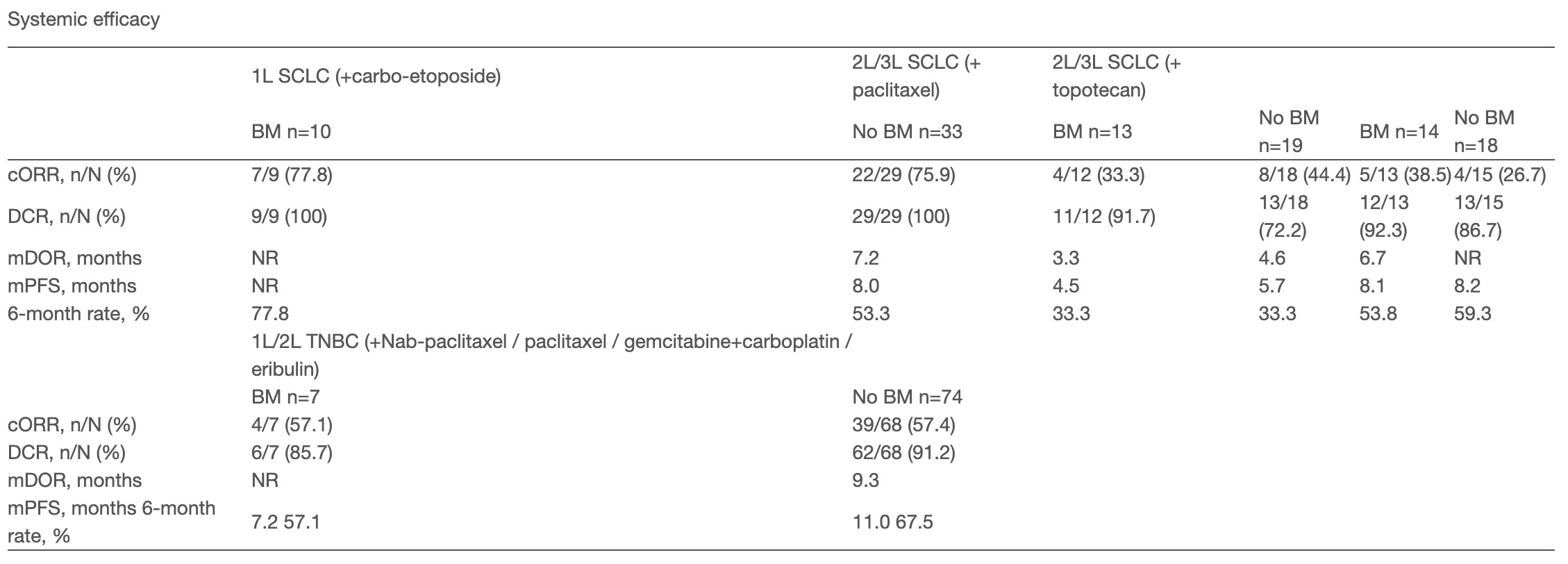
The duo also presented a data for pumitamig in patients with advanced, unresectable small cell lung cancer (SCLC) and triple-negative breast cancer (TNBC) patients whose disease involved brain metastases. Historically, these patients have faced restricted therapeutic options due to the blood-brain barrier and poor drug penetration. In the context of metastatic lesions, including those within the central nervous system, vascular normalization with a VEGF inhibitor could reduce elevated interstitial pressure and optimize the microenvironment for immune cell trafficking and concurrent chemotherapy delivery.
Data presented in Abstract 1951RO pooled patients with active or treated brain metastases drawn from two parallel Phase 2 clinical trials evaluating pumitamig-chemotherapy combinations in advanced solid tumors, specifically incorporating cohorts from SCLC and TNBC trials. Pumitamig plus chemotherapy demonstrated notable systemic responses that translated into meaningful intracranial disease control, indicating that the bispecific antibody effectively reaches and active-manages CNS lesions. Responses observed in patients with brain metastases mirrored systemic clinical benefits, delaying central nervous system progression. The combination maintained a manageable safety profile consistent with prior global pumitamig datasets, with no unexpected compounding neurotoxicities or overlapping systemic safety signals identified in patients with brain metastases.
Sources: ESMO 2026 Abstract 1951RO
CStone - CS2009 (PD1 x VEGF x CTLA4 mAb) / Phase 1-2 (NSCLC, mCRC)
In the spirit of mechanism stacking, China-based CStone Pharmaceuticals presented results from a Phase 1/2 trial evaluating their tri-specific PD1 x VEGF x CTLA4 mAb called CS2009. The ongoing trial enrolled over 300 heavily pretreated patients, including cohorts evaluating monotherapy and chemotherapy combinations in advanced NSCLC, pMMR/MSS metastatic colorectal cancer (mCRC), and other immune “cold” tumors. At ESMO 2026, they reported results from their NSCLC and mCRC cohorts:
Non-Small Cell Lung Cancer (NSCLC): As a monotherapy in first-line PD-L1-high NSCLC, CS2009 achieved an 87.5% ORR (reaching 100% at the 30 mg/kg dose level). In heavily pretreated, post-immunotherapy NSCLC, monotherapy at the 30 mg/kg dose yielded a 28.0% ORR with a median duration of response of 10.5 months. When combined with chemotherapy, it reached an ORR of 85.7% in first-line squamous NSCLC.
Metastatic Colorectal Cancer (mCRC): In first-line pMMR/MSS (microsatellite stable) mCRC, a setting typically resistant to checkpoint monotherapy, CS2009 combined with XELOX achieved an ORR of 63.6% and a DCR of 100%, including a 68.8% ORR in patients with liver metastases. As a monotherapy in heavily pretreated mCRC, it produced a 20.0% ORR and a 93.3% DCR.
Despite incorporating a CTLA-4 mechanism, CS2009 exhibited a low incidence of severe immune-related adverse events and manageable VEGF-related toxicities, mirroring the milder tolerability profiles typically seen with standard PD-1/VEGF bispecifics rather than legacy anti-CTLA-4 regimens. CStone is preparing to launch global Phase 3 registrational trials to evaluate CS2009 in definitive late-stage settings. They also shared that they are engaging in active discussions with multinational pharmaceutical companies to secure strategic partnerships aimed at accelerating global co-development and maximizing commercialization pathways.
Sources: CStone press release, ESMO 2026 Abstract 2616RO, ESMO 2026 Abstract 1953RO
Love biotech? Check out Biotech Readout’s full content library, or navigate directly to a segment that interests you:
Frontiers in Medicine: Exploring the frontiers of our understanding and treatments for disease.
Medical History: Recovering forgotten relics in the history of medicine.
Acquisitions: Exploring the innovation behind acquired companies.
Weekly Readout: A digest of new clinical data from the past week.

To contact us, please send us an email at biotechreadout@gmail.com
Disclaimers
Investigational Status Disclaimer
The therapeutic candidates discussed in this newsletter are currently in clinical development and have not been approved for commercial sale by the U.S. Food and Drug Administration (FDA), the European Medicines Agency (EMA), or other global regulatory authorities. Their safety and efficacy have not been established. References to pipeline products and ongoing clinical trials involve significant risks and uncertainties. Statements regarding the potential safety, potency, or efficacy of investigational drugs reflect current hypotheses and are not a guarantee of future performance or regulatory clearance. The outcome of clinical trials is inherently unpredictable, and clinical results from earlier stages may not be predictive of results in later, larger-scale trials.
No Medical Advice Disclaimer
This newsletter is for informational and educational purposes only. The content is not intended to be a substitute for professional medical advice, diagnosis, or treatment. Always seek the advice of your physician or another qualified health provider with any questions you may have regarding a medical condition. Never disregard professional medical advice or delay in seeking it because of something you have read in this publication.
No Patient-Provider Relationship Disclaimer
The information provided in this newsletter is for educational and analytical purposes only. Receipt of this information, or any interaction with this content, does not create a physician-patient, pharmacist-patient, or any other professional-provider relationship between you and the authors or publishers. This newsletter should not be used as a substitute for a personal consultation with a qualified healthcare professional.
Forward-Looking Statements Disclaimer
This newsletter contains “forward-looking statements” regarding future events, including clinical trial timing, regulatory milestones, and projected market performance. These statements are based on current expectations and assumptions that are subject to significant risks and uncertainties. Actual results may differ materially from those expressed or implied. We undertake no obligation to update these statements as a result of new information or future developments.
Third-Party Links & Content Disclaimer
This newsletter contains links to third-party websites, including clinical trial registries and corporate presentations. Biotech Readout does not endorse, guarantee, or assume responsibility for the accuracy or reliability of any information offered by third-party providers.
Errors and Omissions Disclaimer
While we strive for technical accuracy, the information in this newsletter is provided on an “as is” basis with no guarantees of completeness, accuracy, or timeliness. Biotech Readout assumes no liability for any errors or omissions in the content of this publication.
Non-Endorsement Disclaimer
Any reference to specific commercial products, processes, or services by trade name, trademark, or manufacturer does not constitute or imply an endorsement or recommendation by the author. All trademarks are the property of their respective owners.
No Investment Advice Disclaimer
This newsletter is for informational purposes only and does not constitute financial, investment, or legal advice. The author is not a registered investment advisor. You should consult with a professional financial advisor before making any investment decisions. The biotechnology sector is highly volatile; past performance is not indicative of future results.
Conflict of Interest Disclaimer
The author of this newsletter maintains a position of independence. At the time of publication, the author holds no direct financial interest, equity, or options in any of the companies mentioned in this report. No compensation has been received from any third party to feature or analyze specific therapeutic candidates or corporate entities.