

Disclaimer: This newsletter is for educational and informational purposes only and does not constitute medical, investment, or financial advice, nor does it establish a provider-patient relationship. Content may include forward-looking statements and discussions of investigational therapeutic candidates that are not FDA/EMA approved; their safety and efficacy remain unestablished and clinical outcomes are unpredictable. While we strive for accuracy, all information is provided as is without guarantees. As of the date of publication, the author holds no direct equity positions in the specific companies mentioned in this issue nor receives third-party compensation for this coverage. Please find a complete version of our disclaimers at the bottom of the article and linked here.

Press ⬇️ to go down to a section and ⬆️ to go back up to the Table of Contents
Table of Contents
The European Society for Medical Oncology (ESMO) 2026 Congress took place from October 23 to October 27, 2026, in Madrid, Spain. Europe’s largest cancer conference produced a deluge of clinical breakthroughs, so we split our ESMO 2026 coverage into four separate articles. Subscribe so you don’t miss them!
ESMO 2026: Thoracic & Gastrointestinal Cancers (you are here)
In this article, we focus on the following thoracic & gastrointestinal cancer datasets from ESMO 2026:
DLL3 DeLLetes SCLC
B7-H3 Takes Aim at ES-SCLC & Nasopharyngeal Carcinoma
MET, EGFR, and HER3 Collaborate Against EGFR+ NSCLC
Claudin 18.2, HER2, and PD1 Encircle Gastric Cancer
Other Notable Thoracic & Gastrointestinal Datasets
DLL3 DeLLetes SCLC
Small cell lung cancer (SCLC) has historically been one of the most stubborn and aggressive malignancies in oncology, characterized by rapid doubling times, early metastasis, and a dismal prognosis where only a minority of patients survive past a year. For decades, the standard first-line treatment paradigm for extensive-stage SCLC (ES-SCLC) relied on platinum-based chemotherapy paired with an immune checkpoint inhibitor, followed by checkpoint maintenance alone. Unfortunately, virtually all patients inevitably relapse, and because rapid functional decline often prevents them from receiving subsequent lines of therapy, breakthrough improvements have been desperately needed. The standard treatment at relapse is topotecan chemotherapy, but this is associated with dismal outcomes: OS rates at 6 and 12 months of <40% and <10% in refractory patients.
DLL3 (Delta-like canonical Notch ligand 3) is a cell-surface protein that functions as an inhibitory ligand in the Notch signaling pathway. While it is typically expressed at very low or undetectable levels in healthy adult tissues, it is aberrantly overexpressed in approximately 85% to 96% of small cell lung cancers (SCLC), as well as in other neuroendocrine tumors like large-cell neuroendocrine carcinoma. Due to its high density on the surface of SCLC cells and its virtual absence in normal, healthy tissue, DLL3 serves as an ideal and highly specific tumor-associated antigen.
Amgen & AstraZeneca - Imdelltra (DLL3 x CD3 TCE) + Imfinzi (anti-PDL1 mAb) / Phase 3, DeLLphi-305 (ES-SCLC)
Results from Phase 3 DeLLphi-305 trial was presented at ESMO 2026 and was simultaneously published in NEJM. The trial evaluated a novel, highly anticipated combination strategy: adding Imdelltra (tarlatamab), a DLL3-targeting bispecific T-cell engager (BiTE), to Imfinzi (durvalumab), an anti-PD-L1 monoclonal antibody, as a first-line maintenance regimen in ES-SCLC. Note that, while tarlatamab and durvalumab are approved for ES-SCLC, their combined application in this setting is still investigational. The combination of tarlatamab and durvalumab reduced the risk of death by an unprecedented 58% compared to durvalumab alone (Hazard Ratio [HR], 0.42; 95% CI, 0.32-0.54). Patients receiving the combination achieved a median overall survival of 21.1 months, nearly doubling the 12.7-month median OS seen in the control arm. This represents the longest survival benefit ever reported in a Phase 3 trial for extensive-stage disease. Furthermore, over 58% of patients in the combination arm remained alive at the two-year mark. Median PFS was dramatically extended to 7.4 months for the tarlatamab-durvalumab group compared to just 1.9 months for the control group (HR, 0.34), establishing deep and durable disease control. Importantly, this survival and progression benefit held strong even among patient subgroups with traditionally harder-to-treat baseline features, such as liver or brain metastases. Cytokine release syndrome (CRS), a known class effect of T-cell engagers, occurred in roughly half of the patients (49.6%), but the vast majority of events were low-grade, with only 1.1% experiencing Grade 3 CRS and no fatal CRS or ICANS (immune effector cell-associated neurotoxicity syndrome) events reported. Treatment discontinuations due to adverse events remained low.
Dr Stephen Liu from Georgetown Lombardi Comprehensive Cancer Center shared the following comments:
“The survival gains observed with the addition of tarlatamab to durvalumab first-line maintenance are of a magnitude not previously seen in small cell lung cancer (SCLC).
[…]
The improvement in median PFS from 1.9 months to 7.4 months with the tarlatamab combination is also profound; to keep this cancer from relapsing for that period is quite remarkable.
[…]
This paves the way for safe use of the agent in an outpatient setting and will overcome some of the existing barriers to delivery and access.”
The DeLLphi-305 presentation so impressed the attending physicians that it drew a standing ovation:


Amgen and AstraZeneca are currently preparing regulatory submissions to engage global health authorities (including the FDA) with the goal of expanding Imdelltra‘s current label, which is presently restricted to post-platinum progression, into the frontline maintenance setting.
Sources: ESMO 2026 Abstract LBA3, Amgen press release, NEJM paper, ESMO article
Zai Lab & Roche - Zocilurtatug pelitecan (DLL3 ADC) & Tecentriq (anti-PDL1 mAb) / Phase 1b/1c (ES-SCLC)
Zai Lab presented global data from the Phase 1b/1c study (Study ZL-1310-001) evaluating zocilurtatug pelitecan (zoci, formerly ZL-1310), a pioneering DLL3-targeting ADC, combined with the anti-PD-L1 immunotherapy atezolizumab (with or without carboplatin) as a first-line treatment for ES-SCLC. Note that this combination is still investigational. Among response-evaluable patients treated at the recommended Phase 3 dose of the doublet regimen (zoci 1.6 mg/kg + atezolizumab; n=33), the combination achieved an exceptional confirmed overall response rate (ORR) of 81.8%. Disease control was remarkably durable. The 6-month progression-free survival rate stood at an impressive 81.9%. Among patients with at least six months of follow-up (n=15), the median progression-free survival (mPFS) and median duration of response (mDOR) were not yet reached, with two-thirds (66.7%) of these patients remaining entirely free from disease progression or death at the data cutoff. Evaluated across an exploratory cohort treated with the triplet regimen (zoci + atezolizumab + carboplatin; n=13), it also yielded a high ORR of 92.3% and an mPFS of 8.4 months, though it carried expected additive myelosuppressive toxicities from chemotherapy. Treatment-related Grade 3 or higher adverse events at the 1.6 mg/kg dose occurred in only 9.1% of patients, with zero treatment-related drug discontinuations and only a single instance of low-grade (Grade 1) pneumonitis/ILD reported. Common adverse events were primarily mild (Grade 1 or 2) hematological or gastrointestinal events, such as manageable anemia and nausea. Zai Lab is initiating a global, randomized pivotal Phase 3 study (DLLEVATE) to definitively compare zoci-based regimens against standard-of-care front-line therapies in extensive-stage SCLC.
Sources: ESMO 2026 Abstract 3817P, Zai Lab press release
Ideaya - IDE849 (DLL3 ADC) / Phase 1 (SCLC)
IDEAYA Biosciences presented updated Phase 1 clinical data for IDE849 (SHR-4849), a novel, highly potent DLL3-targeting topoisomerase-1 (TOP1) inhibitor ADC, in heavily pre-treated populations of small cell lung cancer and other neuroendocrine carcinomas (NECs). Among all SCLC patients treated at doses ≥1.8 mg/kg (n=101 evaluable), the overall response rate reached 68.3%, with a confirmed overall response rate (cORR) of 54.5%. In the second-line (2L) setting specifically, the cORR climbed even higher to 60.8% (overall ORR of 72.5%). In second-line SCLC patients, IDE849 delivered a striking median overall survival (OS) of 17.4 months and a median progression-free survival (PFS) of 6.9 months. Across the broader pooled relapsed SCLC population (2L + ≥3L), median OS was 14.7 months alongside a median PFS of 6.8 months. In patients presenting with baseline brain metastases, IDE849 achieved a confirmed ORR of 65.4%, with disease control observed in 100% of the patients in that subgroup (26/26), highlighting robust CNS penetration and activity. Beyond SCLC, the 19 patients with other high-DLL3 neuroendocrine carcinomas (such as large-cell neuroendocrine carcinomas and GEP-NECs) achieved a confirmed ORR of 36.8% (overall ORR 52.6%) and a disease control rate of 84.2%, pointing toward a potential broad therapeutic footprint outside of lung indications.
Following a successful FDA Type C meeting outlining registrational pathways, IDEAYA Biosciences is actively preparing for late-stage development. The company is moving forward with plans to initiate randomized global Phase 3 trials targeting post-Imdelltra extensive-stage SCLC and other neuroendocrine carcinomas. Concurrently, investigators continue to evaluate rational combination strategies, including pairing IDE849 with DNA damage repair inhibitors (like PARG inhibitors) or immune checkpoint blockers, to further maximize durability and expand the drug’s therapeutic reach across DLL3-expressing malignancies.
Sources: ESMO 2026 Abstract 3815P, Ideaya press release
B7-H3 Takes Aim at ES-SCLC & Nasopharyngeal Carcinoma
B7-H3 (CD276) is an immune checkpoint molecule and transmembrane protein belonging to the B7 family. While minimally expressed in normal, healthy adult tissues, it is heavily overexpressed across a broad spectrum of solid tumors, making it an exceptionally attractive target for antibody-drug conjugates (ADCs) and other targeted immunotherapies. Approximately 65% to nearly 80% of SCLC tumor samples demonstrate positive protein expression via immunohistochemistry, according to multiple sources. B7-H3 is heavily upregulated in head and neck squamous cell carcinomas (HNSCC) and nasopharyngeal carcinoma, with positive overexpression typically found in roughly 80% to over 85% of these tumor tissues. B7-H3 programs were among the most impressive presentations at WCLC 2026 in mid-September, which we covered here.
Roche - Tambotatug pelitecan (B7-H3 ADC) / Phase 3, TAISHAN-301 (nasopharyngeal carcinoma)
Highlighting a major milestone in non-lung indications, the Phase 3 TAISHAN-301 trial evaluated tambotatug pelitecan (Tam-Peli, formerly YL201), a novel B7-H3-targeting ADC codeveloped by MediLink Therapeutics and partnered with Roche, in patients with nasopharyngeal carcinoma who had experienced disease progression following prior treatment with a PD-(L)1 inhibitor and at least two lines of systemic chemotherapy. Results from SCLC were published in NEJM about a month before the presentation. Tambotatug pelitecan achieved a confirmed overall response rate (ORR) of 50.8%, more than double the 25.8% observed in the investigator’s choice chemotherapy control arm as well as a significantly longer overall survival(mOS 13.3 months versus 9.4 months; stratified hazard ratio, 0.46, P<0.001). Treatment-related adverse events were predictable, with manageable hematological toxicities and low rates of severe immune or pulmonary complications.
Dr. Fernanda Mosele commented:
“Expanding the range of targetable antigens, together with advances in ADC design and a better understanding of the mechanisms of action such as the bystander effect, have brought opportunities to test this drug class in less frequent cancers and cancer conditions.
[…]
Importantly, there is proof of concept that tumour agnostic approvals are possible with the authorisation of trastuzumab deruxtecan as a tumour-agnostic HER2-directed therapy in HER2-positive solid tumours. In addition, basket trial designs and regulatory framework evolvement are helping to facilitate targeted testing where patient populations are small.
[…]
These findings confirm that targeting an immune checkpoint modulator with an ADC represents a very novel and effective approach. They further reinforce the positive results observed with Tam-Peli in small cell lung cancer (SCLC), while extending the benefit to a broader patient population and highlight its potential applicability across multiple tumour types.
[…]
Since the TAISHAN-301 trial was conducted in China, it will be key to see a global trial in nasopharyngeal carcinoma to assess whether Tam-Peli remains effective across populations with different ethnic backgrounds and epidemiological characteristics”
Following these milestone results and the formal acceptance of regulatory filings, clinical momentum is shifting toward global expansion. Under Roche’s worldwide development and commercialization collaboration (outside of Greater China), plans are underway to integrate tambotatug pelitecan into broader international clinical development programs. Investigators are also evaluating its combination potential with immunotherapy backbones and expanding evaluation into other aggressive, high-unmet-need B7-H3-expressing malignancies.
Sources: ESMO 2026 Abstract LBA43, ESMO article
Merck & Daiichi - Ifinatamab Deruxtecan (B7-H3 ADC) / Phase 2, IDeate-Lung01 (ES-SCLC)
Merck and Daiichi Sankyo evaluated ifinatamab deruxtecan (I-DXd), a precision antibody-drug conjugate (ADC) targeting B7-H3, in the Phase 2 IDeate-Lung01 trial. With a median follow-up of 18.6 months in the total 12-mg/kg group, I-DXd continued to demonstrate pronounced and durable clinical activity. Across the total cohort (N = 137), the confirmed overall response rate (cORR) was 48.9% (95% CI, 40.3–57.6), with a disease control rate (DCR) of 87.6%. Response rates were particularly striking in the second-line (2L) subgroup, reaching a cORR of 59.4% and a DCR of 96.9%. Furthermore, in a small subset of patients previously treated with DLL3-targeting T-cell engagers (n = 11), I-DXd achieved an encouraging cORR of 72.7% (1 complete response, 7 partial responses). In the total 12-mg/kg cohort, median progression-free survival (mPFS) was 5.1 months (6-month PFS rate of 36.3%), and median overall survival (mOS) reached 10.4 months (12-month OS rate of 43.1%). In the 2L subgroup specifically, mPFS extended to 6.0 months and mOS reached 12.6 months. Any-grade TRAEs occurred in 90.5% of patients, with Grade ≥3 TRAEs in 36.5%. The most common grade ≥3 toxicities were hematologic, including neutropenia (14.6%), lymphopenia (12.4%), and anemia (10.2%). Adjudicated treatment-related interstitial lung disease (ILD) / pneumonitis of any grade was reported in 13.1% of patients (including 1.5% Grade 5 fatal events), underscoring the need for continued proactive pulmonary monitoring. Merck and Daiichi Sankyo are actively advancing clinical evaluation through the ongoing global Phase 3 IDeate-Lung2 trial, which directly compared the efficacy and safety of I-DXd (12 mg/kg) versus standard physician’s choice of chemotherapy in patients with ES-SCLC who have progressed on or after one prior platinum-based regimen.
Sources: ESMO 2026 Abstract 3842P
MET, EGFR, and HER3 Collaborate Against EGFR+ NSCLC
For patients with advanced epidermal growth factor receptor-mutated (EGFRm) non-small cell lung cancer (NSCLC), disease progression following third-generation EGFR tyrosine kinase inhibitors (such as osimertinib or aumolertinib) remains an inevitable clinical hurdle. Historically, salvage options have been restricted to traditional platinum-based chemotherapy backbones, which provide limited durability and carry substantial cumulative toxicities.
AstraZeneca - Orpathys (MET inhibitor) + Tagrisso (EGFR inhibitor) / Phase 3, SAFFRON (EGFR+ NSCLC)
Offering a transformative, chemotherapy-free alternative, AstraZeneca and HUTCHMED presented landmark data from the global Phase 3 SAFFRON trial at ESMO 2026. Results were simultaneously published in NEJM. The study evaluated combining EGFR inhibitor Tagrisso (osimertinib) with Orpathys (savolitinib), a selective oral MET inhibitor that is approved in China but not the US. The SAFFRON trial met both of its primary endpoints, delivering unprecedented improvements over traditional chemotherapy in the post-Tagrisso setting. The combination of Tagrisso and Orpathys reduced the risk of disease progression or death by an impressive 45% compared to chemotherapy (HR, 0.55; median PFS of approximately 7.6 months vs. 5.4 months). The regimen also significantly reduced the risk of death by 32%, extending median overall survival to 17.8 months compared to 12.9 months with chemotherapy, an absolute gain of nearly five months. Common adverse events included predictable, manageable class-specific toxicities such as peripheral edema.
Professor Natasha Leighl from the Princess Margaret Cancer Centre shared the following comments:
“In this setting, this is the first study to demonstrate both PFS and OS benefit from targeting MET resistance after osimertinib in patients with high MET expression or MET amplification.
[…]
For appropriately selected patients with confirmed MET-high expression (3+ by immunohistochemistry) or amplification after osimertinib, the results support osimertinib plus savolitinib as a new standard of care treatment option.
[…]
Based on the study findings, Leighl believes that “Repeating molecular testing at progression should become routine to enable precision treatment of resistance,” rather than the current non-selective approach of treating all patients with chemotherapy or, where available, an antibody–drug conjugate-based regimen.
[…]
Osimertinib plus savolitinib offers patients convenience and a less invasive regimen. “It provides patients with a much-needed oral option to tackle progressive disease,” says Leighl, adding, “Access to repeat molecular testing, including validated MET testing, regulatory approval and drug affordability are now essential to enable access for patients.”
Building on these results, regulatory submissions are advancing globally to secure approvals for the Tagrisso and Orpathys combination in the post-Tagrisso resistance setting. Concurrently, clinicians and oncology networks are emphasizing the critical clinical necessity of routine, reflex molecular testing (via tissue or liquid biopsy) at the time of Tagrisso progression to rapidly identify high MET overexpression or amplification. Furthermore, ongoing evaluations are exploring how earlier deployment of MET-targeted combinations, such as in first-line settings, might prevent resistance from emerging altogether.
Sources: AstraZeneca press release, ESMO article, NEJM paper
BMS - Iza-bren (EGFR x HER3 ADC) / Phase 3, PANKU-Lung01 (EGFR+ NSCLC)
Seeking to redefine post-TKI standards, Bristol Myers Squibb and SystImmune presented landmark data from the global Phase 3 PANKU-Lung01 trial at ESMO 2026. Results were simultaneously published in Lancet. The PANKU-Lung01 Phase 3 readout delivered positive results that significantly outperformed standard-of-care chemotherapy. Iza-bren more than doubled median progression-free survival, achieving an mPFS of 11.1 months compared to just 5.7 months for the chemotherapy arm (Hazard Ratio [HR], 0.40; p < 0.0001). This translated into an impressive 60% reduction in the relative risk of disease progression or death. The confirmed objective response rate (cORR) was 60.2% for patients treated with iza-bren, compared to 34.5% for those receiving chemotherapy. Furthermore, responses were highly durable, with a median duration of response (mDOR) of 10.4 months versus 5.7 months in the control arm. Overall survival data remained immature at the time of the analysis, though a favorable trend toward improved OS was observed in the iza-bren group. Treatment discontinuations due to adverse events were low (1.9%), and adjudicated interstitial lung disease occurred in only 0.9% of patients (primarily low-grade), reflecting a favorable therapeutic window.
Professor Simon Ekman from the Karolinska University Hospital/Karolinska Institutet shared the following comments:
“There is a huge need to develop more personalised and targeted treatments. Both studies are positive and demonstrate that a targeted approach is preferable over chemotherapy”
[…]
“Within the limitations of making cross-study comparisons, iza-bren appeared to be associated with more toxicity than ruzaltatug rezetecan, perhaps suggesting that more caution will be needed with the bispecific approach,” remarks Ekman, although he notes the low incidence of interstitial lung disease (ILD) in both trials (grade ≥3 ILD occurred in 1 patient with each ADC). “Overall, the findings from these trials are promising but mature OS data will be needed before firm conclusions can be drawn,” he says.
[…]
There is a strong rationale for targeting HER3, given its abundant expression in NSCLC and increased HER3 signalling during EGFR TKI treatment (Front Immunol. 2024:14:1332057 ), but it may be that HER3 functions well only as an entry point for ADCs after resistance has been acquired, rather than as a strong initial oncogenic driver,” Ekman surmises. “Results in the first-line setting will be highly informative and will help to define the optimal sequence in a crowded field where several new treatments are emerging.
Bristol Myers Squibb and SystImmune are advancing regulatory discussions and expanding broader clinical development programs. Ongoing global registrational studies, such as the IZABRIGHT-Lung clinical program, are further evaluating iza-bren across various lines of therapy, including combination regimens with osimertinib, to determine its full potential to reshape the standard of care from post-progression settings into earlier lines of intervention.
Sources: BMS press release, Lancet paper, ESMO article
Hengrui - Ruzaltatug rezetecan (HER3 ADC) / Phase 3, HERON-Lung01 (EGFR+ NSCLC)
Aiming to redefine the post-TKI standard of care, Jiangsu Hengrui Pharmaceuticals evaluated ruzaltatug rezetecan (SHR-A2009), a novel, HER3-directed antibody-drug conjugate (ADC), in the pivotal Phase 3 HERON-Lung01 trial. Data were published simultaneously in Lancet and presented as a Late-Breaking Abstract at ESMO 2026. HERON-Lung01 enrolled 498 patients with locally advanced or metastatic non-squamous EGFRm NSCLC (harboring classical exon 19 deletions or L858R mutations) who had experienced disease progression on or after prior EGFR-TKI therapy (with the vast majority having received a third-generation TKI). Ruzaltatug rezetecan significantly prolonged median PFS to 8.3 months compared to 5.4 months for chemotherapy (Hazard Ratio [HR], 0.47; 95% CI, 0.36–0.60; one-sided p < 0.0001). This represented a dramatic 53% reduction in the risk of disease progression or death, with benefits consistent across all major baseline subgroups. Objective response rates were markedly higher with the HER3 ADC, achieving an ORR of approximately 60% versus 34% in the chemotherapy arm, accompanied by deeper and more sustained tumor shrinkage. Overall survival data remained immature at the interim cutoff, though an early positive trend favored the ruzaltatug rezetecan arm (HR, 0.70; 95% CI, 0.43–1.14) despite crossover from the control arm. Treatment-related adverse events (TRAEs) leading to drug discontinuation were exceptionally low at 1.2%. Rates of severe (Grade ≥3) hematological toxicities were modest, and adjudicated interstitial lung disease (ILD) occurred infrequently at 2.4% (Grade ≥3 in only 0.4%).
Professor Simon Ekman from the Karolinska University Hospital/Karolinska Institutet shared the related comment from above:
“Within the limitations of making cross-study comparisons, iza-bren appeared to be associated with more toxicity than ruzaltatug rezetecan, perhaps suggesting that more caution will be needed with the bispecific approach,” remarks Ekman, although he notes the low incidence of interstitial lung disease (ILD) in both trials (grade ≥3 ILD occurred in 1 patient with each ADC). “Overall, the findings from these trials are promising but mature OS data will be needed before firm conclusions can be drawn,” he says.
Regulatory authorities have already accepted marketing applications and granted Breakthrough Therapy Designations for ruzaltatug rezetecan in this setting. Meanwhile, clinical investigation is expanding rapidly: a pivotal Phase 3 trial (NCT07183189) evaluating ruzaltatug rezetecan in combination with the third-generation EGFR-TKI aumolertinib for first-line treatment of EGFRm NSCLC is currently underway, exploring whether moving HER3-directed ADCs into upfront lines can preempt resistance altogether.
Sources: ESMO 2026 Abstract LBA72, Lancet paper, ESMO article
Claudin 18.2, HER2, and PD1 Encircle Gastric Cancer
Advanced gastric and gastroesophageal junction (GEJ) cancers carry a characteristically poor prognosis, with the vast majority of patients experiencing disease progression after initial standard therapies. In the second-line and later-line (2L+) settings, traditional cytotoxic treatments offer heavily restricted benefits, leaving a critical need for targeted, biomarker-driven alternatives.
AstraZeneca - Sonesitatug vedotin (Claudin 18.2 ADC) / Phase 3, CLARITY-Gastric 01 (GEA)
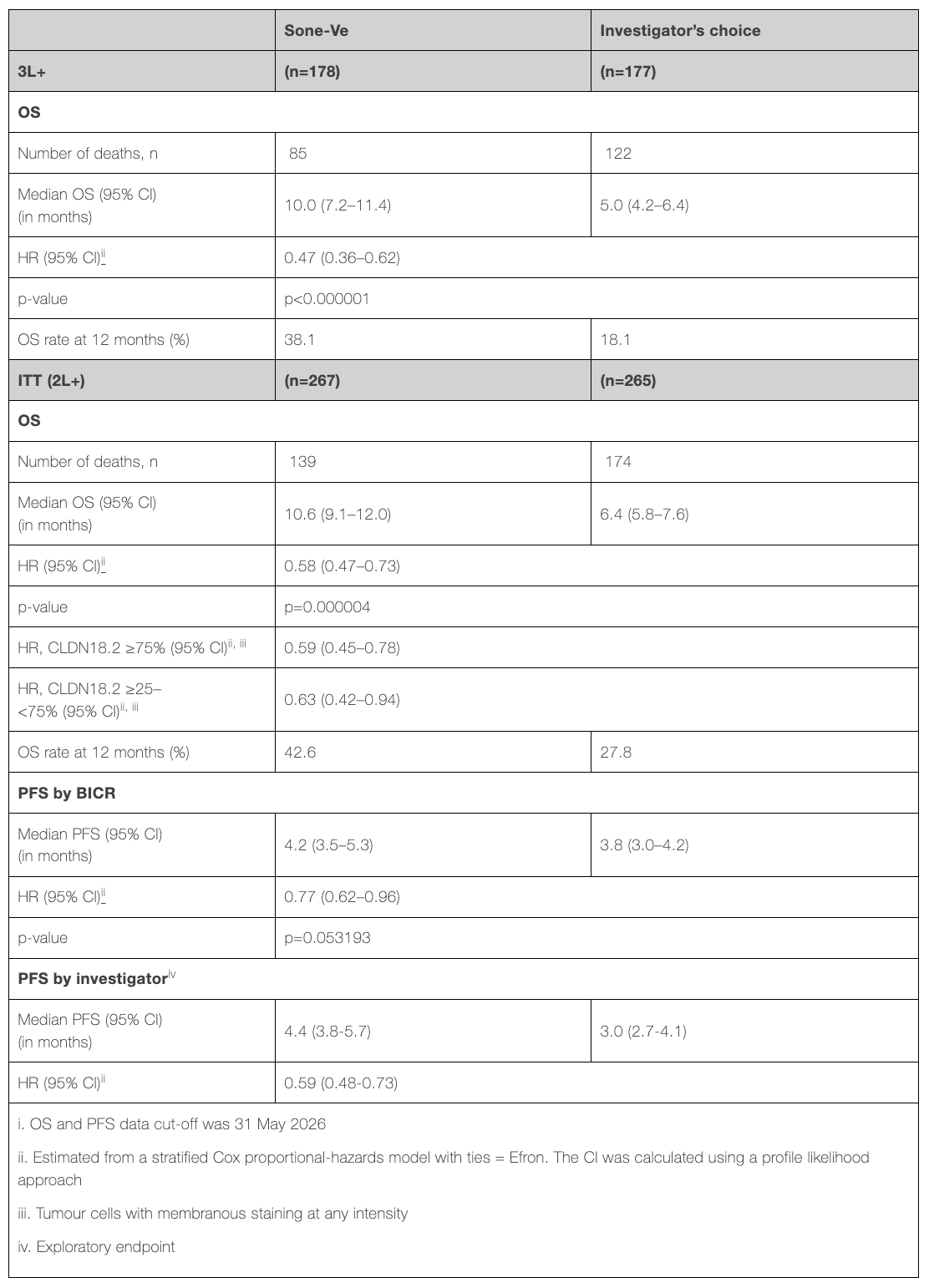
AstraZeneca presented landmark data from the global Phase 3 CLARITY-Gastric01 trial at ESMO 2026. The study evaluated sonesitatug vedotin (Sone-Ve), a first-in-class antibody-drug conjugate (ADC) targeting Claudin 18.2 (CLDN18.2). Enrolled patients had previously received at least one line of systemic therapy and had tumors with CLDN18.2 expression defined by a broader threshold of ≥25% of tumor cells (at any immunohistochemical staining intensity), which is notably more permissive that the ≥75% used by other Claudin 18.2 approaches. The CLARITY-Gastric01 Phase 3 readout delivered exceptional survival metrics. Sonesitatug vedotin reduced the risk of death by an impressive 42% in second- and later-line CLDN18.2-positive advanced gastric and GEJ cancers compared to standard investigator’s choice chemotherapy. This translated into a highly clinically meaningful extension in median overall survival (see table below). By demonstrating robust efficacy using a broader eligibility threshold of ≥25% CLDN18.2 expression, the trial successfully validates a larger treatable patient population than previously unlocked by older, more restrictive screening criteria. Sonesitatug vedotin was well tolerated, displaying a safety profile consistent with its known clinical parameters, with no new or unexpected safety signals identified.
Professor Salah-Eddin Al-Batran from Krankenhaus Nordwest, University Cancer Center Frankfurt and the Frankfurt Institute of Clinical Cancer Research shared the following comments:
“The CLARITY-Gastric01 findings are very promising, at least in patients who have had three or more lines of therapy. Despite the rather complicated nature of dual primary endpoints in different settings in the trial, Sone-Ve could become an important new treatment option in the third- and later-line settings based on the doubling of median OS from 5 to 10 months. The situation in the second-line setting is less certain given the lack of a significant difference in PFS, but the safety profile is manageable.
[…]
Al-Batran notes that the place of Sone-Ve in the treatment of advanced gastric/gastro-oesophageal junction cancer will be further established when results are available from the ongoing CLARITY-Gastric02 phase III trial evaluating Sone-Ve with capecitabine, with or without rilvegostomig (the TIGIT and PD-1 bispecific antibody), as first-line treatment.
[…]
Notably, the two trials used substantially different CLDN18.2 expression thresholds, which should be considered when interpreting and comparing their results, [referring to the Phase 3 G-HOPE-001 study evaluating Takeda’s Claudin 18.2 ADC arcotatug tavatecan.]”
AstraZeneca is moving swiftly to engage global health authorities for regulatory submissions. Simultaneously, clinical investigation is expanding upstream: the ongoing global Phase 3 CLARITY-Gastric02 trial is evaluating sonesitatug vedotin in combination with capecitabine (with or without the bispecific immunotherapy rilvegostomig) as a first-line (1L) treatment for advanced gastric and GEJ cancers. As Professor Al-Batran alluded to, these broader studies aim to determine whether moving CLDN18.2-targeted ADCs into upfront lines can alter the trajectory of the disease from the very onset of care.
Sources: AstraZeneca press release, ESMO article
Takeda & Innovent - Arcotatug tavatecan (Claudin 18.2 ADC) / Phase 3, G-HOPE-001 (GEA)
Takeda and partner Innovent Biologics presented late-breaking results from the global Phase 3 G-HOPE-001 trial at ESMO 2026. The study evaluated arcotatug tavatecan (TAK-921 / IBI343), a next-generation, Claudin 18.2-targeted antibody-drug conjugate (ADC). Conducted across clinical sites in Japan and China, the G-HOPE-001 trial enrolled 464 patients with unresectable locally advanced or metastatic CLDN18.2-positive (≥75% expression), HER2-negative G/GEJA whose disease had progressed following two to four prior systemic treatment regimens. At the second interim analysis, arcotatug tavatecan reduced the risk of death by 43%, achieving a median OS of 10.2 months compared with 6.9 months for the control arm (Hazard Ratio [HR], 0.57; 95% CI, 0.45–0.73; P < 0.0001). IRRC-assessed median PFS was significantly prolonged to 7.1 months with the ADC versus 3.1 months with TPC (HR, 0.45; 95% CI, 0.35–0.58), representing a 55% reduction in the risk of disease progression or death. Confirmed objective response rate (ORR) reached 37.4% for arcotatug tavatecan compared to just 7.7% for chemotherapy, accompanied by a deep median duration of response of 9.9 months and a disease control rate of 83.5%. Arcotatug tavatecan displayed lower rates of severe gastrointestinal distress than standard chemotherapy (e.g., Grade ≥3 diarrhea occurred in 15.2% of ADC patients versus 40.5% with TPC). While hematologic toxicities such as anemia (20.4%) and decreased neutrophil counts (17.4%) were observed, treatment-related discontinuation rates remained low at 1.7% to 3.5%.
Professor Salah-Eddin Al-Batran from Krankenhaus Nordwest, University Cancer Center Frankfurt and the Frankfurt Institute of Clinical Cancer Research shared the following comments:
“These preliminary data are promising, demonstrating a significant improvement in PFS with a manageable safety profile. However, the OS data remain immature, and longer follow-up and the planned formal OS analysis are needed to establish whether this translates into a meaningful survival benefit.”
Data from G-HOPE-001 serve as the foundation for immediate regulatory filings in Japan and are actively supporting priority review pathways in China, according to Takeda and Innovent. Concurrently, clinical development is expanding upstream, with investigators initiating trials to evaluate arcotatug tavatecan in the frontline setting for gastric cancer as well as exploring its efficacy across other CLDN18.2-expressing malignancies like pancreatic cancer.
Sources: Takeda press release, ESMO article
Jazz Pharma & BeOne - Ziihera (HER2 x HER2 mAb) + Tevimbra (anti-PD1 mAb) / Phase 3, HERIZON-GEA-01 (GEA)
Jazz Pharmaceuticals and BeOne Medicines presented mature, highly anticipated three-year survival data from the global Phase 3 HERIZON-GEA-01 trial at ESMO 2026. Results were previously published in NEJM on May 27, 2026. The trial evaluated Ziihera (zanidatamab-hrii), a novel HER2-targeted bispecific antibody, given in combination with chemotherapy with or without the anti-PD-1 immunotherapy Tevimbra (tislelizumab). The study enrolled 914 previously untreated adult patients with unresectable locally advanced, recurrent, or metastatic HER2-positive GEA (defined as HER2 immunohistochemistry [IHC] 3+ or IHC 2+ with positive in situ hybridization [ISH]). Zanidatamab plus chemotherapy significantly reduced the risk of death by 24% compared to the standard trastuzumab-chemotherapy control arm. Furthermore, the addition of tislelizumab to zanidatamab and chemotherapy yielded an OS hazard ratio of 0.65 versus control, maintaining robust long-term survival advantages. Estimated 36-month overall survival rates reached an unprecedented 39.8% with the triplet regimen (zanidatamab + chemotherapy + tislelizumab) and 31.5% with the doublet regimen (zanidatamab + chemotherapy), compared to just 22.9% in the standard control arm. Both zanidatamab-containing arms significantly prolonged progression-free survival compared to trastuzumab plus chemotherapy (PFS HR of 0.61 for the triplet and 0.65 for the doublet). In PD-L1 positive subsets (TAP ≥1%), median OS reached an impressive 26.4 months with the triplet combination. Commonly observed class-specific events, such as diarrhea, were effectively managed with standard supportive protocols, and exposure-adjusted analyses showed that treatment-related adverse events decreased over time following chemotherapy modification or discontinuation.
Building upon these mature Phase 3 findings, which supported recent regulatory approvals by the FDA, Jazz Pharmaceuticals and BeOne Medicines are focusing on broad clinical implementation and real-world integration. Oncological networks worldwide are working to establish comprehensive, routine reflex HER2 and PD-L1 testing protocols at initial diagnosis to ensure eligible patients immediately receive zanidatamab-anchored front-line regimens. Concurrently, exploratory analyses continue to evaluate quality-of-life outcomes and subgroup biomarkers to further refine patient selection.
Sources: Jazz Pharma press release, NEJM paper
Other Notable Thoracic & Gastrointestinal Datasets
Merck - Sacituzumab Tirumotecan (TROP2 ADC) + Keytruda (anti-PD1 mAb) / Phase 3, OptiTROP-Lung06 (nSq NSCLC)
A global team of investigators presented landmark data from the Phase 3 OptiTROP-Lung06 trial at ESMO 2026. Results were simultaneously published in NEJM. The study evaluated sacituzumab tirumotecan (sac-TMT), a novel TROP2-directed antibody-drug conjugate (ADC), combined with Keytruda (pembrolizumab) as a first-line therapy, testing whether an ADC could successfully replace conventional chemotherapy altogether. The OptiTROP-Lung06 trial enrolled 455 previously untreated patients with advanced, PD-L1-negative, non-squamous NSCLC without activating EGFR mutations or ALK translocations. At the prespecified interim analysis presented at ESMO, the OptiTROP-Lung06 trial met its primary endpoint. Sac-TMT plus pembrolizumab dramatically prolonged median PFS to 15.0 months compared to just 5.7 months for the chemoimmunotherapy control arm (Hazard Ratio [HR], 0.49; 95% CI, 0.38–0.63; P < 0.0001). This represents a 51% reduction in the risk of disease progression or death, with a 12-month PFS rate of 51.1% versus 22.8%. While objective response rates were comparable between the arms (50.2% for the sac-TMT arm vs. 47.3% for control), responses were vastly more durable. The median duration of response (mDOR) reached 13.6 months with sac-TMT plus pembrolizumab compared to 6.8 months with standard chemoimmunotherapy (HR, 0.47). Although overall survival data remain immature, an encouraging early trend favored the sac-TMT combination, showing a descriptive OS HR of 0.58 (95% CI, 0.38–0.88) and a 12-month survival rate of 77.6% versus 66.4%. Replacing conventional platinum-pemetrexed chemotherapy with sac-TMT resulted in a favorable safety profile with lower overall rates of Grade ≥3 treatment-related adverse events (47.6% vs. 60.6%). Notably, classic chemotherapy-associated toxicities, such as Grade ≥3 anemia (6.1% vs. 20.4%) and thrombocytopenia (3.9% vs. 14.6%), were markedly reduced.
Dr. Giannis Mountzios from Henry Dunant Hospital Center shared the following comments:
“Pembrolizumab plus chemotherapy is the current standard first-line treatment in this setting, but outcomes remain suboptimal, especially in patients with PD-L1-negative tumours. The dramatic PFS improvement with the addition of ADC to pembrolizumab compared with SOC represents an important milestone; it is the first time this has been demonstrated in patients with PD-L1-negative disease in a randomised phase III study.
[…]
While OS data are awaited, the PFS data are highly clinically relevant and have the potential to be immediately practice-changing in patients with PD-L1-negative tumours who experience poor outcomes. This is an area of high unmet need that could be addressed by combining ADCs with immunotherapy.
[…]
Treatment-emergent adverse events, including haematological toxicities, were actually less frequent in patients who received the ADC than in those who received chemotherapy and this is important for patients’ quality of life.”
Investigators and sponsors are working to expand global regulatory filings to establish sac-TMT plus pembrolizumab as a preferred frontline standard for PD-L1-negative advanced non-squamous NSCLC. Concurrently, broader development programs, such as the OptiTROP clinical trial series, continue to evaluate TROP2-directed ADC combinations across different PD-L1 expression subgroups and tumor subtypes, mapping a comprehensive transition toward chemotherapy-sparing precision regimens.
Sources: NEJM paper, ESMO article
Compass Tx - Tovecimig (DLL4 x VEGF-A mAb) / Phase 2-3, COMPANION-002 (BTC)
Compass Therapeutics presented mature data from the randomized, controlled Phase 2/3 COMPANION-002 trial at ESMO 2026. Results were simultaneously published in JCO. The study evaluated tovecimig (CTX-009), a first-in-class bispecific antibody targeting DLL4 and VEGF-A, given in combination with paclitaxel as a second-line therapy for advanced biliary tract cancer (BTC). Tovecimig plus paclitaxel achieved a statistically significant improvement in confirmed ORR, reaching 18.0% compared to 5.3% in the paclitaxel-alone control arm (P = 0.0228). The combination dramatically extended median progression-free survival to 4.7 months versus 2.6 months for chemotherapy alone, translating into a striking 56% reduction in the risk of disease progression or death (Hazard Ratio [HR], 0.44; P < 0.0001). Due to a high crossover rate (54% of control patients crossed over to receive tovecimig post-progression), overall survival curves crossed, yielding no statistically significant difference in final median OS (HR, 1.05; P = 0.779). However, patients who crossed over demonstrated significantly longer PFS on tovecimig combination therapy compared to their initial time on paclitaxel alone (median post-progression PFS of 3.5 vs. 1.9 months; HR, 0.40). The toxicity profile was consistent with dual anti-angiogenic inhibition. The most common treatment-emergent adverse events in the combination arm were hypertension (69.4%) and fatigue (66.7%). Grade ≥3 adverse events occurred in 93.5% of the combination group versus 64.2% in the control arm, driven largely by manageable, predictable hypertension and transient neutropenia.
Compass Therapeutics has been actively engaging with the FDA to review the package. The company is preparing for a planned BLA submission, seeking regulatory approval for tovecimig in previously treated biliary tract cancer. Concurrently, translational analyses and patient-reported quality-of-life evaluations from the trial are continuing to be processed to further characterize the clinical utility of this novel bispecific therapy.
Sources: Compass press release, JCO paper
Parabilis - Zolucatetide (β-catenin/TCF inhibitor) / Phase 1-2 (desmoid tumors)
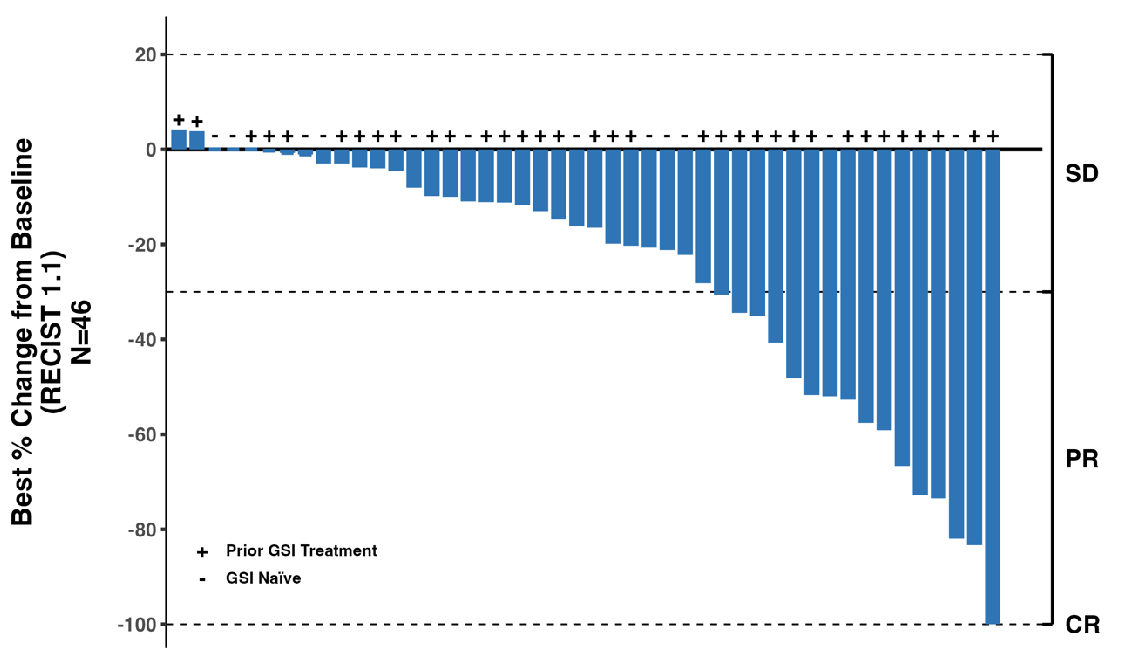
Desmoid tumors are locally aggressive, non-metastatic soft-tissue neoplasms driven by mutations in the Wnt/beta-catenin signaling pathway. While they do not metastasize, they frequently cause severe pain, organ dysfunction, and significant morbidity, and historical treatment options have suffered from limited efficacy or burdensome toxicity profiles. Addressing this core oncogenic driver, Parabilis Medicines presented updated Phase 1/2 clinical data for zolucatetide (FOG-001), a first-in-class β-catenin/TCF inhibitor, at the ESMO 2026. The ongoing Phase 1/2 multicenter, open-label trial enrolled a heavily characterized desmoid tumor cohort (median age 37 years; ~70% female) that included both patients naive to systemic therapy and those previously treated with and failed gamma-secretase inhibitors (GSIs). Among patients evaluable at the 32-week landmark who started at doses ≥450 mg (n = 18), zolucatetide achieved a confirmed ORR of 72.2% (13/18), indicating deep and sustained tumor shrinkage. A disease control rate of 100% was observed across all 46 response-evaluable desmoid patients treated at these therapeutic doses, with zero instances of disease progression. Responses occurred uniformly across patient subgroups irrespective of prior GSI exposure or specific underlying CTNNB1 or APC mutation status. Zolucatetide therapy resulted in zero treatment discontinuations due to adverse events and showed no association with ovarian toxicity or the high-grade gastrointestinal or skin toxicities historically linked to older Wnt pathway modulators like GSIs. Buoyed by these robust Phase 1/2 results and FDA Fast Track and Orphan Drug Designations, Parabilis Medicines has utilized the data to finalize a FDA-aligned dose and regimen selection. The company is actively preparing to initiate the pivotal PEDESTAL Phase 3 registrational trial of zolucatetide in desmoid tumors in the first half of 2027, with topline results anticipated around 2029. Concurrently, broader pipeline development is underway to evaluate zolucatetide across other Wnt-driven indications, including familial adenomatous polyposis (FAP) and hepatocellular carcinoma (HCC).
Sources: Parabilis press release, Parabilis slide deck
Love biotech? Check out Biotech Readout’s full content library, or navigate directly to a segment that interests you:
Frontiers in Medicine: Exploring the frontiers of our understanding and treatments for disease.
Medical History: Recovering forgotten relics in the history of medicine.
Acquisitions: Exploring the innovation behind acquired companies.
Weekly Readout: A digest of new clinical data from the past week.

To contact us, please send us an email at biotechreadout@gmail.com
Disclaimers
Investigational Status Disclaimer
The therapeutic candidates discussed in this newsletter are currently in clinical development and have not been approved for commercial sale by the U.S. Food and Drug Administration (FDA), the European Medicines Agency (EMA), or other global regulatory authorities. Their safety and efficacy have not been established. References to pipeline products and ongoing clinical trials involve significant risks and uncertainties. Statements regarding the potential safety, potency, or efficacy of investigational drugs reflect current hypotheses and are not a guarantee of future performance or regulatory clearance. The outcome of clinical trials is inherently unpredictable, and clinical results from earlier stages may not be predictive of results in later, larger-scale trials.
No Medical Advice Disclaimer
This newsletter is for informational and educational purposes only. The content is not intended to be a substitute for professional medical advice, diagnosis, or treatment. Always seek the advice of your physician or another qualified health provider with any questions you may have regarding a medical condition. Never disregard professional medical advice or delay in seeking it because of something you have read in this publication.
No Patient-Provider Relationship Disclaimer
The information provided in this newsletter is for educational and analytical purposes only. Receipt of this information, or any interaction with this content, does not create a physician-patient, pharmacist-patient, or any other professional-provider relationship between you and the authors or publishers. This newsletter should not be used as a substitute for a personal consultation with a qualified healthcare professional.
Forward-Looking Statements Disclaimer
This newsletter contains “forward-looking statements” regarding future events, including clinical trial timing, regulatory milestones, and projected market performance. These statements are based on current expectations and assumptions that are subject to significant risks and uncertainties. Actual results may differ materially from those expressed or implied. We undertake no obligation to update these statements as a result of new information or future developments.
Third-Party Links & Content Disclaimer
This newsletter contains links to third-party websites, including clinical trial registries and corporate presentations. Biotech Readout does not endorse, guarantee, or assume responsibility for the accuracy or reliability of any information offered by third-party providers.
Errors and Omissions Disclaimer
While we strive for technical accuracy, the information in this newsletter is provided on an “as is” basis with no guarantees of completeness, accuracy, or timeliness. Biotech Readout assumes no liability for any errors or omissions in the content of this publication.
Non-Endorsement Disclaimer
Any reference to specific commercial products, processes, or services by trade name, trademark, or manufacturer does not constitute or imply an endorsement or recommendation by the author. All trademarks are the property of their respective owners.
No Investment Advice Disclaimer
This newsletter is for informational purposes only and does not constitute financial, investment, or legal advice. The author is not a registered investment advisor. You should consult with a professional financial advisor before making any investment decisions. The biotechnology sector is highly volatile; past performance is not indicative of future results.
Conflict of Interest Disclaimer
The author of this newsletter maintains a position of independence. At the time of publication, the author holds no direct financial interest, equity, or options in any of the companies mentioned in this report. No compensation has been received from any third party to feature or analyze specific therapeutic candidates or corporate entities.
A hazard ratio of 0.42 and median OS of 21.1 versus 12.7 months makes DeLLphi-305 the result that changes first-line maintenance in extensive-stage SCLC. With CRS in 49.6% but only 1.1% grade 3, the practical issue becomes how many community oncology sites can manage the step-up dosing.