

Disclaimer: This newsletter is for educational and informational purposes only and does not constitute medical, investment, or financial advice, nor does it establish a provider-patient relationship. Content may include forward-looking statements and discussions of investigational therapeutic candidates that are not FDA/EMA approved; their safety and efficacy remain unestablished and clinical outcomes are unpredictable. While we strive for accuracy, all information is provided as is without guarantees. As of the date of publication, the author holds no direct equity positions in the specific companies mentioned in this issue nor receives third-party compensation for this coverage. Please find a complete version of our disclaimers at the bottom of the article and linked here.

Press ⬇️ to go down to a section and ⬆️ to go back up to the Table of Contents
Table of Contents
The European Society for Medical Oncology (ESMO) 2026 Congress took place from October 23 to October 27, 2026, in Madrid, Spain. Europe’s largest cancer conference produced a deluge of clinical breakthroughs, so we split our ESMO 2026 coverage into four separate articles. Subscribe so you don’t miss them!
ESMO 2026: RAS Inhibitors (you are here)
In this article, we focus on the following high-impact RAS inhibitor datasets from ESMO 2026:
RevMed Does a Victory Lap
KRAS G12D Remains Up For Grabs
RAS Inhibitors Tango with PRMT5
Roche’s KRAS G12C Captures the High Ground
RevMed Does a Victory Lap
For decades, metastatic pancreatic ductal adenocarcinoma (PDAC) has represented one of the most formidable and stubborn tumor types in oncology. Characterized by a dense, fibrous tumor microenvironment that notoriously wards off systemic therapies and an abysmal historic prognosis (median overall survival of 6.7 months according to the RASolute 302 trial), advanced pancreatic cancer has long suffered from a dearth of effective, targeted treatments. Historically, mutant KRAS proteins, which accounts for more than 90% of patients with PDAC, were long considered “undruggable” due to their picomolar affinity for GTP/GDP and the absence of traditional, deep binding pockets on the inactive protein conformation. At the ESMO Congress 2026, the medical community turned its attention to a breakthrough: the presentation of detailed subgroup and overall survival analyses from Revolution Medicines’ landmark Phase 3 RASolute 302 trial (Abstract LBA82) evaluating Rasonque (daraxonrasib), which was approved for 2L PDAC about two months ago on August 26, 2026 and has “since set a new standard of care in metastatic PDAC”, according to Dr. Ignacio Garrido-Laguna in an ESMO op-ed.
RevMed - Rasonque (pan-RAS inhibitor) / Phase 3, RASolute 302 trial (PDAC)
As we mentioned before, KRAS mutants have long been considered “undruggable” due to their picomolar affinity for GTP/GDP and the absence of traditional, deep binding pockets on the inactive protein conformation. Rasonque (daraxonrasib) upends this limitation as an oral, RAS(ON) multi-selective, non-covalent, tri-complex inhibitor (TCI). Rather than targeting the off-state, Rasonque intercepts and binds to the active, GTP-bound “ON” conformation of multiple prevalent RAS variants and glues it to another protein called cyclophilin A. By forming a stable tri-complex with cyclophilin A, it effectively blocks aberrant downstream signaling cascades, cutting off the relentless proliferation signals driving pancreatic cancer cells. The landmark approval or Rasonque was supported by positive topline results from the global Phase 3 RASolute 302 trial. RevMed presented topline results at ASCO 2026, which we covered here. Notably, the presentation received a standing ovation from a room full of oncologists (see video below), who have struggled to keep their PDAC patients alive longer than 1 year.

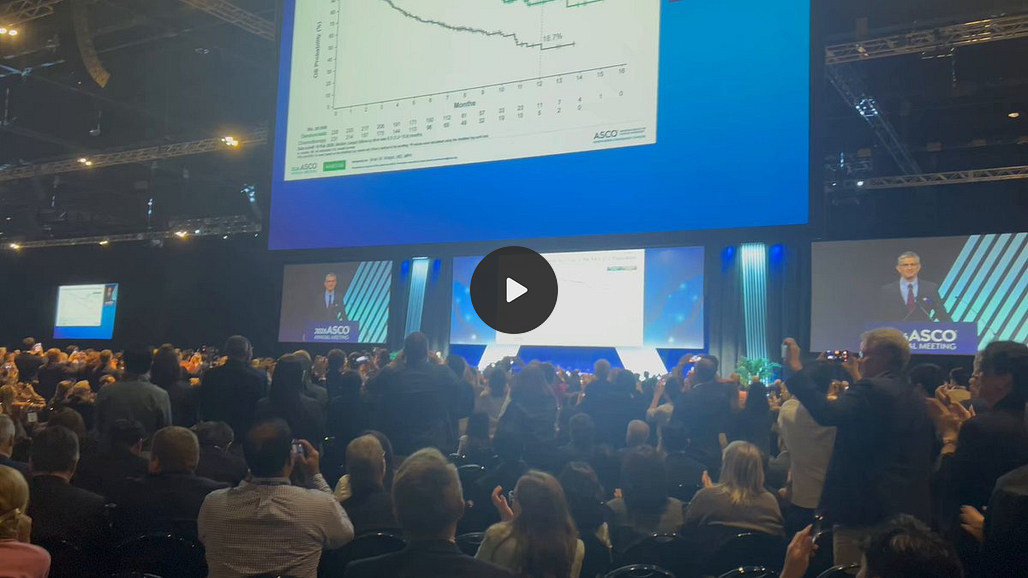
The data presented at ESMO 2026 built upon the trial’s primary findings, which we have seen before and showed a near-doubling of overall survival (mOS 13.2 months for daraxonrasib versus 6.7 months for chemo; HR=0.40, p < 0.0001). The new ESMO data confirmed the consistency of this survival benefit across all RAS mutation subgroups (see table below).

In his ESMO op-ed, Dr. Ignacio Garrido-Laguna applauded the results while noting further room for improvement:
“OS benefits are observed irrespective of tumour RAS mutational status, as was anticipated based on daraxonrasib’s mechanism of action (LBA82). OS improvements were also maintained across other pre-selected subgroups, including standard of care chemotherapy regimens and prior treatment settings, including early metastatic recurrence.
Of note, patients with G12V mutations seem to derive greater benefit than those with G12D mutations and this creates opportunities to continue to develop allele-specific G12D inhibitors. Although RAS inhibitors have transformed outcomes in advanced PDAC, median OS with daraxonrasib in the second-line setting is still only ~13 months (N Engl J Med. 2026;395:325-337), and there remains an urgent need for more effective treatment strategies.”
Sources: RevMed press release, ESMO 2026 Abstract LBA 82, Dr. Ignacio Garrido-Laguna’s ESMO op-ed
GenFleet - GFH276 (pan-RAS inhibitor) / Phase 1a (solid tumors)
True to the gold rush mentality of biotech, other drug hunters have observed RevMed’s success with Rasonque (daraxonrasib) and have raced to develop pan-RAS inhibitors of their own. One such investigational candidate is GFH276, a novel oral pan-RAS inhibitor by China-based GenFleet Therapeutics. GFH276 leverages a similar mechanism as Rasonque, inhibiting the GTP-bound “ON” conformation of RAS through a tri-complex mechanism with cyclophilin A. Presented in a late-breaking presentation by Dr. Yuxiang Ma from the Sun Yat-sen University Cancer Center, the Phase 1a data readout unveiled early proof-of-concept for tackling notoriously hard-to-treat, pretreated RAS-mutant solid tumors, spanning pancreatic ductal adenocarcinoma (PDAC), non-small cell lung cancer (NSCLC), and colorectal cancer (CRC). The sample sizes are too small to do a half-decent cross-trial comparison with Rasonque, but they reported initial signs of efficacy.
The Phase Ia dose-escalation study evaluated oral GFH276 monotherapy administered at daily doses ranging from 5 mg to 320 mg QD across heavily pretreated patients with advanced RAS-mutant solid tumors. Patients had a high baseline disease burden, with over 78% presenting with liver metastases and more than 90% having undergone prior lines of systemic chemotherapy. Among 61 evaluable PDAC patients treated at the 40-160 mg QD dose levels who completed at least one post-treatment tumor assessment, GFH276 achieved an impressive overall response rate (ORR) of 41.1% and a disease control rate (DCR) of 91.8%. In evaluable NSCLC patients treated at 80-160 mg QD, the overall response rate reached 45.5%. No Grade 4 or Grade 5 TRAEs were reported, and pharmacokinetic analyses showed favorable exposure without significant drug accumulation.
Sources: ESMO Abstract LBA33, GenFleet press release, GenFleet ESMO 2026 slide deck
KRAS G12D Remains Up For Grabs
As we saw previously, a subgroup analysis of the Phase 3 RASolute 302 trial revealed nuanced ways pan-RAS inhibition interacts with different oncogenic drivers in pancreatic ductal adenocarcinoma (PDAC). While Rasonque demonstrated a profound overall survival (OS) and progression-free survival (PFS) benefit across all major RAS variants compared to standard chemotherapy, G12V mutations seemed to derive greater benefit from Rasonque than those with G12D mutations (HR 0.32 versus 0.49). G12D is the single most common mutation in PDAC, accounting for roughly 40% of the patient population in the trial and leaving a substantial unmet medical need (G12V is the second most common, accounting for about 35%). We certainly shouldn’t be worried for RevMed, which is investigating their own KRAS G12D inhibitor zoldonrasib in a number of Phase 3 trials. Other biotech companies have noticed the KRAS G12D opportunity, developed selective inhibitors of their own, and presented data at ESMO 2026. However, it is yet unclear whose KRAS G12D inhibitor is the fairest one of them all.
Hengrui - HRS-4642 (KRAS G12D inhibitor) + GnP + Adebrelimab (anti-PDL1 mAb) / Phase 1/2 (PDAC)
Hengrui stepped up to the plate with their presentation of clinical data for HRS-4642, a novel, highly specific KRAS G12D inhibitor. Spearheaded by key trials such as the evaluation of perioperative and combination regimens (including Abstract LBA85 presented by Prof. Chenlei Wen), these data highlight a unique intravenous approach designed to bypass oral limitations. Yes, you read that correctly. HRS-4642 utilizes a specialized IV-administered liposomal nanoparticle (LNP) delivery system, designed to optimize tumor tissue accumulation and prolong the duration of target inhibition. Highlighted during the Rapid Oral session as Late-Breaking Abstract LBA85, the presentation focused on evaluating HRS-4642 when combined with standard chemotherapy (gemcitabine and nab-paclitaxel, or GnP), with or without the PD-L1 inhibitor adebrelimab, as a perioperative and first-line treatment approach in patients with treatment-naive, KRAS G12D-mutant pancreatic ductal adenocarcinoma (PDAC). The Phase 1/2 trial evaluated two primary cohorts of 30 patients each:
Cohort 1: Received HRS-4642 combined with standard gemcitabine plus nab-paclitaxel (GnP) chemotherapy.
Cohort 2: Received the triple combination of HRS-4642, GnP chemotherapy, and the anti-PD-L1 immunotherapy adebrelimab.
The preliminary Phase 1/2 results presented at ESMO 2026 demonstrated antitumor activity and manageable safety profiles across both cohorts. In Cohort 1 (HRS-4642 plus GnP), the confirmed overall response rate (ORR) reached 63% (19 partial responses out of 30 patients). In Cohort 2 (HRS-4642 plus GnP and adebrelimab), the ORR rose to 87% (26 partial responses out of 30 patients), indicating deep initial response rates with the addition of PD1 immunotherapy, though investigators noted that the relative independent contribution of adebrelimab requires further randomized validation. The estimated 6-month event-free survival rate stood at an impressive 87% for Cohort 1 and 96% for Cohort 2. Furthermore, among patients with baseline CA19-9 tumor markers above the upper limit of normal, 100% experienced a reduction of at least 50%. The intravenous regimen proved manageable and well-tolerated. Grade 3 or higher treatment-related adverse events (TRAEs) occurred in 47% of patients in Cohort 1 and 53% in Cohort 2, primarily consisting of manageable hematologic toxicities like neutropenia and leukopenia. Crucially, no TRAEs were fatal or prevented patients from safely proceeding to surgical resection.
In his ESMO op-ed, Dr. Ignacio Garrido-Laguna expressed cautious optimism about these Phase 1 results:
“Combining RAS inhibitors with other therapies is now a major focus of PDAC research. Preliminary findings from an open-label phase II study presented at the Congress demonstrated an objective response rate (ORR) of 63% among patients with resectable KRAS G12D-mutant PDAC treated peri-operatively with combination chemotherapy plus the G12D inhibitor, HRS-4642 (LBA85). This increased to 87% among those receiving triple therapy combining chemotherapy, HRS-4642 plus a PD-L1 inhibitor. Although these response rates are striking, they should be interpreted with caution. This is a single-centre study, RECIST responses were not centrally reviewed, and the ORRs are higher than in the resectable PDAC population in the SWOG S1505 trial of mFOLFIRINOX (9%) and gemcitabine-nab-paclitaxel (21%) (JAMA Oncol. 2021;7:421-427), but the major pathological response rate is lower (17% in both HRS-4642 arms versus 33% in SWOG S1505) (Ann Surg. 2020;272:481-486), a mismatch that raises questions about the RECIST assessments.”
To that end, Hengrui’s ongoing Phase 3 HRS-4642-302 trial could confirm the long-term survival advantages of incorporating HRS-4642 into standard first-line metastatic PDAC care.
Sources: ESMO 2026 Abstract LBA85, Dr. Ignacio Garrido-Laguna’s ESMO op-ed
Incyte - INCB161734 (KRAS G12D inhibitor) / Phase 1 (CRC, PDAC)
Inctye likewise added to the KRAS G12D gold rush with highly anticipated clinical data from its Phase 1 program evaluating its oral inhibitor, INCB161734. Highlighted in presentations led by international investigators showcased the safety, pharmacodynamic activity, and early clinical efficacy of INCB161734 both as a monotherapy and in rational combination regimens. Notably, KRAS G12D mutation serves as a major oncogenic driver in approximately 40% of pancreatic cancers, as well as 15% of colorectal cancers, so Incyte’s data for both metastatic pancreatic ductal adenocarcinoma (mPDAC; Abstract 3137RO) and metastatic colorectal cancer (mCRC; Abstract 1007RO) was a welcome addition:
PDAC: In patients receiving INCB161734 with mFOLFIRINOX, the confirmed/pending ORR reached 81% (overall ORR 89%), with a 100% disease control rate (DCR) and a landmark 6-month PFS rate of 90%. In patients receiving INCB161734 with GEMNabP, the confirmed/pending ORR was 58% (overall ORR 69%), with a 96% DCR and a 6-month PFS rate of 80%.
CRC: In heavily pretreated mCRC patients (median of 2-3 prior lines), INCB161734 monotherapy achieved an ORR of 8% and a DCR of 79%. The addition of anti-EGFR mAb cetuximab dramatically enhanced activity, yielding an ORR of 36%, a 100% DCR, and a median PFS of 7.2 months. Plasma ctDNA analysis showed deep molecular response rates (≥90% reduction in KRAS G12D VAF) of up to 85% in the CRC cetuximab combination arm.
Building on these Phase 1 results, Incyte is actively advancing clinical development. The positive data have directly catalyzed the launch of the global, randomized Phase 3 DAWN-303 trial, which is currently enrolling patients globally to evaluate standard-of-care chemotherapy combined with INCB161734 versus placebo in first-line metastatic PDAC. Simultaneously, further expansion studies are underway to optimize combination dosing schedules and explore deeper clinical utility across broader G12D-driven tumor types.
Sources: ESMO 2026 Abstract 1007RO, Incyte press release, Incyte ESMO 2026 slide decks
RAS Inhibitors Tango with PRMT5
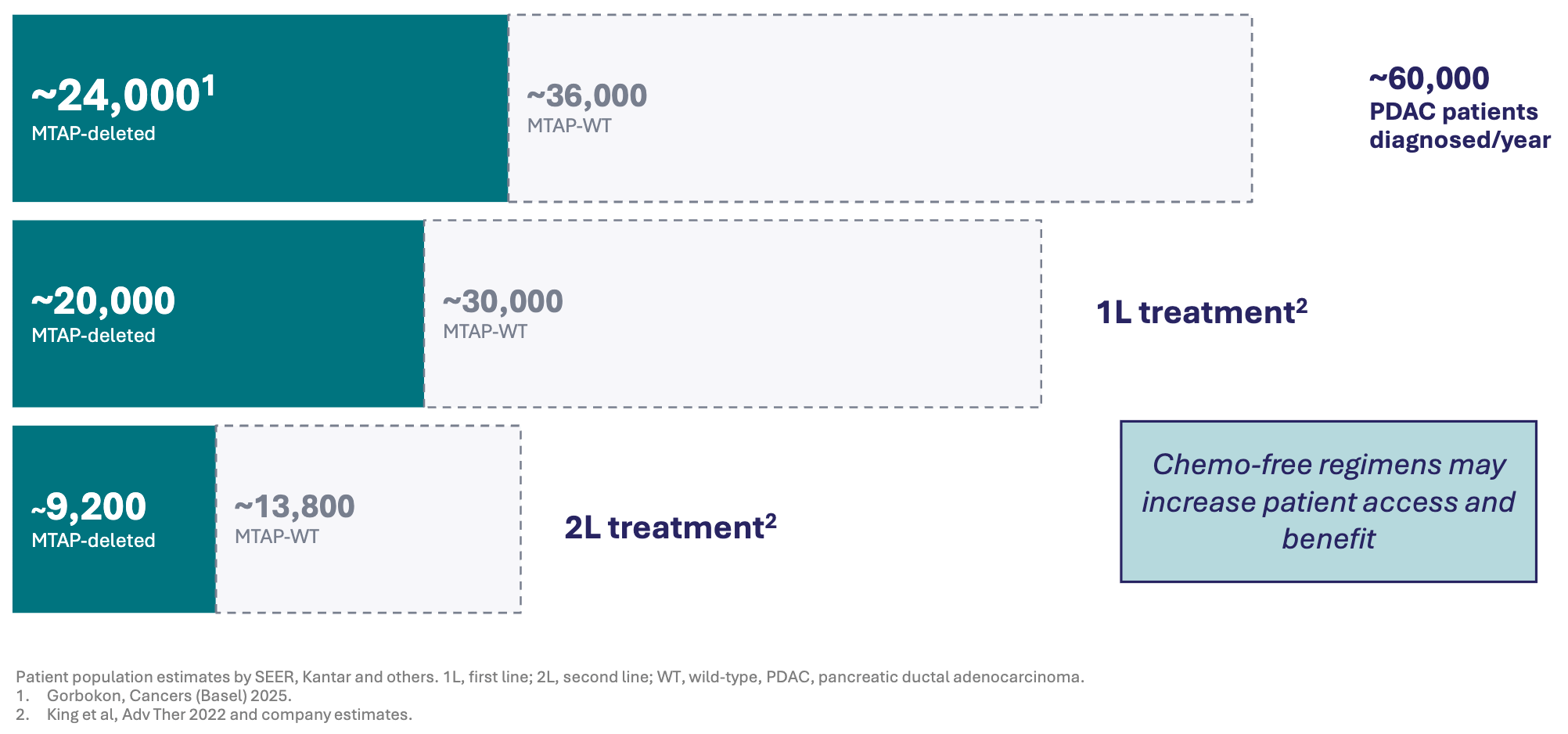
Hitting KRAS G12D isn’t the only way to add efficacy to pan-RAS inhibitor Rasonque (daraxonrasib). Tango Therapeutics and others have found that stacking PRMT5 inhibitors on top of pan-RAS inhibition pushes efficacy higher in molecularly defined patient population. A significant subset of RAS-mutated cancers, including roughly 15-20% of pancreatic and lung cancers, frequently experience co-deletions of the neighboring MTAP (methylthioadenosine phosphorylase) gene due to genomic proximity to CDKN2A. MTAP loss causes a metabolic bottleneck that leads to an intracellular accumulation of methylthioadenosine (MTA). MTA-cooperative PRMT5 inhibitors selectively target cancer cells carrying this MTAP deletion by leveraging accumulated MTA to shut down PRMT5 activity in the tumor while sparing healthy, MTAP-intact tissues. Pairing an MTA-cooperative PRMT5 inhibitor with a pan-RAS inhibitor delivers a double hit: it exploits a built-in metabolic vulnerability (MTAP loss) while neutralizing the primary oncogenic driver (mutant RAS).
Tango - Vopimetostat (PRMT5 inhibitor) / Phase 1-2 (PDAC)
The two-hit RAS & PRMT5 approach is spearheaded by Tango Therapeutics, which presented updated clinical data from its ongoing Phase 1/2 trial (Abstract 3149P) evaluating vopimetostat, a first-in-class oral PRMT5 inhibitor, in combination with RevMed’s RAS(ON) inhibitors (daraxonrasib or zoldonrasib) in patients with advanced metastatic pancreatic ductal adenocarcinoma (PDAC) and non-small cell lung cancer (NSCLC) harboring co-occurring MTAP deletions and RAS mutations. Among efficacy-evaluable patients receiving the vopimetostat plus daraxonrasib combination (at Dose Level 1), the confirmed and unconfirmed overall response rate (ORR) reached 82% with a 100% disease control rate (DCR). The median progression-free survival (PFS) had not yet been reached at the data cutoff, but the 9-month PFS rate was an impressive 88%. Dose Level 1 (vopimetostat 200 mg + daraxonrasib 100 mg daily) established an encouraging, manageable safety profile with no dose-limiting toxicities, no treatment withdrawals due to adverse events, and zero Grade 4 or 5 treatment-related adverse events. The most common side effects were “manageable” Grade 1-2 events such as stomatitis, rash, and diarrhea.
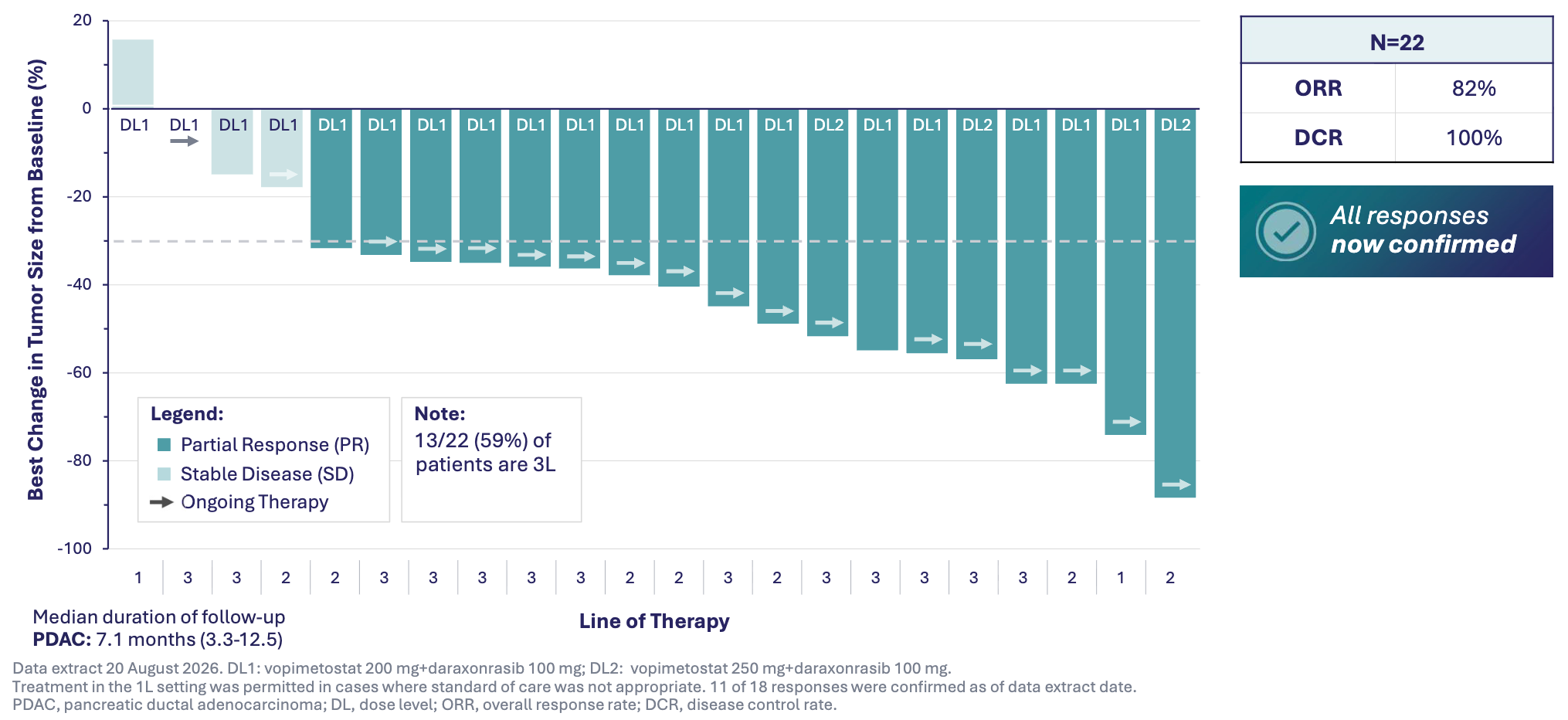
Bolstered by these striking clinical responses and following positive alignment with the FDA, Tango Therapeutics has committed to an accelerated late-stage development path. The company plans to initiate a global, randomized Phase 3 registrational trial in the first half of 2027, evaluating the vopimetostat and daraxonrasib combination versus standard-of-care chemotherapy as a front-line treatment for patients with MTAP-deleted metastatic pancreatic cancer.
Sources: ESMO Abstract 3149P, Tango press release, Tango slide deck
BeOne - BGB-58067 (PRMT5 inhibitor) / Phase 1a (NSCLC)
While Tango blazes a trail in PDAC, BeOne decided to take their oral PRMT5 inhibitor, BGB-58067, into NSCLC. Uniquely designed to cross the blood-brain barrier, BGB-58067 aims to address both systemic lesions and central nervous system (CNS) sanctuaries. Dr. Jordi Rodon Ahnert presented data from the first-in-human Phase 1a clinical trial (Abstract 1043P), which enrolled an extensive cohort of 83 patients with MTAP-deficient NSCLC. Among 75 efficacy-evaluable patients with MTAP-deficient NSCLC, BGB-58067 achieved a confirmed overall response rate (ORR) of 25.3% and a disease control rate (DCR) of 76.0%. In the specific EGFR wild-type NSCLC subgroup, the confirmed ORR rose to 38.5% with a DCR of 82.1%. The median progression-free survival (PFS) reached 7.7 months in the overall NSCLC cohort and 8.1 months in the EGFR wild-type subgroup. Highlighting its brain-penetrant design, an intracranial ORR of 30.8% was observed in patients presenting with untreated, asymptomatic brain metastases, alongside a notably low rate of central nervous system progression. Across therapeutic daily doses ranging from 200 mg to 400 mg (n=87), BGB-58067 demonstrated a manageable toxicity profile. Grade 3 or higher treatment-related adverse events (TRAEs) occurred in 27.6% of patients, and only 5.7% discontinued treatment due to adverse events. The most frequent TRAEs were mild-to-moderate nausea, anemia, and fatigue.
Building on these positive monotherapy readouts, BeOne Medicines is rapidly accelerating the clinical development of BGB-58067. Immediate next steps include advancing broader expansion cohorts across multiple tumor types (including pancreatic cancer and glioblastoma) and initiating planned rational combination trials, such as pairing BGB-58067 with upstream targeted agents (like RevMed’s pan-RAS or G12D inhibitors) and ADCs to block adaptive resistance and further deepen patient responses.
Sources: ESMO Abstract 1043P, BeOne press release
Roche’s KRAS G12C Captures the High Ground
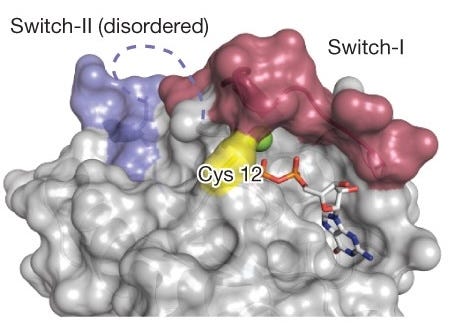
KRAS G12C inhibitors have been around much longer than pan-RAS, KRAS G12D, and PRMT5 inhibitors but it serves as the foundation for the renaissance we’ve recently seen in the RAS inhibitor space. There’s a good reason why we got KRAS G12C inhibitors first. Published in Nature in November 2013 by Jonathan M. Ostrem, Kevan M. Shokat, and colleagues at UCSF, the landmark paper titled “K-Ras(G12C) inhibitors allosterically control GTP affinity and effector interactions” showed that the KRAS G12C mutation uniquely introduces two critical vulnerabilities to the otherwise smooth and “undruggable” RAS protein: an allosteric binding site that they called the “switch-II pocket (S-IIP)” and a reactive cysteine from the oncogenic mutation that electrophilic inhibitors could covalently latch onto. Shokat’s foundational work led to a stable of first-generation KRAS G12C inhibitors, specifically Lumakras (sotorasib) and Krazati (adagrasib), that were designed to permanently lock onto this single reactive cysteine residue, trapping the protein in its inactive (GDP-bound) state.
While these first-generation agents proved that mutant KRAS could be targeted, their clinical impact was constrained. They suffered from moderate potency, modest response rates, and inevitable acquired resistance, typically yielding median progression-free survival (PFS) around 5-6 months and overall survival (OS) hovering around 12 months. They were also restricted to the G12C allele, leaving the vast majority of RAS-driven cancers (like G12D, G12V, and non-G12C variants prevalent in pancreatic and colorectal cancers) completely unaddressed. To overcome the limitations of first-generation G12C covalent locking, the field split into two directions, both of which we have discussed:
Mutation-Specific Expansion: Developing allele-specific agents for other high-frequency drivers, such as Revolution Medicines’ zoldonrasib for G12D.
Pan-RAS Skeleton Keys: Engineering multi-selective, non-covalent, tri-complex inhibitors (TCIs) like Rasonque (daraxonrasib) that use molecular glue mechanisms via cyclophilin A to bind the active (ON) state across a wide spectrum of RAS variants, bypassing the need for a targeted G12C cysteine hook.
Meanwhile, others focused on optimizing single-allele G12C inhibition, which is what this section focuses on.
Roche - Divarasib (KRAS G12C inhibitor) / Phase 3, Krascendo 1 (NSCLC)
Designed with exceptional structural potency and selectivity, divarasib binds the G12C switch-II pocket with far greater affinity than its predecessors. However, proving true best-in-class status required rigorous, head-to-head clinical validation. Presented as a Late-Breaking Abstract during the Presidential Symposium at the ESMO Congress 2026 and simultaneously published in NEJM, the global Phase 3 Krascendo 1 trial provided the definitive comparative dataset establishing divarasib as the likely best-in-class KRAS G12C inhibitor in NSCLC, pending regulatory review and approval.
The Krascendo 1 trial is the first and only global head-to-head Phase 3 study directly comparing a next-generation KRAS G12C inhibitor (divarasib) against first-generation approved standards (sotorasib or adagrasib). The trial enrolled 338 previously treated patients with advanced KRAS G12C-mutant non-small cell lung cancer NSCLC. Median PFS was significantly longer with divarasib at 9.8 months compared to 5.7 months with control treatment (stratified HR, 0.58; P < 0.001). Divarasib delivered a statistically significant and clinically meaningful OS benefit, with a median overall survival of 17.7 months versus 12.0 months for the control group (HR, 0.56; P < 0.001). Confirmed ORR nearly doubled in the divarasib arm at 58.4% compared to 32.3% in the control group, with a median response duration of 11.9 months versus 6.9 months. Despite being more potent, divarasib demonstrated a favorable safety profile with fewer Grade 3 or 4 treatment-related adverse events (24.6% vs. 34.5%) and lower rates of treatment discontinuation due to toxicity (4.8% vs. 11.7%) compared to first-generation options sotorasib and adagrasib.
The Krascendo 1 results establish divarasib as the likely best-in-class KRAS G12C inhibitor in NSCLC (pending regulatory review and approval) by decisively raising the efficacy ceiling established by CodeBreaK 200 and KRYSTAL-12. Furthermore, the results serve as the springboard for ongoing and upcoming trials expanding divarasib into earlier lines and combination paradigms, notably Krascendo 2 (evaluating divarasib plus pembrolizumab in first-line NSCLC) and Krascendo 3 (evaluating adjuvant monotherapy in resectable early-stage disease).
Sources: ESMO 2026 Abstract LBA5, Roche press release, NEJM paper
Eli Lilly & Merck - Olomorasib (KRAS G12C inhibitor) & Keytruda (anti-PD1 mAb) / Phase 1-2, LOXO-RAS-20001 & SUNRAY-01 (NSCLC)
Eli Lilly has also been hard at work developing a next generation KRAS G13C inhibitor. At ESMO 2026, they presented updated, long-term clinical data from its ongoing Phase 1/2 LOXO-RAS-20001 trial and the safety lead-in of the global SUNRAY-01 master protocol (featuring Rapid Oral presentation 2652RO). The presentations focused on evaluating the next-generation, highly selective oral KRAS G12C inhibitor olomorasib (LY3537982) in combination with first-line checkpoint immunotherapy (pembrolizumab) with or without chemotherapy for patients with advanced, treatment-naive KRAS G12C-mutant non-small cell lung cancer (NSCLC). Similar to divarasib, olomorasib was engineered as a next-generation, highly potent, and selective oral KRAS G12C inhibitor designed for higher predicted target occupancy compared to first-generation inhibitors.
The clinical data shared at ESMO 2026 stemmed from multi-cohort expansions evaluating olomorasib in combination with anti-PD1 mAb pembrolizumab and chemo in first-line metastatic NSCLC. These results showed how next-generation KRAS G12C inhibition could synergize with the immune system to offer chemotherapy-spared or enhanced frontline options for biomarker-selected lung cancer patients:
Olomorasib + Pembrolizumab (Chemotherapy-Free): After a median follow-up of 20.7 months, the confirmed overall response rate (ORR) reached 72.6% overall and 77.8% in patients with high PD-L1 expression (≥50%). Median progression-free survival (PFS) and duration of response (DOR) were not yet reached, with an estimated 18-month PFS rate of 54.9% overall and 64.5% in the PD-L1 high subgroup.
Olomorasib + Chemoimmunotherapy: After a median follow-up of 18.7 months in a broader population (mostly low/negative PD-L1), the confirmed ORR was 61%, median DOR was 14.4 months, and median PFS was 11.8 months.
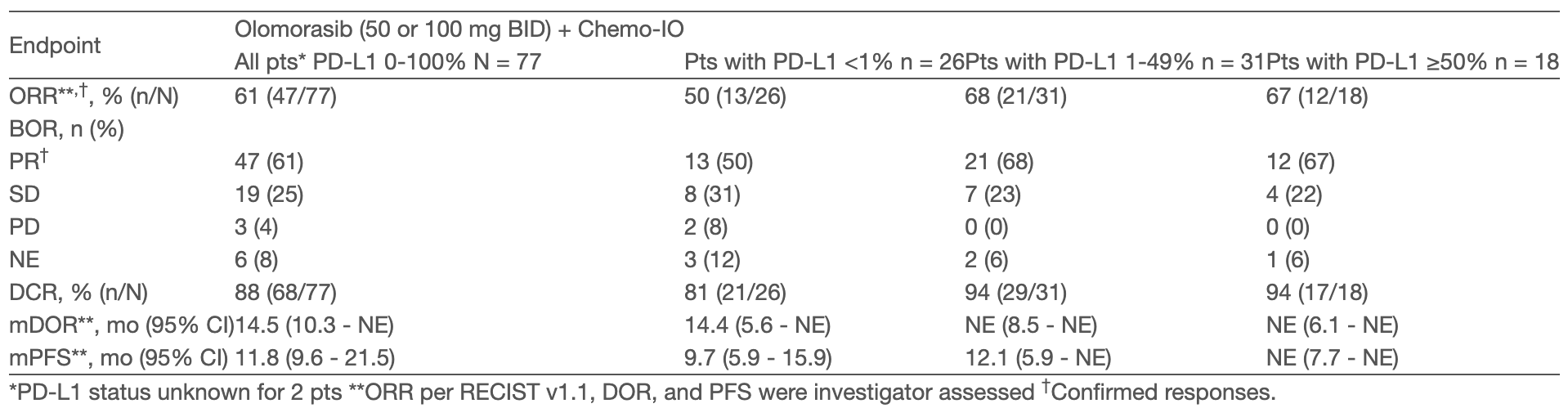
Both combinations exhibited manageable toxicity profiles consistent with known immune and chemotherapy agents. Grade 3 or higher treatment-related adverse events (TRAEs) primarily involved transient liver enzyme elevations (ALT/AST) and mild-to-moderate gastrointestinal effects, with low rates of regimen discontinuation and no fatal Grade 5 TRAEs. Building on these results and its FDA Breakthrough Therapy designations, Eli Lilly is rapidly advancing the global SUNRAY-01 Phase 3 master protocol, which has three parts:
SUNRAY-01 Part A: A randomized, double-blind study evaluating olomorasib plus pembrolizumab versus placebo plus pembrolizumab in PD-L1 high patients.
SUNRAY-01 Part B: Comparing olomorasib plus chemoimmunotherapy versus placebo plus chemoimmunotherapy regardless of PD-L1 status (this part has completed enrollment).
SUNRAY-01 Part C & SUNRAY-02: Evaluating combinations in lower PD-L1 settings and moving into early-stage adjuvant/resectable NSCLC settings.
Lilly anticipates reading out the first randomized Phase 3 data from this program in the first half of 2027.
Sources: ESMO 2026 Abstract 2652RO, Eli Lilly press release, Eli Lilly ESMO 2026 slide deck
Merck - MK-1084 (KRAS G12C inhibitor) / Phase 1 (solid tumors)
Small molecule optimization? We simply cannot leave out the medchem wizards (and witches!) at Merck, who have likewise developed a next generation KRAS G12C inhibitor. Their molecule, calderasib (MK-1084), was engineered as a highly potent and specific oral KRAS G12C-GDP covalent inhibitor optimized for a superior structural fit within the switch-II pocket. At ESMO 2026, they presented results from Arms 1 and 3 of the Phase 1 KANDLELIT-001 study (Abstract 1039P), delivered by Dr. Mariusz Kwiatkowski. The data focused on 62 patients with advanced, previously treated non-CRC, non-NSCLC solid tumors receiving calderasib monotherapy (Arms 1 and 3 at daily doses ranging from 25 mg to 800 mg PO). This cohort included 26 patients with PDAC, 11 patients with hepatobiliary cancers (HBC), and 25 with various other solid tumors (including gynecological and non-CRC gastrointestinal cancers).
Calderasib monotherapy demonstrated notable, durable antitumor activity across these difficult-to-treat tumor types. In hepatobiliary cancer (HBC, n=11), calderasib achieved a striking confirmed ORR of 73% (including 2 complete responses and 6 partial responses) and a disease control rate (DCR) of 91%. In pancreatic cancer (PDAC, n=26), the confirmed ORR was 23% with a DCR of 62%. Across the overall non-CRC/non-NSCLC cohort (N=62), the confirmed ORR was 32% and the DCR was 76%. The median duration of response (DOR) overall reached 13.8 months, with 64% of responding patients maintaining responses at 12 months. Median progression-free survival (PFS) was 5.7 months overall (reaching 17.2 months in the HBC cohort), and median overall survival (OS) was 10.3 months overall (reaching 21.7 months in HBC). Complete clearance of KRAS G12C variant allele frequency (VAF) in plasma ctDNA strongly correlated with deeper tumor shrinkage and higher confirmed response rates.

Calderasib also exhibited a favorable and manageable safety window, according to Merck. Treatment-related adverse events (TRAEs) were mostly Grade 1-2 (with Grade 3-4 TRAEs occurring in 8% of patients, primarily transient AST/ALT elevations), leading to treatment discontinuation in only 1% of monotherapy patients, with no treatment-related deaths. Merck has advanced clinical evaluation into the Phase 2 KANDLELIT-014 study, which is actively investigating calderasib combined with anti-EGFR mAb cetuximab in KRAS G12C-mutated advanced solid tumors.
Source: ESMO 2026 Abstract 1039P
Love biotech? Check out Biotech Readout’s full content library, or navigate directly to a segment that interests you:
Frontiers in Medicine: Exploring the frontiers of our understanding and treatments for disease.
Medical History: Recovering forgotten relics in the history of medicine.
Acquisitions: Exploring the innovation behind acquired companies.
Weekly Readout: A digest of new clinical data from the past week.

To contact us, please send us an email at biotechreadout@gmail.com
Disclaimers
Investigational Status Disclaimer
The therapeutic candidates discussed in this newsletter are currently in clinical development and have not been approved for commercial sale by the U.S. Food and Drug Administration (FDA), the European Medicines Agency (EMA), or other global regulatory authorities. Their safety and efficacy have not been established. References to pipeline products and ongoing clinical trials involve significant risks and uncertainties. Statements regarding the potential safety, potency, or efficacy of investigational drugs reflect current hypotheses and are not a guarantee of future performance or regulatory clearance. The outcome of clinical trials is inherently unpredictable, and clinical results from earlier stages may not be predictive of results in later, larger-scale trials.
No Medical Advice Disclaimer
This newsletter is for informational and educational purposes only. The content is not intended to be a substitute for professional medical advice, diagnosis, or treatment. Always seek the advice of your physician or another qualified health provider with any questions you may have regarding a medical condition. Never disregard professional medical advice or delay in seeking it because of something you have read in this publication.
No Patient-Provider Relationship Disclaimer
The information provided in this newsletter is for educational and analytical purposes only. Receipt of this information, or any interaction with this content, does not create a physician-patient, pharmacist-patient, or any other professional-provider relationship between you and the authors or publishers. This newsletter should not be used as a substitute for a personal consultation with a qualified healthcare professional.
Forward-Looking Statements Disclaimer
This newsletter contains “forward-looking statements” regarding future events, including clinical trial timing, regulatory milestones, and projected market performance. These statements are based on current expectations and assumptions that are subject to significant risks and uncertainties. Actual results may differ materially from those expressed or implied. We undertake no obligation to update these statements as a result of new information or future developments.
Third-Party Links & Content Disclaimer
This newsletter contains links to third-party websites, including clinical trial registries and corporate presentations. Biotech Readout does not endorse, guarantee, or assume responsibility for the accuracy or reliability of any information offered by third-party providers.
Errors and Omissions Disclaimer
While we strive for technical accuracy, the information in this newsletter is provided on an “as is” basis with no guarantees of completeness, accuracy, or timeliness. Biotech Readout assumes no liability for any errors or omissions in the content of this publication.
Non-Endorsement Disclaimer
Any reference to specific commercial products, processes, or services by trade name, trademark, or manufacturer does not constitute or imply an endorsement or recommendation by the author. All trademarks are the property of their respective owners.
No Investment Advice Disclaimer
This newsletter is for informational purposes only and does not constitute financial, investment, or legal advice. The author is not a registered investment advisor. You should consult with a professional financial advisor before making any investment decisions. The biotechnology sector is highly volatile; past performance is not indicative of future results.
Conflict of Interest Disclaimer
The author of this newsletter maintains a position of independence. At the time of publication, the author holds no direct financial interest, equity, or options in any of the companies mentioned in this report. No compensation has been received from any third party to feature or analyze specific therapeutic candidates or corporate entities.